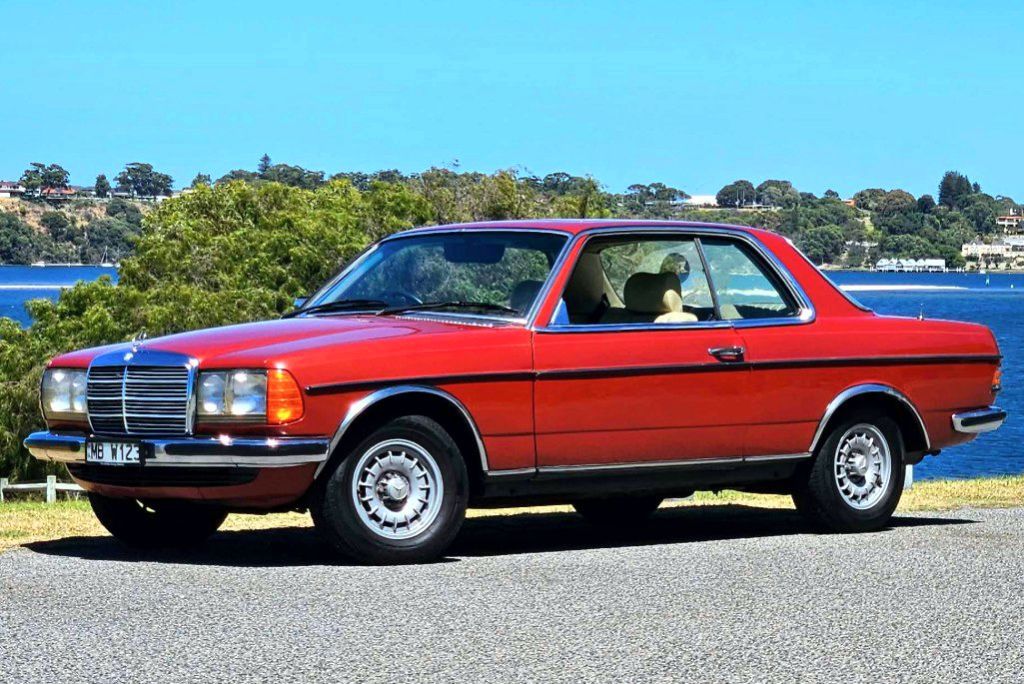
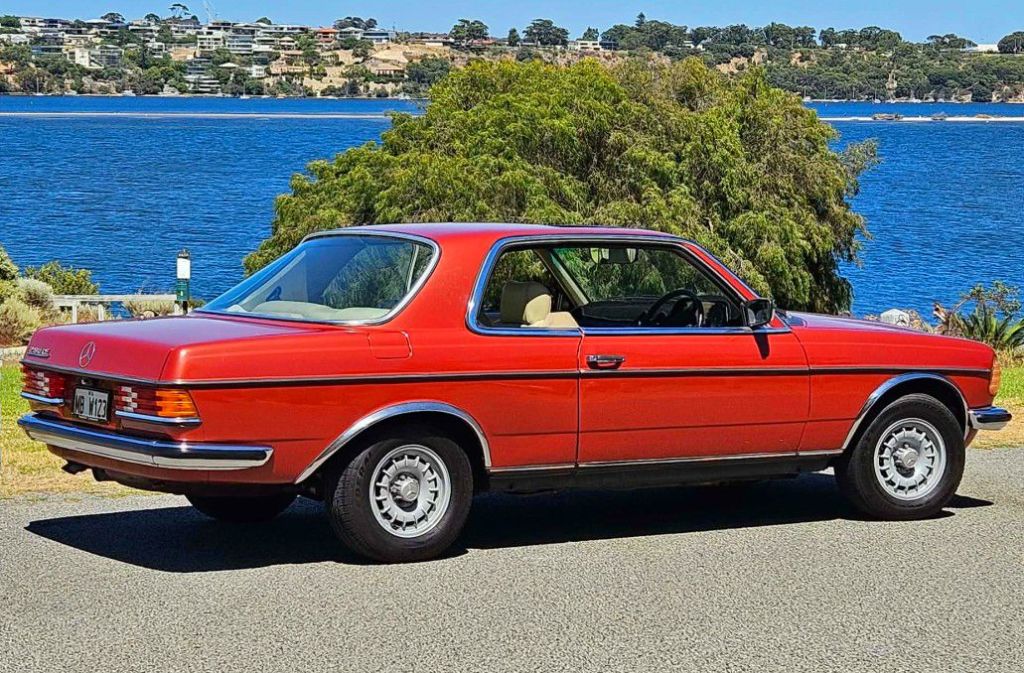
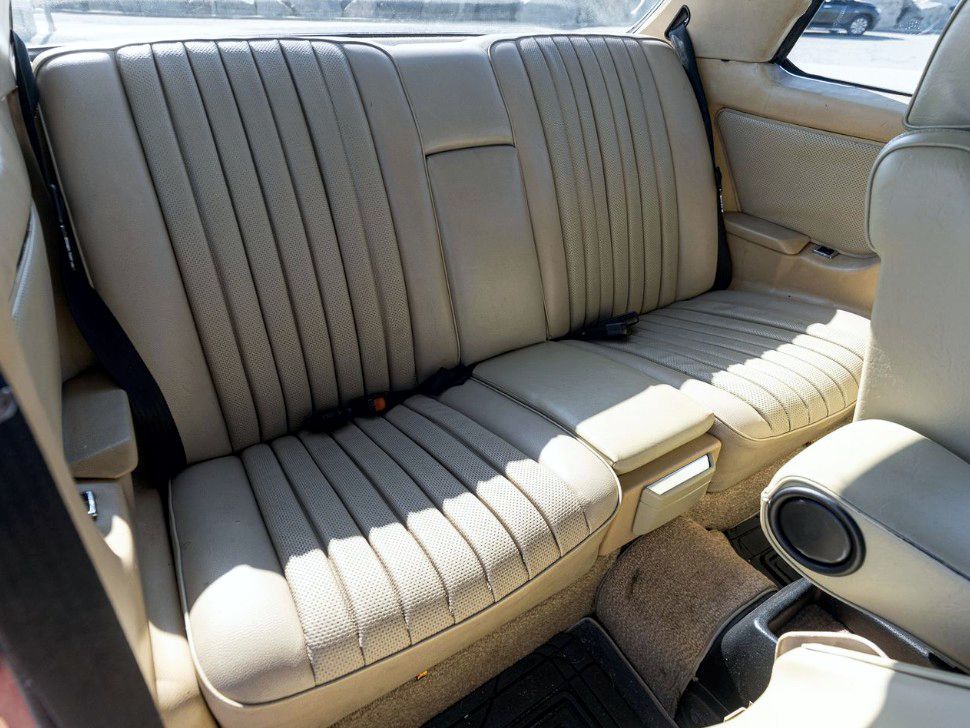
The 280CE was the top of the line of a very successful model range for Mercedes-Benz.
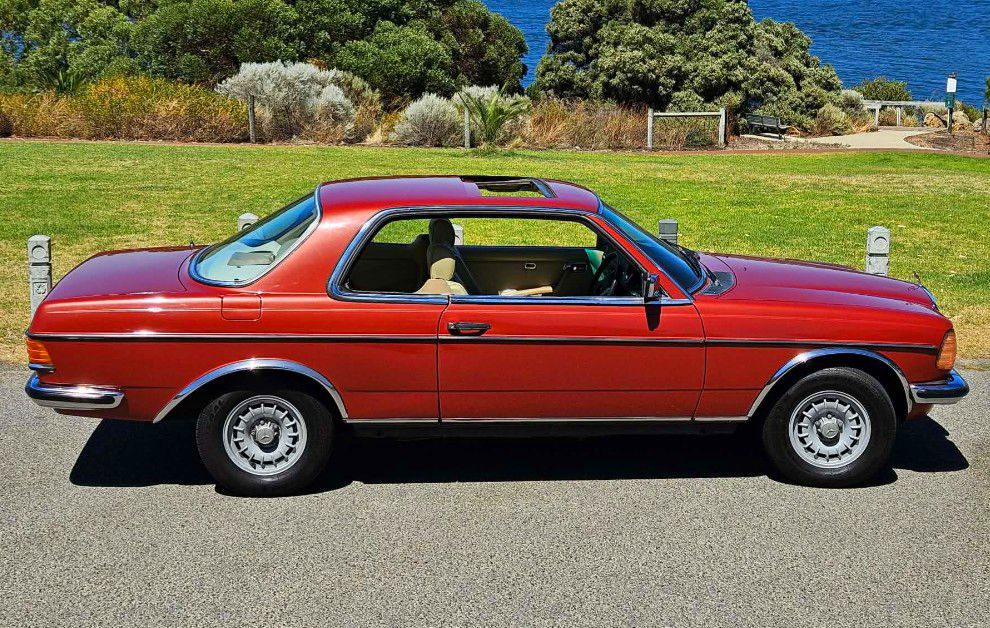
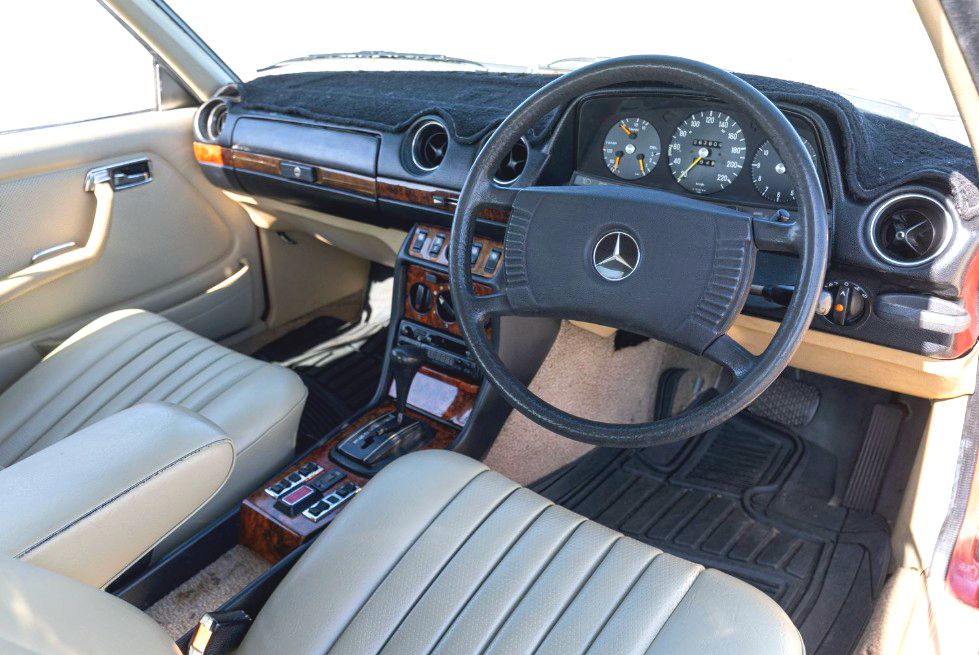
This is a car of high specifications, boasting steel sliding sunroof, power windows, burl walnut interior woodwork and Bundt alloy wheels.
The car was believed delivered new in Victoria and wears an Australian compliance plate.
The current owner has had the car for four years. The owner has had work done during his ownership, which has included – in addition to servicing – automatic gearbox service, fitment of four new tyres and a new air conditioning compressor. Most recently the car has been serviced and a new battery fitted.
A comprehensive history file shows work carried out over the years, dating back to 2011. The odometer shows 269,000km – that equates to 5,744km per year.
The car presents well with its lovely metallic red paintwork. The brightwork is good and the correct Bundt alloy wheels have been refinished. Under the dash mat are some cracks in the dashboard.
If sold to a Western Australian buyer the numberplates MB W123 will go with the car.
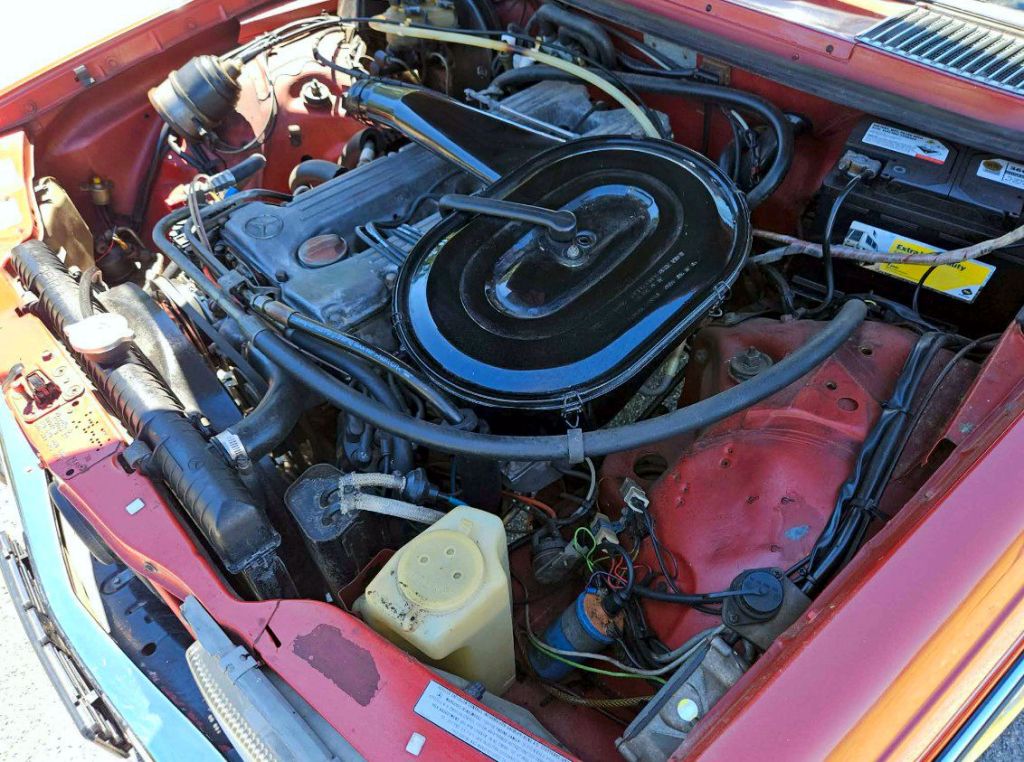
It starts readily and idles smoothly. The 6-cylinder motor provides plenty of torque, making for an easy drive. The car has been a weekend cruising car for its owner.
This 280CE is realistically priced – compare it to others listed at dream prices… A very usable classic, with a lot of style.
Whilst every effort to ensure accuracy is made when preparing the description of a car, much of the information is provided by the owner and cannot be guaranteed to be accurate and complete.
Some errors and omissions occur occasionally and we cannot be held liable for any loss or damage arising from incorrect or incomplete information or any reliance which might be placed on information provided.
Any potential purchaser is advised to make his or her own independent investigations or inspections to determine title and whether a vehicle is suitable for purchase.
Mercurys are generally unfamiliar to Australians as the brand was only briefly marketed here around the war years, so the proliferation of models over the brand’s 70-plus years make for unfamiliar sights to us.
The Mercury brand, born in 1938 and died in 2011 had some highs and lows. Designed by Edsel Ford as a brand to fit between the popular Fords and luxury Lincolns, the Mercury marque took the name of the winged messenger to the ancient Greek gods.
Mercury was a success from the start with their 1939 model year cars. While the Mercury’s were clearly Ford-based, the model range expanded quickly. From the start, all models had V8 engines.
In 1947 the Lincoln-Mercury Division was created, combining the Ford brand’s two upmarket marques. And from 1949 Mercurys shared Lincoln bodyshells instead of Ford. This new, sleek shape sold well and would become a favourite with hot rodders in years to come.
By the early 1950s they were back to body sharing with Ford models, but with longer wheelbases, the extra length ahead of the windscreen. Bigger V8s and a major restyle saw record sales in 1955.
During the 1970s Mercurys had become very much restyled Ford products – and while this system seemed to work for most US car makers for decades, ultimately it lead to the decline of the brand.
The final Mercury produced, a Grand Marquis, rolled of the production line in January 2011.
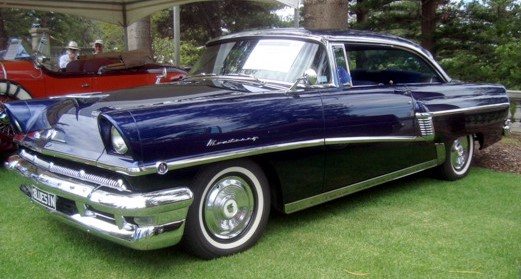
I have the good fortune to travel the world going to many of the great automotive events. Very occasionally an unusual car really catches my eye with its combination of striking looks, rarity and condition. One such car is the 1956 Mercury Monterey featured here, and it’s in my home town.
In 1956 Mercury was riding the crest of a wave of popularity. 1955 had been their biggest year ever and the ‘56s were refined versions. The Monterey series were the bread-winners for Mercury and the brand offered several versions – including pillared sedan and wagon, a hardtop coupe and later in the year a hardtop sedan. Most popular by far was the hardtop coupe, with over 42,000 made in that year.
Engines for ’56 Montereys were an enlarged version of the Y-block V8 which with 312cu in (5.1 litre) produced 175kW (235bhp). Lesser Mercurys had less powerful versions of the same motor.
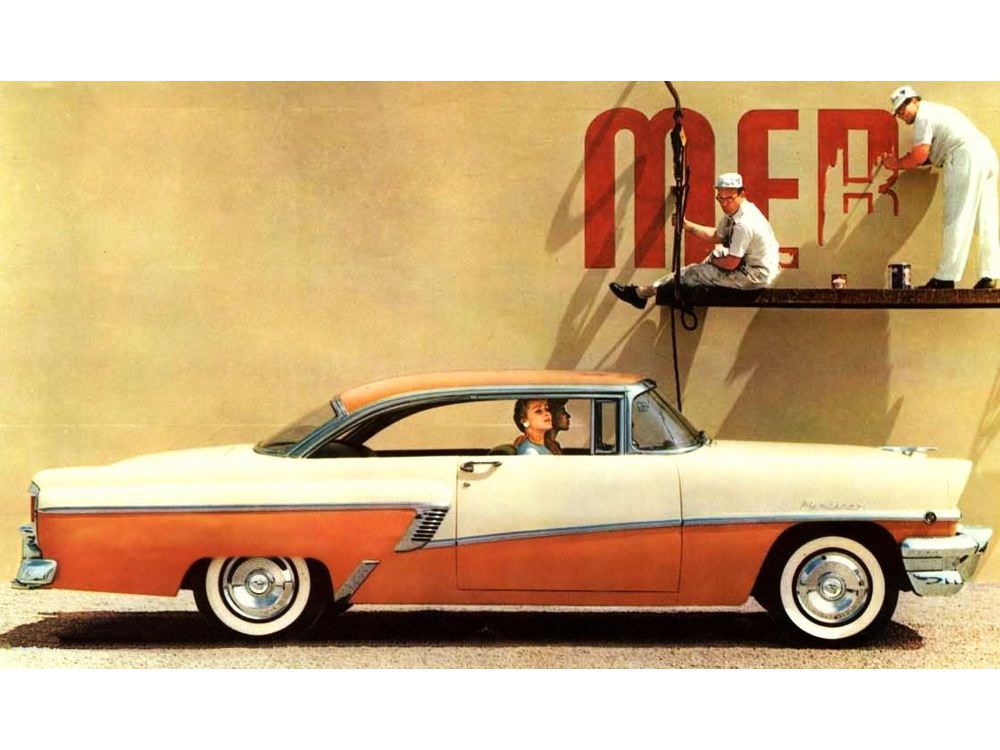
They were good looking cars, with low, wide grilles, muscular ‘hips’ reminiscent of where rear mudguards had been in years gone by and a sleek roofline, especially on the Hardtop Coupe. Big Z-shaped chrome side trim dominated the profile view. This was often the delineator for two-tone paint schemes, with the lower section usually matching the roof colour. There’s beautiful detailing throughout, particularly the badges.
It was clear from the design that the Mercury was a Ford product, but more classy and upmarket. And American buyers understood this. All twenty 1956 Mercury models fitted into the US$2500-3000 range. In total 328,000 Mercurys joined the American carpark in 1956.
How many came to Australia? Probably none in period. Mercury was primarily made for the US and Canadian markets with virtually no interest from the parent company in exports. No right hand drive cars were made. A few have trickled in to Australia over the last couple of decades as classics.
Al Dunnett grew up in New Zealand and his early cars included a lot of Chevvies – including ’55 and ’65 Impalas and a ’66 Chevelle SS, but in recent years has been more taken by 1950s Ford products. He explains how this car came about: “I’ve got two mates with Ford Victorias and wanted something similar. I’d had a ’56 Ford 2-door Club Sedan and knew a bit about them.”
He had seen this Mercury advertised in Unique Cars from a seller in Queensland. “I saw it was a different shape and knew I wanted it straight away.” Al explains. “I got a mate in Queensland to look at it for me. The paint was faded, there were small dents on the trim and body and some really minor rust.” Remarkably, the paint and trim was still original, but showing the wear and tear of fifty years.
The car arrived at Al’s home in Perth and work began soon after. While the car ran alright, Al took off the rocker covers and sump to have a look in the motor. “It was all mint – no sludge and as clean as a whistle inside and the same for the transmission“, which was pleasingly in line with the 41,000 miles the odometer showed.
“The job evolved as I went” Al recalls, “I’d do something and then think, oh, that’s not good enough”. It was pretty much stripped down, but the body remained on the chassis. “At one point I test drove it with a plastic crate as a seat.”
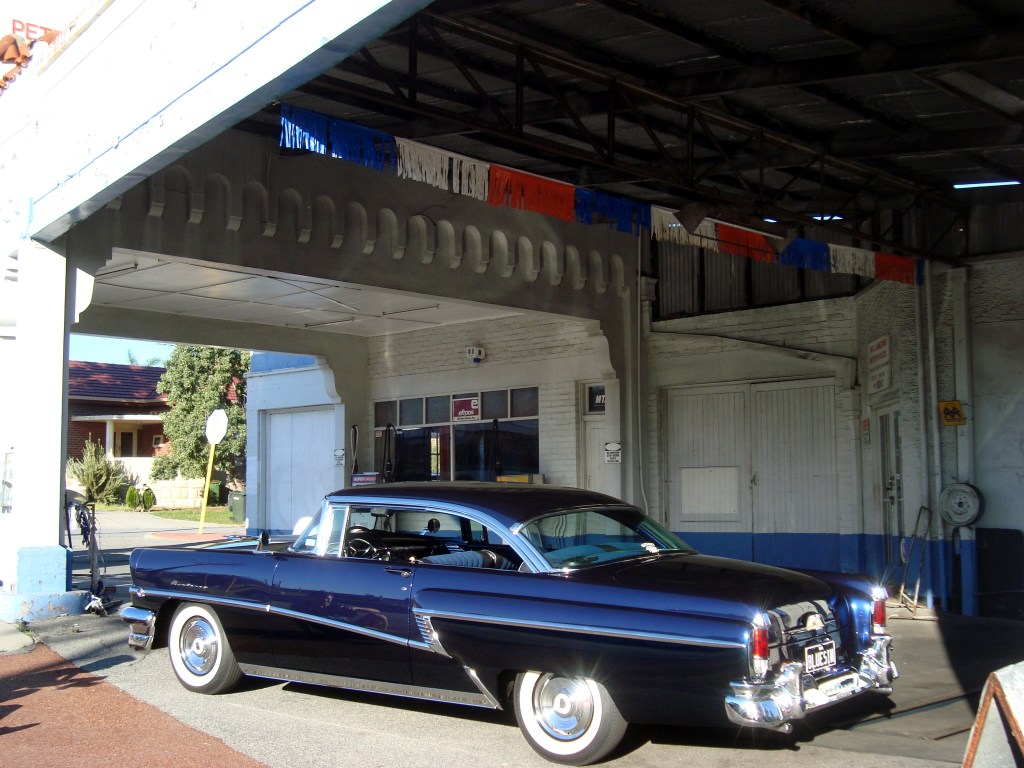
While the car is now spectacularly well restored in all areas, it’s the bodywork and paint that stand out more than anything. House of Kolor special paint colours were mixed for it. While the car was originally delivered new in Los Angeles in Saffron Yellow, Al explains “My ’56 Ford had been yellow and I got sick of the colour”, so two hues of rich metallic blue were carefully selected. The darker colour of lower part of the car changes in different light.
Al was very particular about the finish of the Mercury’s body. “The bonnet was painted three times. First there was a small blemish in the paint, then a bolt from inside damaged it.”
“I wanted perfectly flat panels – not even factory ripples. We welded metal onto the back edges of the doors to get the gaps right.”
During the restoration process Al decided to tidy up the front styling subtly, by removing the over-riders and adding extra grille ends and teeth. With so much attention to detail, the results are something Al is justifiably proud of.
Inside, the back and yellow upholstery had to go, but the original pattern was retained. And in one nice detail, the pattern of the back seat was extended into the rear parcel shelf trim. The period radio is backed up by a modern unit hidden in the glovebox. A lovely period accessory of a swivelling tissue box holder under the dash has been added.
New badges, horn-ring, door trims, sill plates and rubbers were sourced. “A lot of it’s pretty much Ford Victoria parts, though the Mercury is on a longer wheelbase and has a different engine. I got most of the parts from the internet, but I’ve noticed in four or five years there are nowhere near as many parts available for these cars on the net – or they want exorbitant prices.” Al laments.
In the suspension rebuild, the front end has been lowered slightly which suits the car’s look very well.
Al is not big on car shows and as a favour to a friend, displayed the Mercury in the foyer of the Perth Motor Show in 2011, which is where I first saw it – and I immediately thought the car was an obvious contender for Unique Cars, as the photos amply show.
The car runs beautifully and gets an amazing amount of attention on the road. There’s a subtle burble from the V8 – nothing too blatant. If ever a car was a cruiser, this is it.
Is it a car to keep forever? It looks that way, though as the cautious owner explains, “My daughter really wants it and has put her order in for the car. I won’t let her cook for me now.”
Fast Facts
POWER: 175kW@4600rpm – TORQUE: 325Nm – TRANSMISSON: 3-speed Merc-O-matic – WEIGHT: 1628kg – TOP SPEED: 177km/h – BRAKES: Drums front and rear – PRICE NEW: US$2630 – NUMBER MADE: 42,863

 Paul Blank