Tag Archives: car-culture

Classic – De Tomaso Pantera

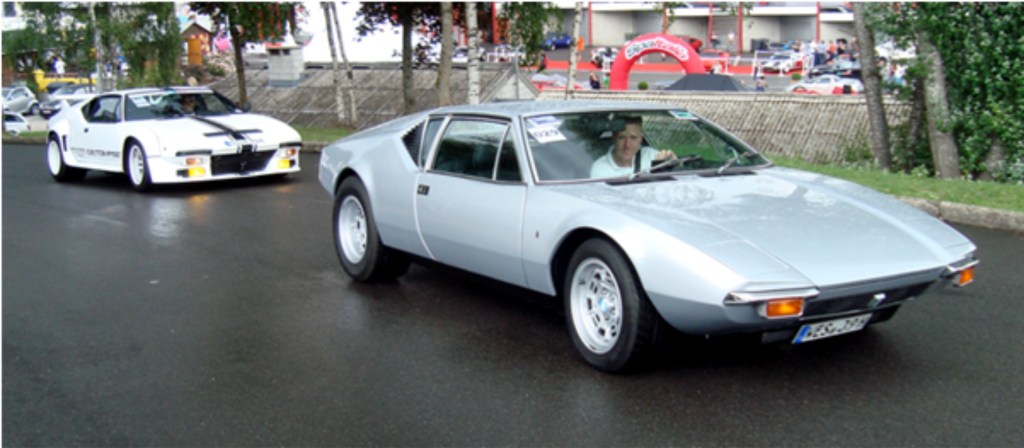
The Pantera is the only De Tomaso model which most people have ever heard of – and that’s just the car enthusiasts. Vallelunga? Guara? Deauville? There are examples of all of these in Australia, but the Pantera is the only model that rings a bell with most people.

Probably not surprising, given that the Italian maker built 10,000 Panteras over the model’s record 23-year model run and the rest in tiny numbers.

Alessandro De Tomaso was a clever man, possibly cleverer than some of the cars he made… He was a marketing genius, with good connections and a passion for exotic vehicles. The Argentinian-born entrepreneur lived his adult life in Italy and married into a very wealthy, well connected American family. His wife’s connections provided the entrée to Ford, which is where De Tomaso was able to make a very lucrative agreement. De Tomaso would build an exotic sports car for American Ford dealers to out-shout Chevrolet’s Corvette.

As part of the deal, he later sold Ghia and Vignale to Ford.

Durability also became an issue and by 1974 Ford had got too frightened by the whole thing and pulled out of the deal, though the cars remained in production for many years to come, with considerably smaller sales through De Tomaso’s own network.

In 1972 the hotter GTS was added, with bigger wheelarches covering wider wheels and more power. 1972 saw the introduction of the Pantera L, primarily to suit American regulations, with big bumpers and a ‘strangled’ engine producing less power.

Subsequent to the Ford period, De Tomaso developed several versions of the Pantera, improving performance and adding enhancements along the way. 1980 saw the GT5 join the range, featuring a huge rear wing, which became a popular fitment on many Panteras.

1986 saw the Cleveland V8 replaced by the Windsor 5.8 litre, which brought with it a drop on performance.

Next came a smooth big blister guards which modernised the look quite well.

In 1991 came the Si model, with a fuel-injected 5-litre V8 and a comprehensive restyle courtesy of Marcello Gandini. Along with bigger blister guards, a silly (Gandini trademark) spoiler at the base of the windscreen, the brakes and suspension came in for redesign in this model. Big plastic wrap-around bumpers and side sills were added, but by now they were really tarting up something beyond its use-by date.

By 1993 the Pantera was a pretty old car that had outrun its life expectancy, and production ceased.

The sales success of the Pantera made De Tomaso a wealthy man and allowed him to develop other models – always with Ford V8s even after the ‘divorce’. He ultimately also owned the Moto Guzzi and Benelli motorcycle companies, Lambretta and Innocenti and Maserati car firms. There were also newer De Tomaso models, but none than sold anywhere near as well as the Pantera.

What do you need to look for when buying a Pantera today?
Well, they were not built for longevity and rust is the biggest killer. Where a Pantera has lived its life and how much rust has taken hold can be a major factor for a potential buyer – check everywhere… It’s not just exterior panels that are at risk. Make sure you get a car up on a hoist to see the underneath. Areas inside the engine bay should also be checked.

But potentially more of a problem are modifications. It seems the majority of Pantera owners over the years have not known when to leave well enough alone. There are many cars which have legitimate upgrades, but far more which have been customised by people with questionable taste. This adds nothing to the value (devalues them in some cases). Reversing unfortunate modifications can be as costly as repairing issues of wear and tear.

Probably the costliest risk area in any Pantera is the transaxle gearbox. It’s a sturdy German-made ZF unit, but they have often taken a pounding for years and when they break, they are very, very expensive…

Rebuilt engines are relatively common, unlike with other Italian exotica, because the cost is very reasonable – plus performance upgrades are attractively cheap. There are plenty of specialists who have knowledge and experience with these engines.

Worn suspension can take a lot of the joy and accuracy out of a Pantera’s handling, so should be checked for proper maintenance.

Parts availability is generally good, mostly at a fraction of the price that other exotic car parts sell for. Many of the small parts of hardware are common with other Italian cars of the ’70s. You just need to be able to identify which company made a part…

Wheels can be expensive, though there are aftermarket alternatives in the correct style, including in bigger diameters. But please don’t spoil a Pantera with different designs of wheels… Or a big, dumb wing on the back of a model that shouldn’t have one. Too 1980s.

On some Panteras the removable rear boot box has gone, sometimes to make way for an exotic exhaust system. If you want to carry shopping or luggage, you may need to find or fabricate one.

However, with values rising steadily over the past couple of decades, many Panteras have been thoroughly restored and problems like rust, cooling issues and poor fitting parts have disappeared in expensive restorations.

There has been a steady if slow influx of Panteras from the USA over the past twenty or so years, all being left hand drive. Conversions are relatively straightforward.

When looking, it’s worth first deciding which model you want. Then, look closely at any cars on the market to see whether they are genuinely the model they appear to be. If you’re happy with a GT5 clone that began life as a Pantera L, then that’s fine. Just don’t assume that a car is what it looks like. And pay accordingly.

Text and photos copyright Paul Blank
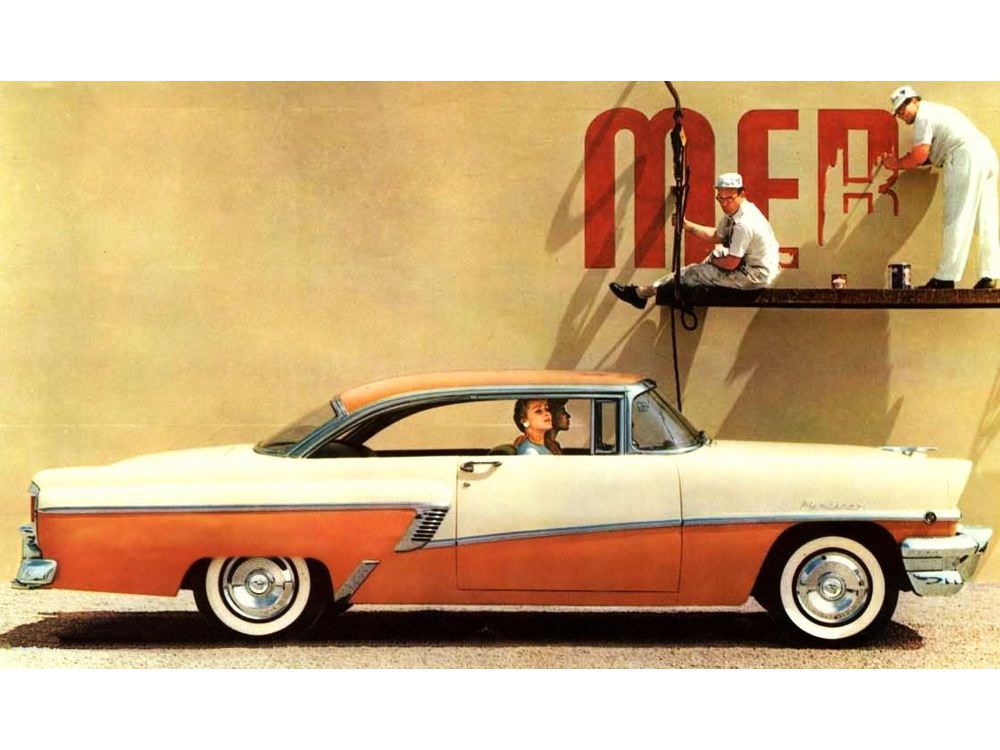
1956 MERCURY MONTEREY HARDTOP COUPE                                  

Mercurys are generally unfamiliar to Australians as the brand was only briefly marketed here around the war years, so the proliferation of models over the brand’s 70-plus years make for unfamiliar sights to us.

The Mercury brand, born in 1938 and died in 2011 had some highs and lows. Designed by Edsel Ford as a brand to fit between the popular Fords and luxury Lincolns, the Mercury marque took the name of the winged messenger to the ancient Greek gods.

Mercury was a success from the start with their 1939 model year cars. While the Mercury’s were clearly Ford-based, the model range expanded quickly. From the start, all models had V8 engines.

In 1947 the Lincoln-Mercury Division was created, combining the Ford brand’s two upmarket marques. And from 1949 Mercurys shared Lincoln bodyshells instead of Ford. This new, sleek shape sold well and would become a favourite with hot rodders in years to come.

By the early 1950s they were back to body sharing with Ford models, but with longer wheelbases, the extra length ahead of the windscreen. Bigger V8s and a major restyle saw record sales in 1955.

During the 1970s Mercurys had become very much restyled Ford products – and while this system seemed to work for most US car makers  for decades, ultimately it lead to the decline of the brand.

The final Mercury produced, a Grand Marquis, rolled of the production line in January 2011.

I have the good fortune to travel the world going to many of the great automotive events. Very occasionally an unusual car really catches my eye with its combination of striking looks, rarity and condition. One such car is the 1956 Mercury Monterey featured here, and it’s in my home town.

In 1956 Mercury was riding the crest of a wave of popularity. 1955 had been their biggest year ever and the ‘56s were refined versions. The Monterey series were the bread-winners for Mercury and the brand offered several versions – including pillared sedan and wagon, a hardtop coupe and later in the year a hardtop sedan. Most popular by far was the hardtop coupe, with over 42,000 made in that year.

Engines for ’56 Montereys were an enlarged version of the Y-block V8 which with 312cu in (5.1 litre) produced 175kW (235bhp). Lesser Mercurys had less powerful versions of the same motor.

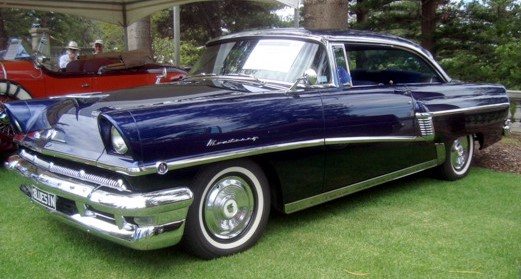
They were good looking cars, with low, wide grilles, muscular ‘hips’ reminiscent of where rear mudguards had been in years gone by and a sleek roofline, especially on the Hardtop Coupe. Big Z-shaped chrome side trim dominated the profile view. This was often the delineator for two-tone paint schemes, with the lower section usually matching the roof colour. There’s beautiful detailing throughout, particularly the badges.

It was clear from the design that the Mercury was a Ford product, but more classy and upmarket. And American buyers understood this.  All twenty 1956 Mercury models fitted into the US$2500-3000 range. In total 328,000 Mercurys joined the American carpark in 1956.

How many came to Australia? Probably none in period. Mercury was primarily made for the US and Canadian markets with virtually no interest from the parent company in exports. No right hand drive cars were made.  A few have trickled in to Australia over the last couple of decades as classics.

Al Dunnett grew up in New Zealand and his early cars included a lot of Chevvies – including ’55 and ’65 Impalas and a ’66 Chevelle SS, but in recent years has been more taken by 1950s Ford products. He explains how this car came about: “I’ve got two mates with Ford Victorias and wanted something similar. I’d had a ’56 Ford 2-door Club Sedan and knew a bit about them.”

He had seen this Mercury advertised in Unique Cars from a seller in Queensland. “I saw it was a different shape and knew I wanted it straight away.” Al explains. “I got a mate in Queensland to look at it for me. The paint was faded, there were small dents on the trim and body and some really minor rust.” Remarkably, the paint and trim was still original, but showing the wear and tear of fifty years.

The car arrived at Al’s home in Perth and work began soon after.  While the car ran alright, Al took off the rocker covers and sump to have a look in the motor. “It was all mint – no sludge and as clean as a whistle inside and the same for the transmission“, which was pleasingly in line with the 41,000 miles the odometer showed.

“The job evolved as I went” Al recalls, “I’d do something and then think, oh, that’s not good enough”.  It was pretty much stripped down, but the body remained on the chassis. “At one point I test drove it with a plastic crate as a seat.”

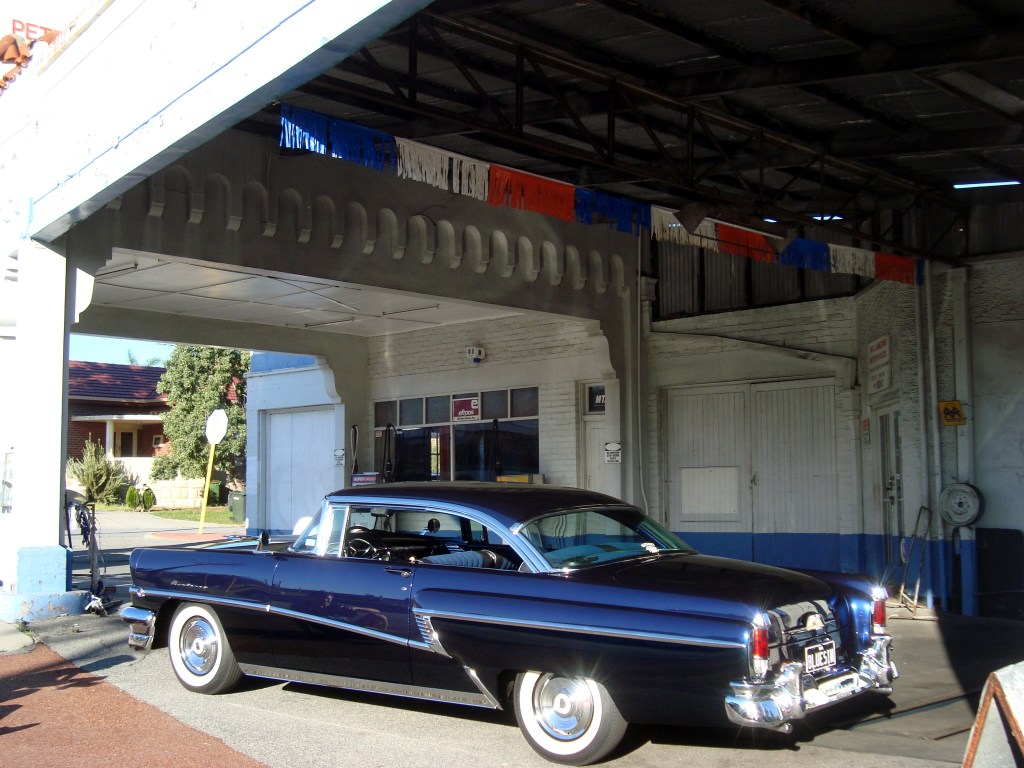
While the car is now spectacularly well restored in all areas, it’s the bodywork and paint that stand out more than anything.  House of Kolor special paint colours were mixed for it. While the car was originally delivered new in Los Angeles in Saffron Yellow, Al explains “My ’56 Ford had been yellow and I got sick of the colour”, so two hues of rich metallic blue were carefully selected. The darker colour of lower part of the car changes in different light.

Al was very particular about the finish of the Mercury’s body. “The bonnet was painted three times. First there was a small blemish in the paint, then a bolt from inside damaged it.”

“I wanted perfectly flat panels – not even factory ripples. We welded metal onto the back edges of the doors to get the gaps right.”

During the restoration process Al decided to tidy up the front styling subtly, by removing the over-riders and adding extra grille ends and teeth. With so much attention to detail, the results are something Al is justifiably proud of.

Inside, the back and yellow upholstery had to go, but the original pattern was retained. And in one nice detail, the pattern of the back seat was extended into the rear parcel shelf trim. The period radio is backed up by a modern unit hidden in the glovebox. A lovely period accessory of a swivelling tissue box holder under the dash has been added.

New badges, horn-ring, door trims, sill plates and rubbers were sourced. “A lot of it’s pretty much Ford Victoria parts, though the Mercury is on a longer wheelbase and has a different engine. I got most of the parts from the internet, but I’ve noticed in four or five years there are nowhere near as many parts available for these cars on the net – or they want exorbitant prices.” Al laments.

In the suspension rebuild, the front end has been lowered slightly which suits the car’s look very well.

Al is not big on car shows and as a favour to a friend, displayed the Mercury in the foyer of the Perth Motor Show in 2011, which is where I first saw it – and I immediately thought the car was an obvious contender for Unique Cars, as the photos amply show.

The car runs beautifully and gets an amazing amount of attention on the road.  There’s a subtle burble from the V8 – nothing too blatant. If ever a car was a cruiser, this is it.

Is it a car to keep forever?  It looks that way, though as the cautious owner explains, “My daughter really wants it and has put her order in for the car. I won’t let her cook for me now.”

Fast Facts

POWER: 175kW@4600rpm – TORQUE: 325Nm – TRANSMISSON: 3-speed Merc-O-matic – WEIGHT: 1628kg – TOP SPEED: 177km/h – BRAKES: Drums front and rear – PRICE NEW: US$2630 – NUMBER MADE: 42,863

Copyright Paul Blank