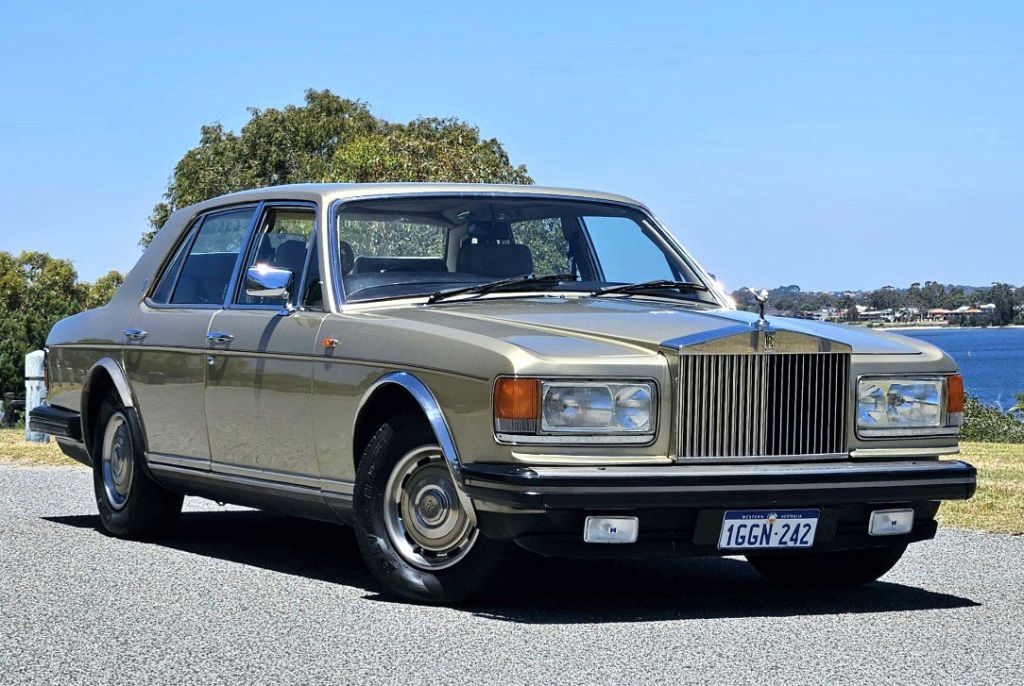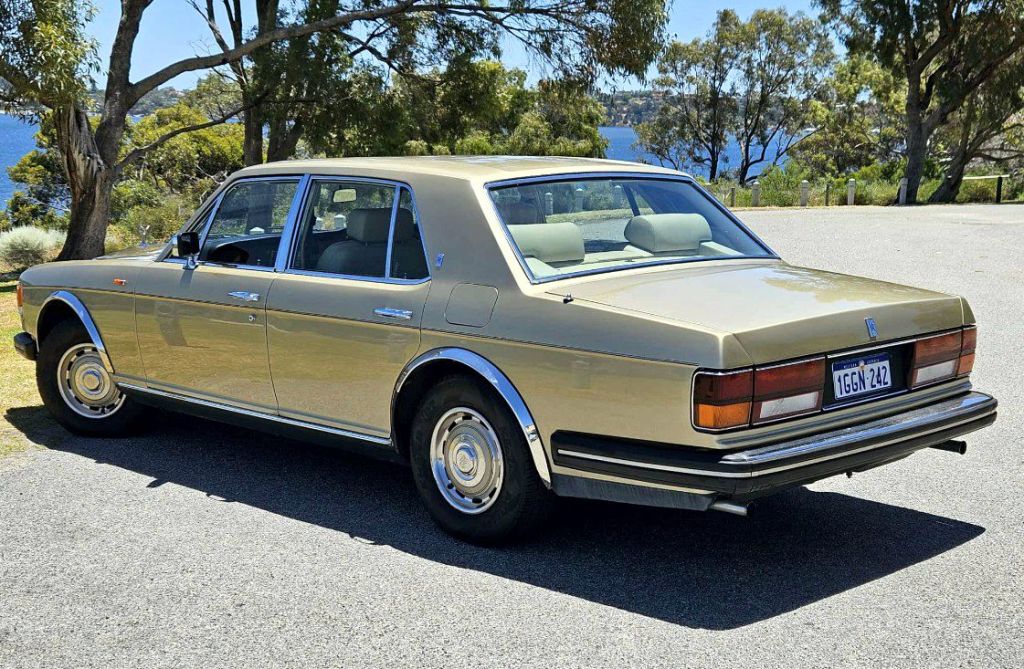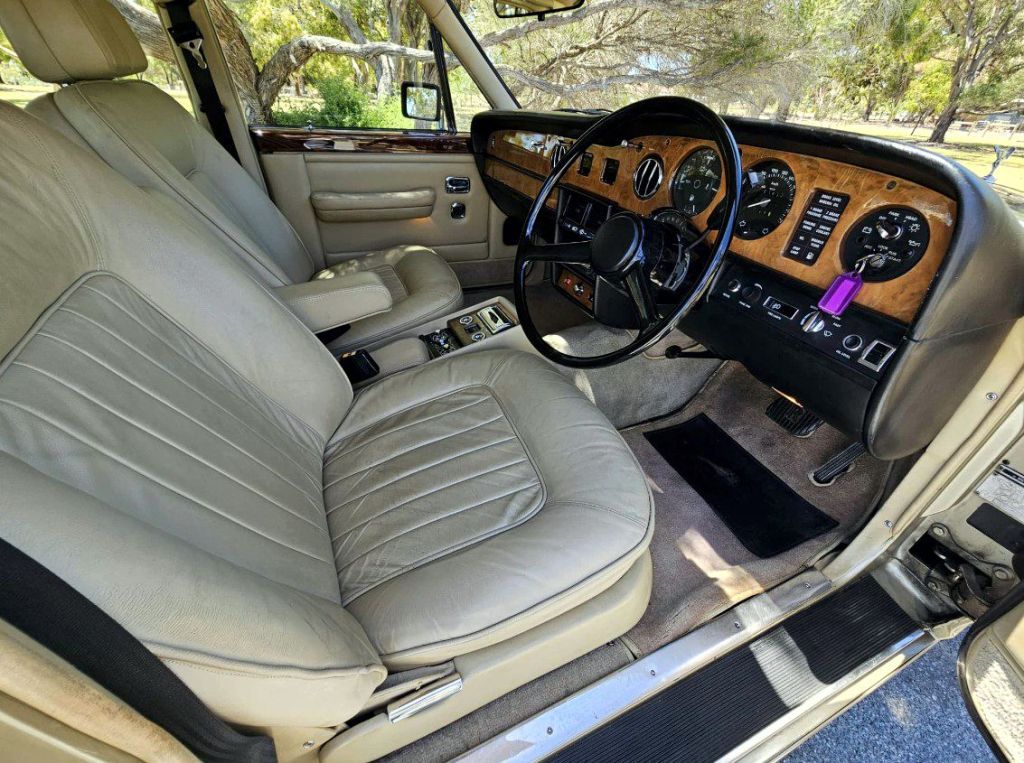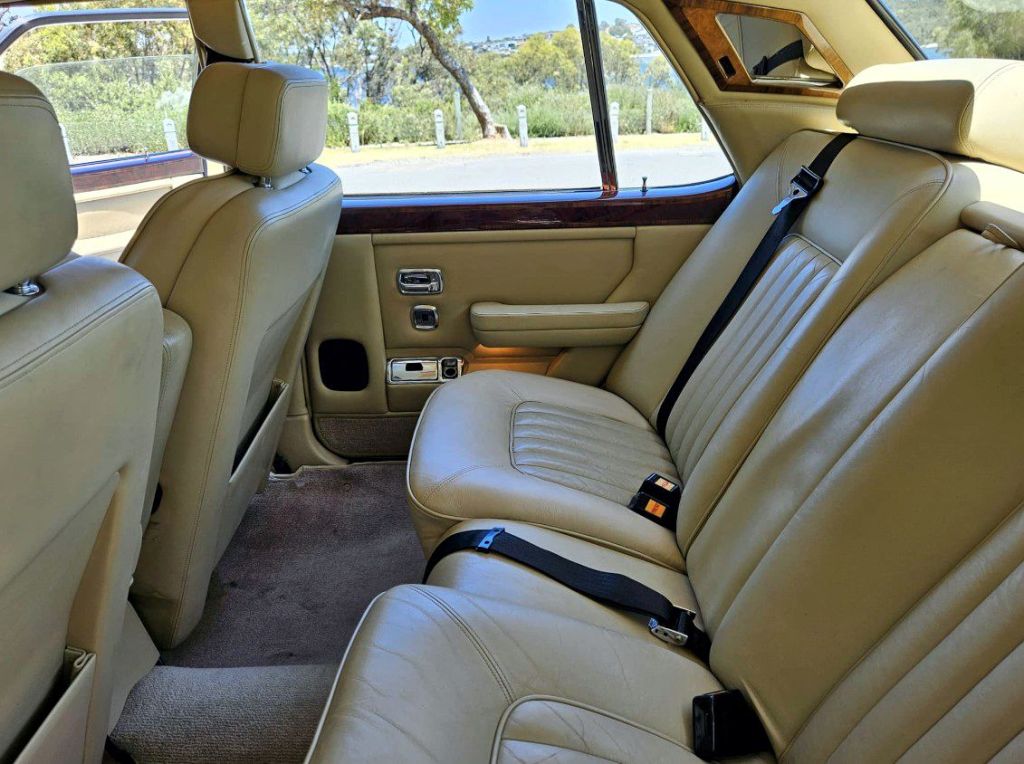
The Silver Spirit model brought Rolls-Royce into the 1980s with its smooth 6750cc V8 engine, a very high level of engineering and Rolls-Royce’s famous build quality.
Luxury and comfort were the hallmarks of these cars. Beautifully finished, the interiors had lovely polished woodwork, comfortable, electrically-adjustable leather seats and plush carpet. The climate control system could be controlled by zone. Of course there were power windows, central locking, rear make-up mirrors and other comfort features.
This car was delivered new in Adelaide, finished in metallic Cotswald Beige. It moved to Melbourne and later the Gold Coast. The car can be traced by details in its service booklet – stamped through to when it moved to Perth.
Sadly about a year and a half ago the owner passed away. His family held on to the car, but it was not being used, so the decision has been made to sell. In preparation for sale quite a bit of work has been done on the car.
The car drives particularly well and exhibits notably good acceleration and smooth gearchanges. It starts immediately from cold.
A few items could be attended to, such as the air conditioning not working and some of the chromework on the car has deteriorated which would benefit from being refinished.
Inside the car presents very well, with good leather and hardware. The woodwork is in fine shape.
This Silver Spirit is not a car show queen, but a decent, Australian-delivered car with fine driving characteristics. Its realistic price takes into account some work a new owner may wish to do.
1GGN242. Whilst every effort to ensure accuracy is made when preparing the description of a car, much of the information is provided by the owner and cannot be guaranteed to be accurate and complete.
Some errors and omissions occur occasionally and we cannot be held liable for any loss or damage arising from incorrect or incomplete information or any reliance which might be placed on information provided.
Any potential purchaser is advised to make his or her own independent investigations or inspections to determine title and whether a vehicle is suitable for purchase.
One of the all-time great sports cars – and for a time, the biggest seller, was the original Datsun 240Z. Built from 1969 to 1973, the 240Z is still highly sought after by collectors today due to its tremendous combination of style and performance.
Datsun’s parent company Nissan steadily developed their sports model over the years, with a continuous series of models. The latest model, the 400Z sticks to the tried and true formula which pleases enthusiast drivers well. It’s front-engined, with a 6-cylinder motor, rear wheel drive and in strictly 2-seater configuration.
To look at, there are styling cues taken from the original Z, but reinterpreted in a modern way rather than clumsily copying the earlier style. The rear is reminiscent of the 300ZX. And it works well – the 400Z I had to review for a week got positive comments everywhere I went.
The engine is a highlight of the 400Z – a 3-litre twin-turbocharged V6, it provides plenty of grunt – 298kW (which equals 400 horsepower). In the relatively light body, this gives ample acceleration, even in the higher gears… of which it has six in the manual gearbox, or 9 in the automatic.
Inside is where the compromises of sports cars are most apparent. It’s just two seats with a small storage space behind. There are shallow central storage spots and the boot doesn’t hold a lot. Pretty much the story of most 2-seater sports cars…
The view out to the rear three quarters is very restricted, which many modern cars of all types suffer from. The answer car makers give is to fit cameras and a screen (which I find frustratingly inadequate for this form-over-function problem). However in the 400Z, the screen is angled out at the bottom, and not set back enough to be shaded – at many times of the day, the sun shines directly onto the screen making it virtually unreadable.
As a sports car the bar is set high for driving expectations and the 400Z doesn’t disappoint. While it’s an easy car to cruise around town in, when the Sports mode button is pressed, it takes on a more aggressive feel and provides very strong performance.
The low-set car handles very nicely, taking curves in its stride – and notably, the ride has finesse, compliance and comfort. The harshness in other cars can be wearing, especially on a long run, so the 400Zs suspension setup works very much in its favour.
In a time when SUVs dominate the catalogues of almost every car maker’s offerings, it is very pleasing that a car like the 400Z is available. Any sports car sells to a niche market, and uptake in Australia is traditionally smaller than many other parts of the world.
Nissan had a launch price for 400Z at $73,300 in manual or automatic form. Its natural competitors are the Toyota Supra ($87,000) and Ford Mustang 5.0 ($65,290), so it fits nicely in that range. As Nissan Australia’s only non SUV or 4WD model, the 400Z has a lot of appeal.
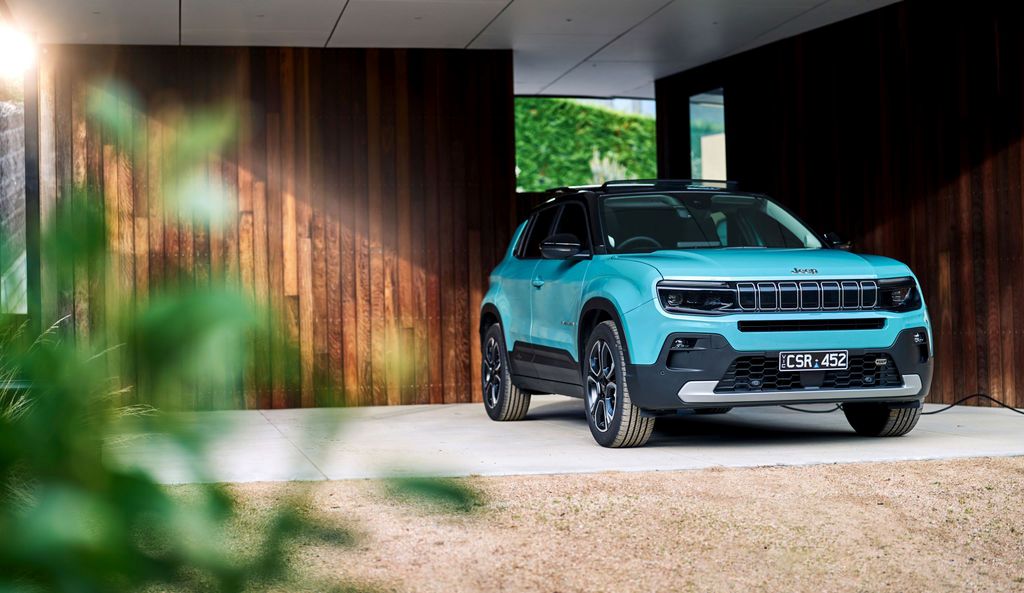
The new Avenger is a most unusual Jeep. First, it’s not available in the USA. Second, it’s not four-wheel-drive. Third, it’s electric.
The Avenger’s story is one of the complexity of the modern car industry. The huge Stellantis group is a merging of the Fiat Chrysler group of companies (Fiat, Alfa Romeo, Abarth, Maserati, Lancia, Chrysler, Dodge, Jeep and RAM) with the Peugeot group PSA (Peugeot, Citroen, DS, Opel and Vauxhall). Plus there’s a slice of some Chinese brands involved too – Dongfeng and Leapmotor…
The Fiat Chrysler group of companies were in enormous trouble, having had terrible management making poor decisions. Only Jeep was making money for the group. And very little of that was outside the US market.
A small Jeep Renegade model which shared its platform and Italian manufacture with a Fiat model had been moderately successful in Europe. So when the decision to replace it with a new electric model came about – it’s one that just about every one of the Stellantis brand names has a car based-on, a Jeep was obvious. So far, only Abarth, Maserati and RAM have not got a car on this platform.
Each has its own characteristics, styling inside and out, but shared technology and much of the structure and running gear. The Jeep model, built in the Polish factory which used to build the incredibly popular 500 (which unbelievably Fiat somehow managed not to have a direct replacement for), the Avenger is aimed primarily at the European market. There a Jeep doesn’t have to be as big as a truck or have the capability to climb Mt Rushmore.
So the electric Jeep is a compact, front wheel drive model – and Australia gets the Avenger as its smallest Jeep. It’s quite a tidy design, harnessing the Jeep look without appearing unnecessarily aggressive or utilitarian.
Inside, it’s clear some of the systems and tech are familiar from other Stellantis brands, it mostly comes together pretty well. It handles nicely, with sure-footedness, and has decent performance.
It’s just as well the Avenger isn’t aimed for rough work and long country drives, because that’s where electric vehicles are at their most inept. As an around town compact family car, it does quite well. Electronic aids are nicely calibrated and unobtrusive – other makers could learn from this…
There are three versions starting at $49,990 for the Longitude, but the base model is lacking in features. The Limited is set at $54,990 and the Summit $60,990. All are comfortable and fit five easily despite the compact exterior dimensions.
If we got the all-wheel-drive and engine-driven versions that Europeans car buy, sales of the Avenger would undoubtedly be stronger, given the Australian market for EVs has yet to get to ten percent.
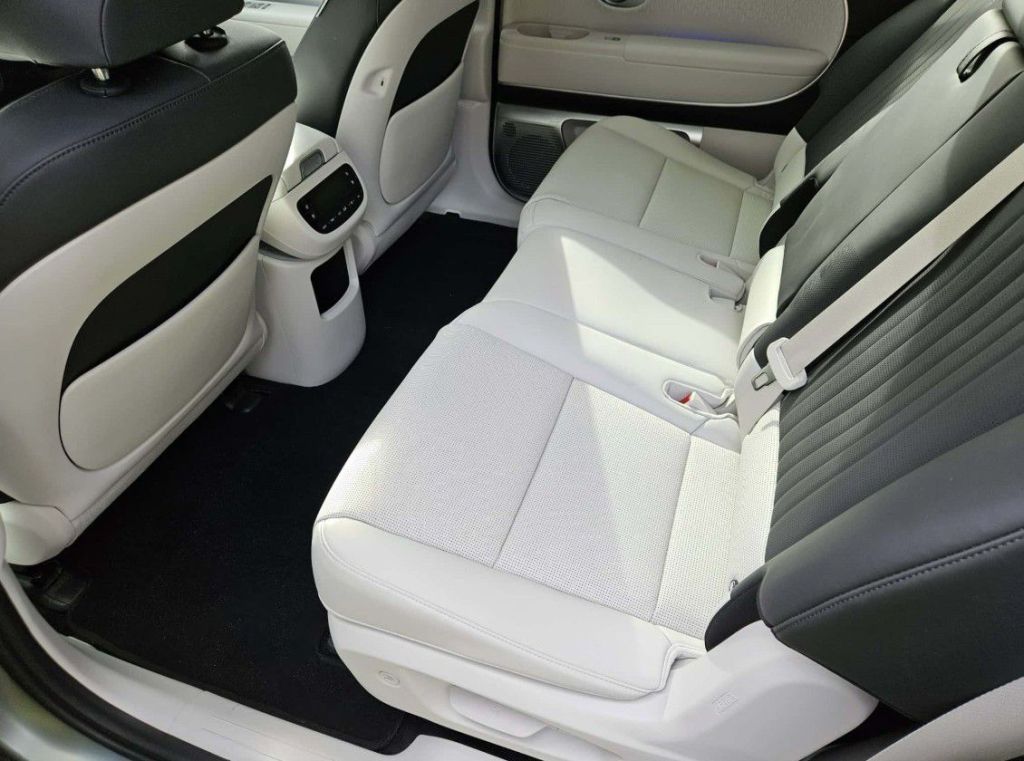
This week I’m testing the Hyundai Ioniq 9 Calligraphy – a 7-seater luxury EV. It’s certainly big, plush, quiet and well equipped. At a smidge under $120,000, it’s pushing well into Genesis territory, but that can probably work for the company.
There’s strong acceleration – 0-100km/h in 5.2 seconds, with much less intrusive electronic nannying than many other recent models from Hyundai – seems they’ve been taking the feedback on board.
The Ioniq 9 feels well planted on the road, handles well for a 2.5 tonne SUV. The WLTP claim is a 600km range.
The top of the line Calligraphy has everything they can throw at it. Except Australia doesn’t get the option of swivelling centre row seats that other markets do. There are special finishes, heated and cooled front and rear seats, dozens of cup holders, 21-ich wheels (of a rather dated, fussy design), triple zone climate control, panoramic glass roof, lovely feeling suede-like roof lining and many more details.
But the $3000 option gimmick cameras and screens in place of door mirrors is frustrating at best – dangerous at worst. You have to focus on the screen, not using the depth of field as with a normal mirrors or looking through the windows. Loses a fraction of a second. Terrible for anyone who needs glasses. And hard to judge gaps (when reverse parking for example). The image doesn’t give the additional information a brain can take on board by moving your head a bit. I’ve used this in several cars now. More car makers will use this expensive gimmick to seem high tech. It’s a retrograde step.
The boot floor is crazy high, like almost every new SUV, especially EVs. And it’s not concealing a spare wheel. Boot space with seats up is not generous. There is a small frunk.
Space in the front two rows is excellent – almost limousine-like for the centre row passengers.
There’s an 8-year warranty – and unlike sone of the unknown new brands, Hyundai will still be around to honour it – while parts availability and servicing will be to their usual good standard.
And I don’t mind the styling, especially the back end.
One of the greatest of Australian muscle cars, the GTR XU-1 built its reputation with motorsport wins and quickly became a favourite with collectors.
This car came into the family selling it now, over 20 years ago, spending much of that time garaged, awaiting attention. The owner has had the car carefully checked over and is confident that it’s the real deal, not a replica XU-1. A well-known and respected expert has verified this for him. The numbers show the car was assembled in GMH’s Queensland plant. Other early history is unknown. The car has its original build plates.
Its original engine was sold many years ago and another, period correct motor (verified 1973) has been fitted, with the triple carburettors and other correct fitments.
The XU-1 was registered until 2009, then deregistered and has passed inspection this year, being re-licensed on club registration.
The car was repainted to a high standard over twenty years ago, but it has not been on the road for most of that time, so presents very well. The bright yellow suits the car particularly well.
Inside the car presents very well throughout. A modern sound system has been installed recently, with no holes cut in the rear parcel shelf for speakers. The original AM radio will be sold with the car also.
Under the bonnet, in the boot and underneath the car also present very well. New tyres are on correct alloy wheels which show no kerb damage.
Considerable work has been undertaken recently to bring the car up to its excellent standard. Almost $30,000 has been spent doing this work. Much of the work done by a highly regarded expert workshop in these cars. The car has been serviced and dyno tuned – it starts instantly and runs very well.
It’s not going to be a concours winner, but is a very impressive example, which gets a great deal of positive attention when out and about. And it’s realistically priced.
If sold to a Western Australian buyer, the number plates MUSTARD can go with the car.
Whilst every effort to ensure accuracy is made when preparing the description of a car, much of the information is provided by the owner and cannot be guaranteed to be accurate and complete.
Some errors and omissions occur occasionally and we cannot be held liable for any loss or damage arising from incorrect or incomplete information or any reliance which might be placed on information provided.
Any potential purchaser is advised to make his or her own independent investigations or inspections to determine title and whether a vehicle is suitable for purchase.
Recognized as one of the all-time-great hot hatches, the later version of the 205 GTi featured a 1.9-litre, fuel injected motor. This car’s from the sweet-spot in GTi production, with the most powerful (130bhp) motor. From 1992, the power output was reduced.
Genuine, original cars are very sought after. An Australian-delivered example, finished in Alpine White with cloth upholstery and the GTi’s signature red carpet, plus optional sunroof, this car recently arrived in Perth from Victoria.
The previous owner in Melbourne had spent over $6000 between 2023 and 2025 on maintenance and repair work on the car. This included the cam belt, and since this was changed, the car has just covered 100km. The odometer shows 313,000km.
On purchasing the car in August and having it shipped to Western Australia, and underwent a license inspectoin. Fortunately very little was required – and the car sailed through its registration inspection. The owner has also replaced the battery.
The GTi presents well, though there are a few blemishes and a couple of scratches. Inside, the upholstery is excellent. The car has the original Peugeot stereo and power windows. The owner advises that the sunroof does not work and he has not investigated why it doesn’t operate.
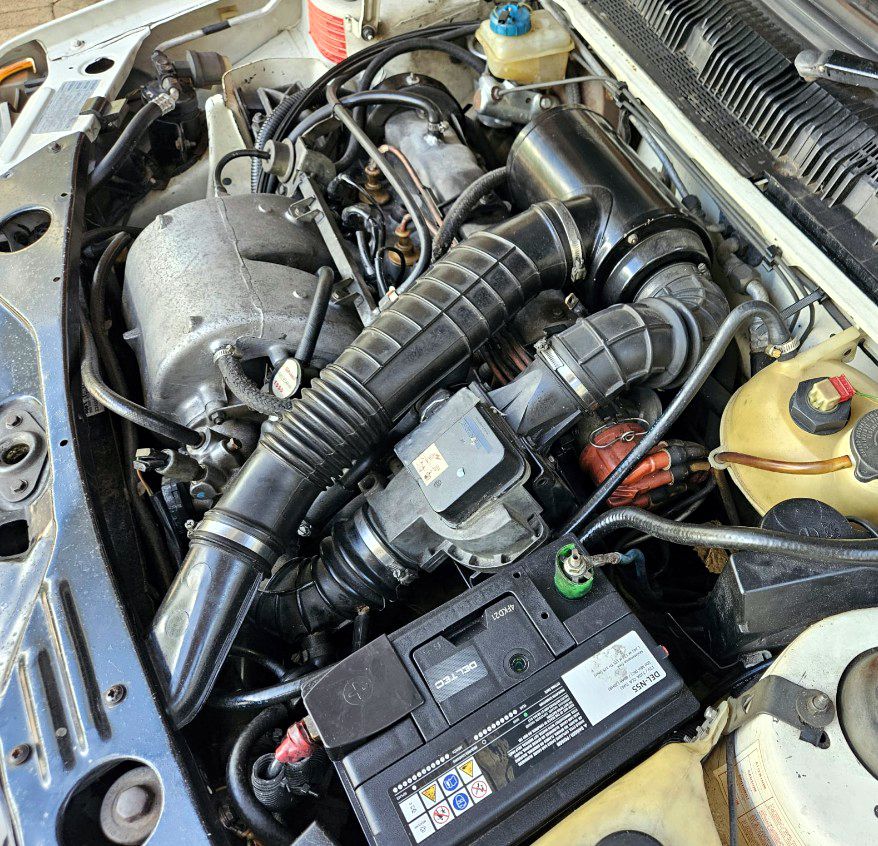
Under the bonnet, everything is as it should be. The car starts instantly and performs well showing the fun driving characteristics that this model is renowned for.
The car is registered (1IST538) to March 2026. It is eligible for club license.
This 205 GTi is very realistically priced, this is an honest, neat example which retains tremendous 1980s fun factor.
Whilst every effort to ensure accuracy is made when preparing the description of a car, much of the information is provided by the owner and cannot be guaranteed to be accurate and complete.
Some errors and omissions occur occasionally and we cannot be held liable for any loss or damage arising from incorrect or incomplete information or any reliance which might be placed on information provided.
Any potential purchaser is advised to make his or her own independent investigations or inspections to determine title and whether a vehicle is suitable for purchase.
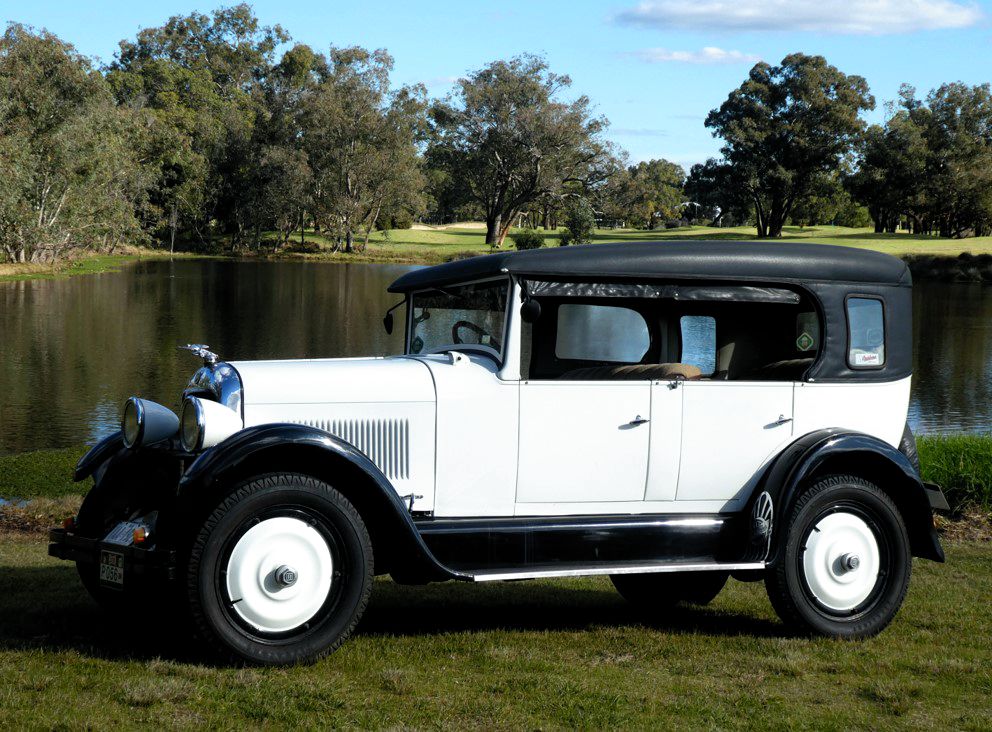
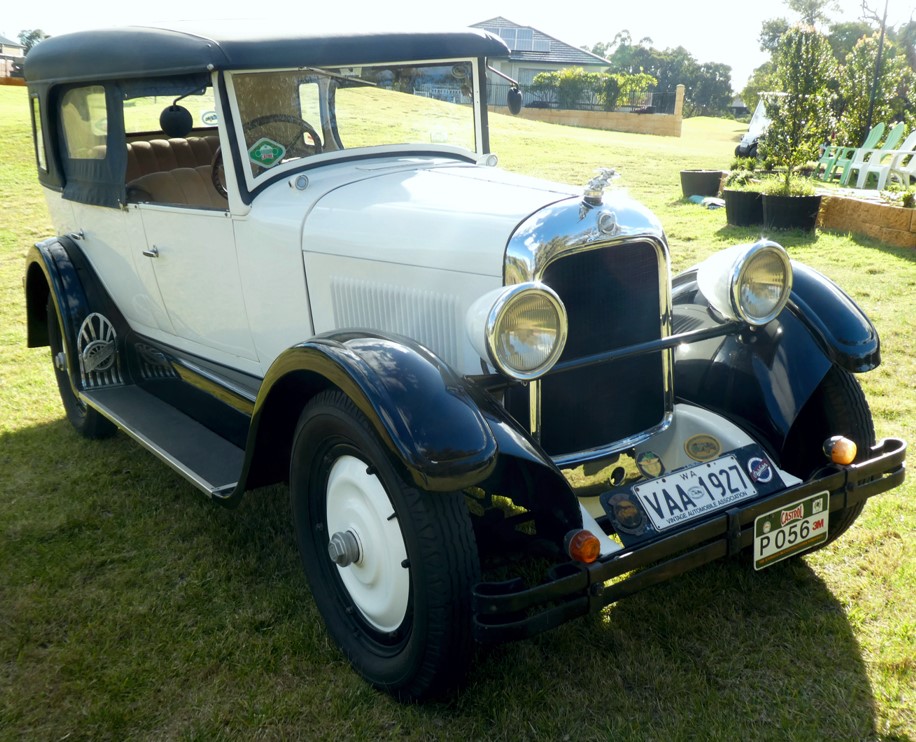
The Dictator was a new model for 1927, with a 242 cubic inch (4-litre) straight-six engine and was the second from top model in the range. It was a large, spacious car on a 113-inch wheelbase. Steel disc wheels were standardised for 1927 as were 4-wheel brakes.
This car was purchased, as a project in need of complete restoration in 1987 by the previous owner… and a total restoration was undertaken so the car could be used in the Bicentennial Rally.
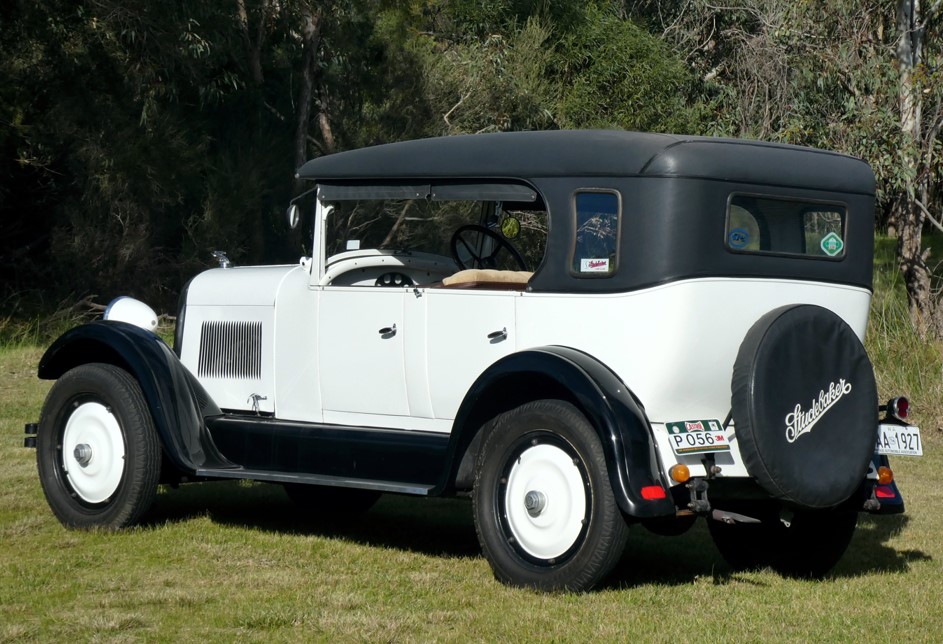
The car drove to Canberra and back with tremendous reliability along with several others. It was a 17-day drive from Perth, the furthest start point. 1150 vehicles took part, with entries from all over the world. The Studebaker still proudly wears its rally plates and stickers.
One of the special features of this car is the California Hardtop, a separate, but fixed hardtop roof which was a popular, and expensive accessory. This makes the car a much more habitable vehicle for long drives – and also features retractable spring-loaded, roll-up side curtains. Other nice details include cowl-mounted sidelights and a high-quality stainless steel radiator mascot – which cost the owner $500.
The Dictator is a comfortable car to ride in and is especially spacious in the back, making it a great family car for club runs and rallies. The large engine provides good performance with plenty of torque. This car has always been known to be exceptionally reliable.
The car changed hands in 2022 and has required little beyond servicing in that time. A new hi-crank battery was fitted a couple of years ago. The roof fabric sustained a small scratch, more recently than these photos.
If sold to a WA buyer, the VAA 1927 number plates can go with the car. The Studebaker is realistically priced and ready to provide many more years of reliable service for its next custodian.
Please request an email with more details and photos, from paul@classicrally.com.au
Whilst every effort to ensure accuracy is made when preparing the description of a car, much of the information is provided by the owner and cannot be guaranteed to be accurate and complete. Some errors and omissions occur occasionally and we cannot be held liable for any loss or damage arising from incorrect or incomplete information or any reliance which might be placed on information provided. Any potential purchaser is advised to make his or her own independent investigations or inspections to determine title and whether a vehicle is suitable for purchase. MD28143
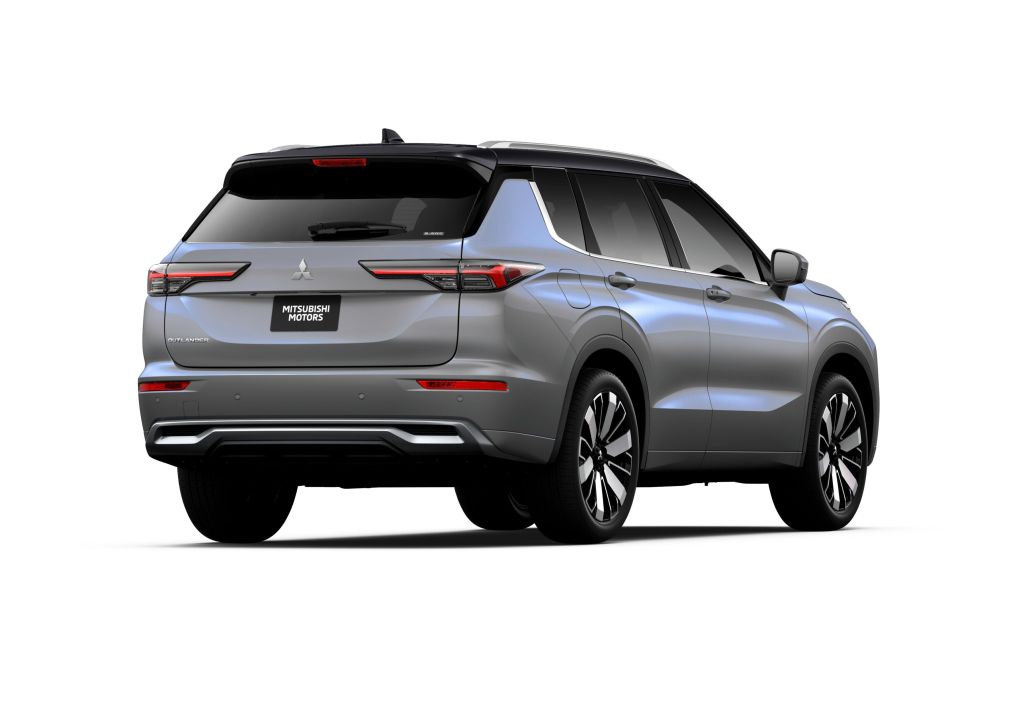
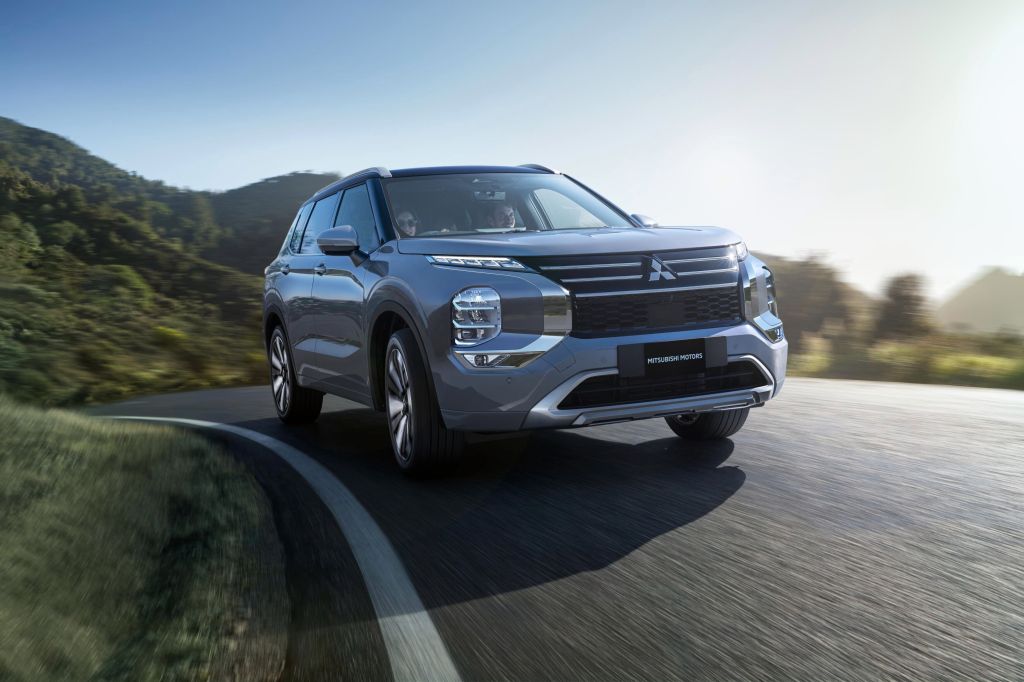
The Outlander has been a popular seller for Mitsubishi and it’s been through a few generational updates. I’ve just had a week with the 2025 Aspire version.
This is a mid-level version, which starts the range at around $41,000. The Aspire costs a fraction over $48,000.
There are three levels of equipment, 5 or 5+2 seating versions, front or all-wheel drive and petrol or PHEV powerplants. The petrol powerplant in the car I drove is a 135kW 2.5-litre, 4-cylinder, with a smooth 8-speed automatic transmission.
It’s significant that the Outlander scored in the top 5 sellers in Australia most months last year.
In announcing the latest updates, Mitsubishi said: “As a core market for Mitsubishi Motors globally, Australian market feedback played a significant role in further improving the updated Outlander’s steering, ride and handling, tuning it to further suit Australian conditions and buyer requirements with a new tyre specification.
“There’s also an incredible new suite of Yamaha audio systems that further enhance the driving experience, while the refreshed exterior, new alloy wheel designs, interior and improved infotainment systems add further presence and sophistication.”
In many respects, it’s an innocuous vehicle. It blends in with everyday modern traffic… Not huge, but decently spacious. Well appointed without being pretentious.
What I did note, was that it is very well built. The fit and finish inside and out is excellent. I’m pretty critical about this and can say that in this respect, the Outlander far outshines the Chinese offerings in the same price range.
The same with on-road dynamics. While it might not be important to all drivers (and clearly isn’t to many who find cheap Chinese vehicles adequate) the Outlander drives nicely, handles well, brakes competently and manoeuvres confidently without being overtly sporty or weak. That gives confidence.
The electronics are well resolved too. While every new car is laden with tech needed to achieve their ANCAP 5 points for safety, some brands have annoying, badly calibrated and intrusive systems, Mitsubishi have developed a good, mature usability in this respect.
Mitsubishi has been around a long time, which explains some of the above – but should also give buyers confidence that they’ll still be here well after the long warranty has expired.
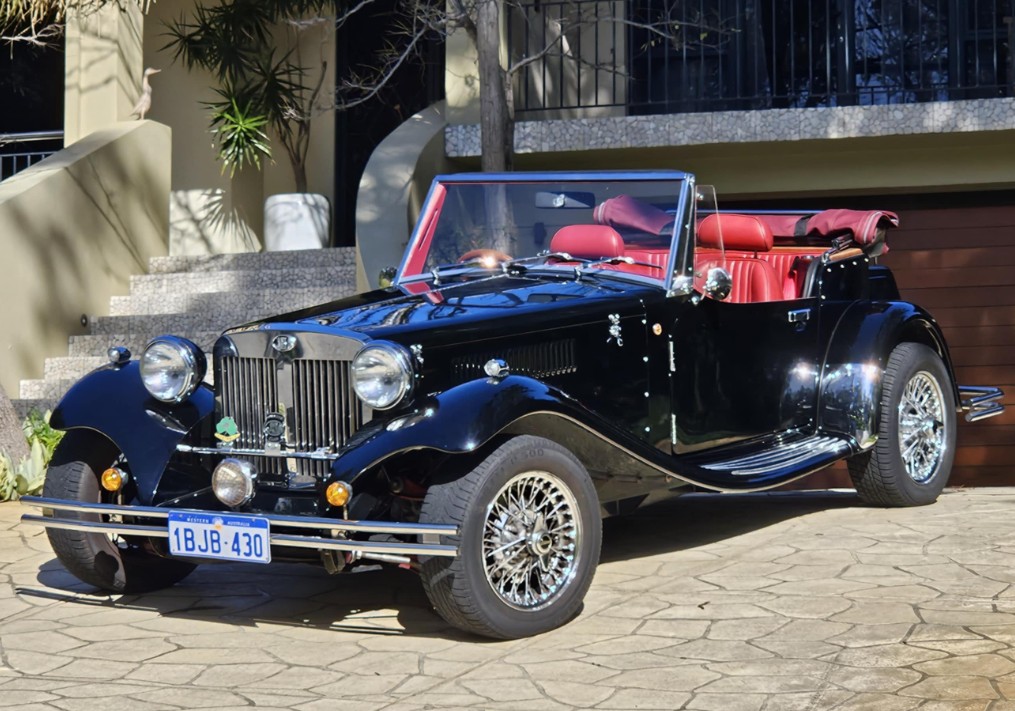
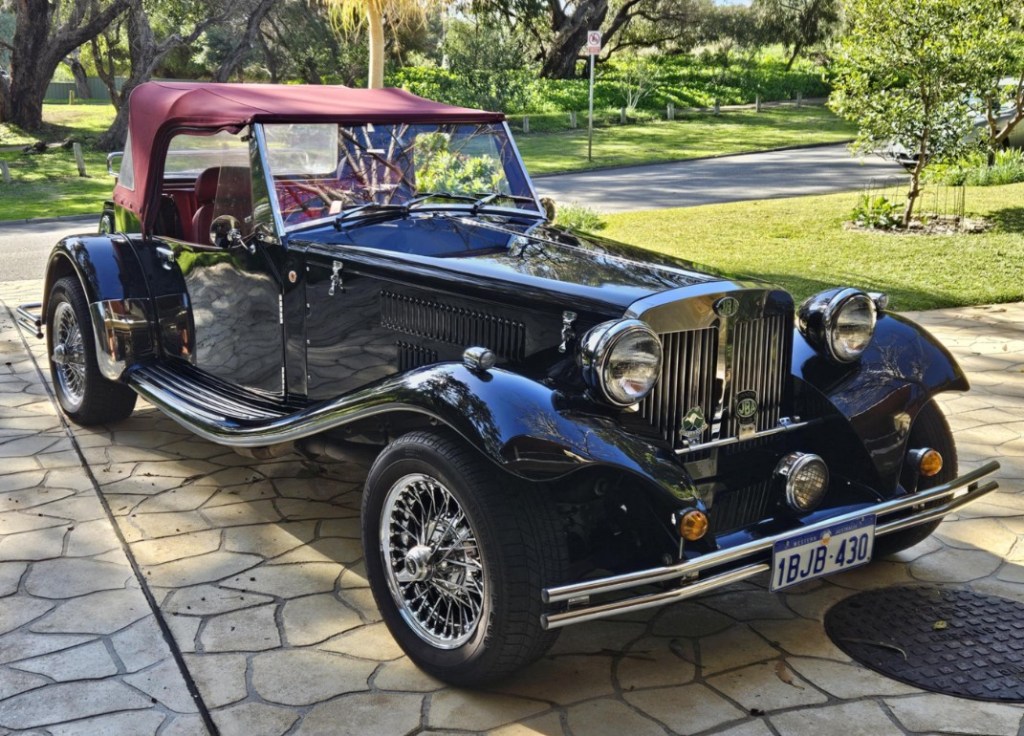
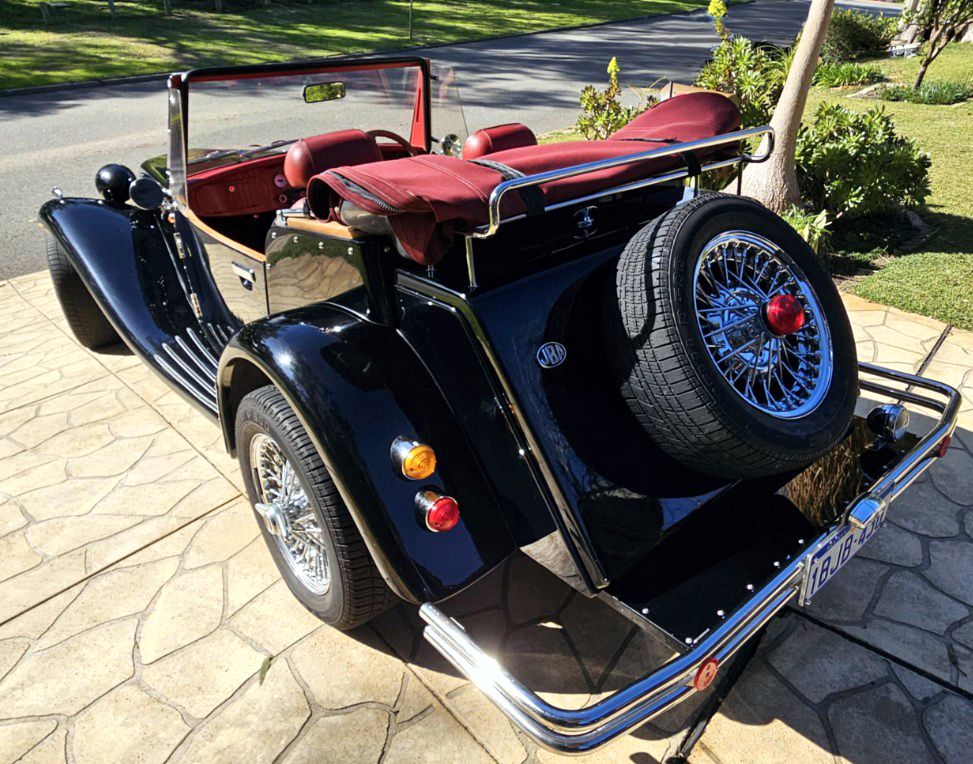
JBA was a British designed component car which met with more success than most – from 1982 to 2004. Fraser Auto Sports began marketing JBAs in Australia with an interesting process, whereby buyers could attend sessions with Fraser to build their cars together.
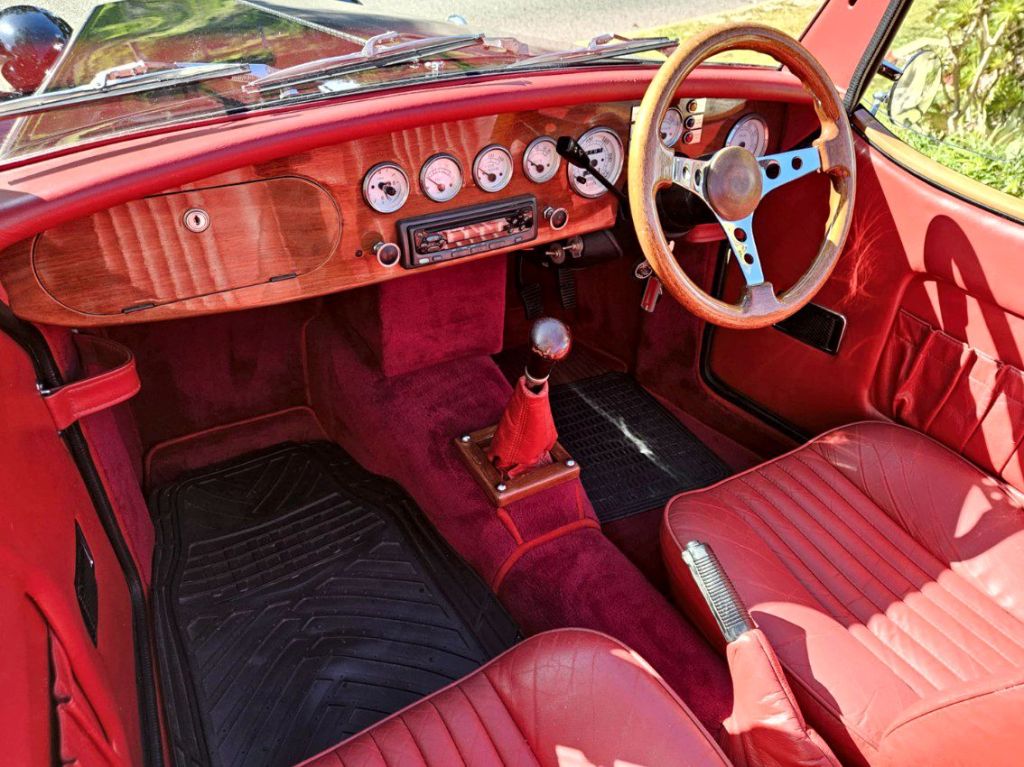
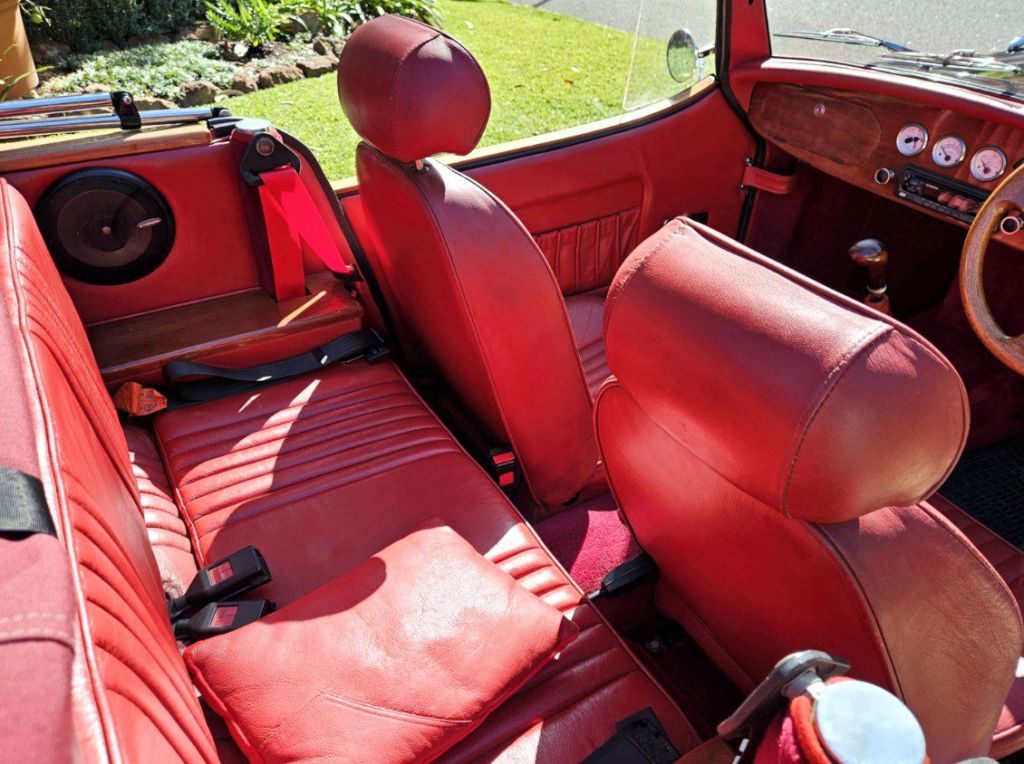
This car was owned and built by Murray Fraser for his wife Sue. As a demonstrator for the possibilities with a JBA, great lengths were taken to ensure the best build and specs. It was fitted with a Toyota Supra V6 engine, giving excellent performance. This car features red leather interior, polished woodwork, chrome wire wheels and more. It’s not an amateur build.
Fraser sold the car after a while to a buyer who kept it until May 2003 when the present owner’s husband purchased the car. He passed away ten years later and the car has seen limited use since.
The car starts instantly, runs as smoothly as the well-respected Supra motor is famous for and the car has the Toyota 5-speed gearbox. With relatively light weight, it offers excellent performance.
It has covered just 27,000km since being built. This is clearly a very well-built car, which offers a lot of fun along with practicality of modern running gear. It gets a lot of positive attention when out and about… and represents tremendous value for money.
Fully registered 1BJB430.
Please request an email with full details and more photos, from paul@classicrally.com.au
Whilst every effort to ensure accuracy is made when preparing the description of a car, much of the information is provided by the owner and cannot be guaranteed to be accurate and complete. Some errors and omissions occur occasionally and we cannot be held liable for any loss or damage arising from incorrect or incomplete information or any reliance which might be placed on information provided. Any potential purchaser is advised to make his or her own independent investigations or inspections to determine title and whether a vehicle is suitable for purchase.
The place is Melbourne, the year is 1970, the man is Michael. He’s 35 years old, has become a leading architects – and he’s quietly pleased with himself.
Michael has worked hard. After school he went to university, enrolling for Architecture which would allow him to indulge in his pleasures of design, engineering and aesthetics. The same criteria he applied to his other passion – cars.
As a kid Michael always eagerly awaited looking at each month’s latest car magazines, especially Melbourne’s own Motor Manual.
As Michael pored over the pages of the latest magazines he loved the flamboyant styling of the American designs and the sophisticated engineering of some of the European cars. These cars were a world away as only very occasionally would he see anything like these cars on Melbourne’s roads.
As soon as he finished university there was a job waiting which meant an income – to buy a car. Michael went straight out and bought a used Volkswagen Beetle, just like the car which had won the demanding Redex Round-Australia Trial the year before. It proved unbreakable even when asked to perform challenging tasks – like a memorable weekend trip with a mate and three girls to the snow…
But a year later the Beetle would be sold as Michael followed his dream and took off to England for a year’s working holiday. Europe in the late 1950s was an eye-opener for any car enthusiast from the Antipodes. While Michael had his year away, his enthusiasm for European design – of products, architecture and cars increased exponentially.
He returned to Australia confident and with a mission… and set up his own architectural firm, keen to promote the latest skills and knowledge he’d brought back with him. And Melbourne welcomed him with open arms, the business flourishing from the start.
So with his success came a strengthening income. And that meant indulging in cars. After briefly having a “sensible car”, Michael started being drawn to cars with a bit more performance and panache. In 1965 Michael bought his first brand new car – a modern Triumph 2000.
Two years later a very unorthodox new car was announced in Germany – the NSU Ro80 – which would become known as a seminal design and acknowledged as one of the most important cars of the 20th century.
People knew NSU as the world’s biggest motorcycle manufacturer and it had begun its postwar car production with the little rear-engined Prinz, which had also been very successful. Cashed up, the company took on their engineer Felix Wankel’s radical rotary engine design and developed a completely new car around it.
That was forty years ago today – and for Michael like many others, the Ro80 was an amazing vision of motoring in the future. It had the incredible twin-rotor Wankel engine, front wheel drive (which few cars had in the 1960s), had semi-automatic transmission, and unusually sleek aerodynamic bodywork. Inside it had a flat floor with no transmission hump, comprehensive instrumentation and all the modern equipment. He’d never seen anything like it.
While he admired the Ro80 in magazines, it wasn’t until 1969 when Michael saw one in Melbourne. He was walking outside his offices in South Yarra when he heard an odd humming engine sound behind. Looking around, he swivelled on his heels, grinning widely as a bright orange Ro80 cruised past. Just released in Australia, this was the coolest car Michael had ever seen!
He called the Melbourne dealer Regan Motors who sent out a brochure – and Michael was hooked. Two weeks later he cautiously drove home for the first time in his own Ro80. It was an expensive car, costing him $6400, when his brother had just bought an impressive new Ford Falcon GTHO for $4500 and his neighbour had paid just $2600 for new a Peugeot 404.
Michael, always the individualist, could justify the expense in two ways – firstly, business was good enough to indulge himself and secondly, there was nothing on the market like the Ro80. It had a long wheelbase and cushioning ride like a big French car (but a Citroen DS was not for him), had the build quality of a Mercedes, plus modern, sure-footed handling and four disc brakes (when big Australian cars would make do with drums all round for the next decade).
The car was a talking point, being the centre of attention wherever he went. Which perfectly suited Michael’s cool image…
Once Michael had mastered the gear-change (touching the gear-knob activated the clutch) and became at home with the low torque but high revving characteristics of the rotary engine, it became a very smooth car to drive.
On country roads the aerodynamic shape kept the car stable and the Recaro seats offered support and comfort like few other cars could equal. It cornered at speed with the composure of a steely supermodel and encouraged Michael to take country drives.
NSU had begun with a clean sheet, the Ro80 having no carry over parts from any other car. It was an expensive operation, and one fraught with risks, especially with a completely new type of engine. The company had produced a small run of single-rotor Wankel engined Prinz Spiders as a test, but the Ro80 would be the first mass production application of the engine.
Felix Wankel had conceived his novel engine before World War 2, but it wasn’t until 1957 when at NSU, he tested his first engine. This simple, yet sophisticated engine produced excellent power for a small capacity and small physical size.
Car manufacturers became excited by the potential they saw in the Wankel rotary engine and NSU sold licenses to many companies including Mercedes-Benz, General Motors, Citroen and Mazda.
NSU adopted a ‘wedge’ low-front, high-rear aerodynamic shape for the Ro80 along with faired-in, shaped headlights, deep windows and other details which would become expectations 20 years later, but were quite revolutionary for a 4-door sedan in 1967.
The package was instantly acclaimed by the media and the car won the coveted European Car of the Year award among its many accolades.
But all was not well… The company had felt compelled by commercial pressures to launch the car before it was completely ready – not an altogether unfamiliar story in the car world. Whilst the engineers and designers had achieved a truly vast undertaking in developing a totally new car, the engine would prove to be its Achilles’ heel. Rotor tip seal failures caused problems which would eventually take years to resolve.
While the company openly and without hesitation replaced faulty engines in cars for customers under a generous warranty, the replacement engines were no better. Many owners would find that engines lasted just 30,000km. That said, there are still examples being driven with their original engines decades later.
Before Michael took delivery of his Ro80 in Melbourne, the factory had already sent out an engine upgrade kit which was installed in his car – like all others in Australia. But it was to no avail. As much as Michael enjoyed city and country driving in his NSU, after four years his engine cried ‘enough’ and he faced the question of what to do. He enjoyed and admired this car more than any other car he’d seen, but faced a big cost and questionable future.
Only 164 Ro80s had been sold in Australia and they were no longer being imported, with the last example registered in 1973 (though production for Europe continued until 1977, with over 133,000 built). Having spent enormous amounts developing the Ro80, and replacing countless engines, NSU had also been spending money developing another completely new car – a slightly smaller 4-door sedan, to take the rotary and a newly developed 1500cc conventional engine. The once great NSU, started in 1905, had been brought to its knees and Volkswagen stepped in with an offer which was accepted in April 1969, NSU merging with Audi in a new arrangement. The smaller NSU sedan was put into production as the Volkswagen K70, giving the company its first water-cooled and first front wheel drive model.
All this didn’t bode well for Australian Ro80 owners as there was no intention to market the cars here again. Sadly for Michael, his love affair was over, cut short. The car was sold and while he owned a string of other luxury cars later, none filled him with pride like the avant garde NSU had – when he could cruise down St Kilda Road confident he wouldn’t see another car that measured up to his technical masterpiece pass the other way.
TECHNICAL MARVEL
The rotary engine was at the heart of the Ro80 experience. The engine has a rounded triangular ‘piston’ rotating in a housing with combustion chambers around the outside. The nominally 995cc twin-rotor Ro80 engine used twin Solex carburettors and produced 86kW – which could get the 1210kg sedan to over 180km/h. Light and physically small, it sat low in the engine bay, giving a low bonnet and centre of gravity. A feature is that the higher it revs, the smoother it gets – and the exhaust note progresses from a hum to a buzz.
The transmission was unusual too. A 3-speed semi-automatic had the clutch activated by applying pressure to the gear-knob. A torque converter kept things smooth. First gear was down and left, with second and third in the right plane – reverse above first, and Park to the left again.
The Ro80 was full of novel technical solutions, such as the front disc brakes mounted inboard and very easily accessed from under the bonnet for pad replacement. Power-assisted ZF rack and pinion steering was fitted and the car has coil spring suspension all round. Alloy wheels were among the options – and a real rarity in the era.
Aside from NSU, only Citroen and Mazda marketed rotary engined cars, and Suzuki a rotary motorcycle. Mazda continues today with the RX8, after producing well over a million rotary cars – including the 1991 Le Mans wining car.
ENGINE ALTERNATIVES
With the reliability problems that the Wankel engine had, owners took to fitting alternative motors. In England, the apparently strange popular choice was the Ford V4, which we saw in service in Transit vans, but several passenger cars in the UK used it. Though cheap, compact and readily available – it really wasn’t that nice…
In Australia we were lucky to have readily accepted Mazda’s rotary engined models in significant numbers, and their engines were a more available, sensible and obvious choice – and in keeping with the original design. And they have “License NSU-Wankel” cast in the tops of the housings… The 12A has always been the most popular Mazda engine for this conversion, and with an adaptor plate, makes a relatively straightforward conversion and gives a handy power boost over the original NSU unit.
Today many owners around the globe are fitting original NSU engines, as their cars are only doing the sorts of mileages that many collectors’ pieces do, and should last many years.
Paul Blank
The author owned the white Ro80 shown in these photos for eleven years.