
Perth’s Bentley Police Cars
by Paul Blank
Thinking outside the automotive square is not a new phenomenon. Perth in Western Australia is one of the most far flung outposts. Originally a British colony, its residents are often proud that it is the most isolated capital city in the world.
In the early days of motoring, the cars of Perth generally fell in to two groups, small English cars and large American cars. Some European makes also flourished briefly, mainly with smaller cars too. West Australian roads provided a tough environment for cars, especially with the vast distances and few sealed roads outside of the Perth metropolitan area.
By the late 1920s the Perth Police had a lot of ground to cover, and a ramshackle collection of vehicles for patrols – few of them very capable in a pursuit. The best were four Ford V8s and a Harley Davidson motorcycle they had in addition to some worn out cars as old as 1913.
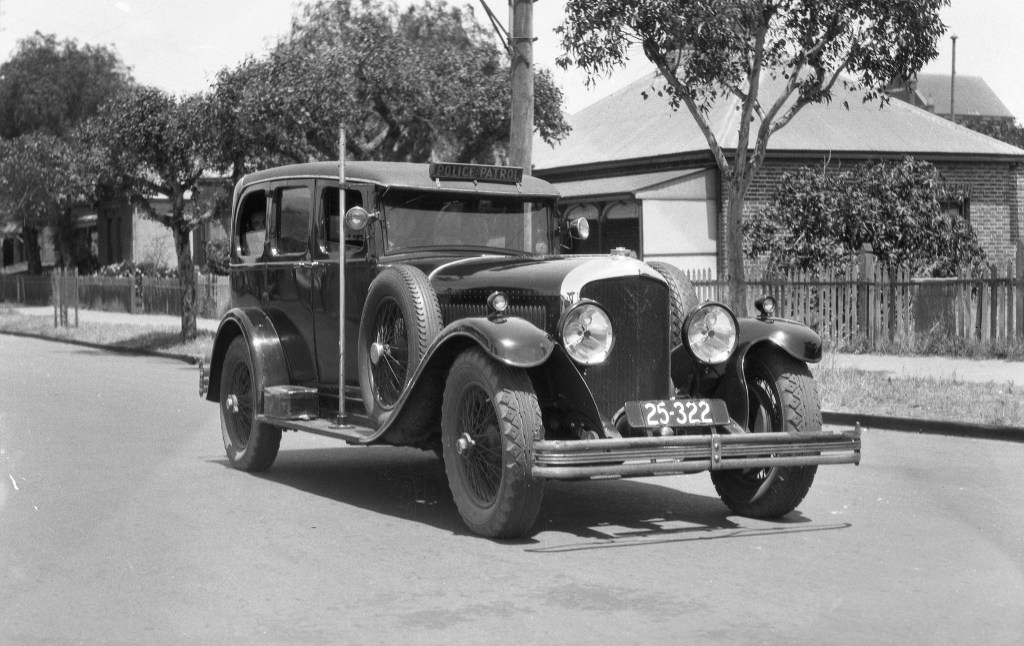
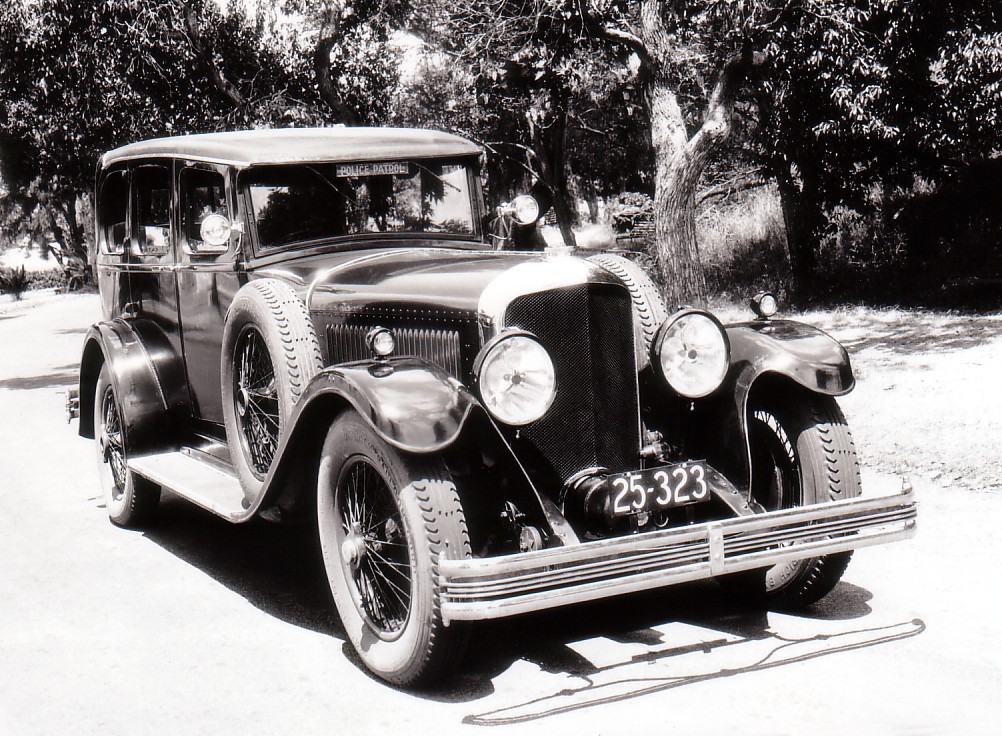
While the start of the Depression was beginning to bite in Western Australia, in April 1930 the Police Commissioner gave a recommendation to Parliament which led to the Agent General in London ordering two new Bentley Speed Six chassis for Police use. This is as remarkable as a Police department ordering new Bentley Arnages today… How could such extravagance be justified?
Somehow the idea was dreamt up that while Perth needed new Police stations, if these cars were to be equipped with two-way radios, it would obviate the need to build ten stations. A pair of Bentleys would cost less than ten buildings. And everyone seemed to like the idea…
Two-way radios were a novelty in 1930, and the Police Bentleys would become the first police cars in the world to be fitted with such units.
The Daily News announced in an article on May 12, 1930, “War on Motor Crooks”. The article went on to explain that “Two high-powered Bentley motor chassis, said to be capable of overtaking any vehicle likely to be seen on Western Australian roads are now on the water bound for Fremantle from England.”
“Within the next week or so four wireless operators will be selected from the many applications received. The equipment of the two patrol cars will mark an important stage in the battle against Perth criminals, many of whom are moving with the times by exploiting motor power to aid them in get-aways and in rapid moves.” The photograph was captioned “Capable of overtaking any motor car bandit”.
The two-way radio system would prove to be a challenge. Whilst some police departments around the world had patrol cars fitted with radios which could receive messages, none had been able to transmit messages. The AWA company was very keen to equip the Bentleys with two-ways, and agreed to a special rental arrangement for the first three years.
Interestingly the radios operated using only Morse Code, not voice. And they were vast units which took up much of the rear compartment of the Bentleys. An operator had to sit to the side in the rear at all times the cars were in use. The Morse Code key was set up on the pillar behind the rear door so that the operator could rest his arm on the radio. Presumably whilst driving this was a risky endeavour.
With its batteries, the system weighed several hundred kilograms. So it’s lucky that the 6.5-litre Speed Six had plenty of power. What Bentley supplied was the same as the 1929 Le Mans racing cars, with the exception of a different compression ratio, camshaft timing and final drive ratio.
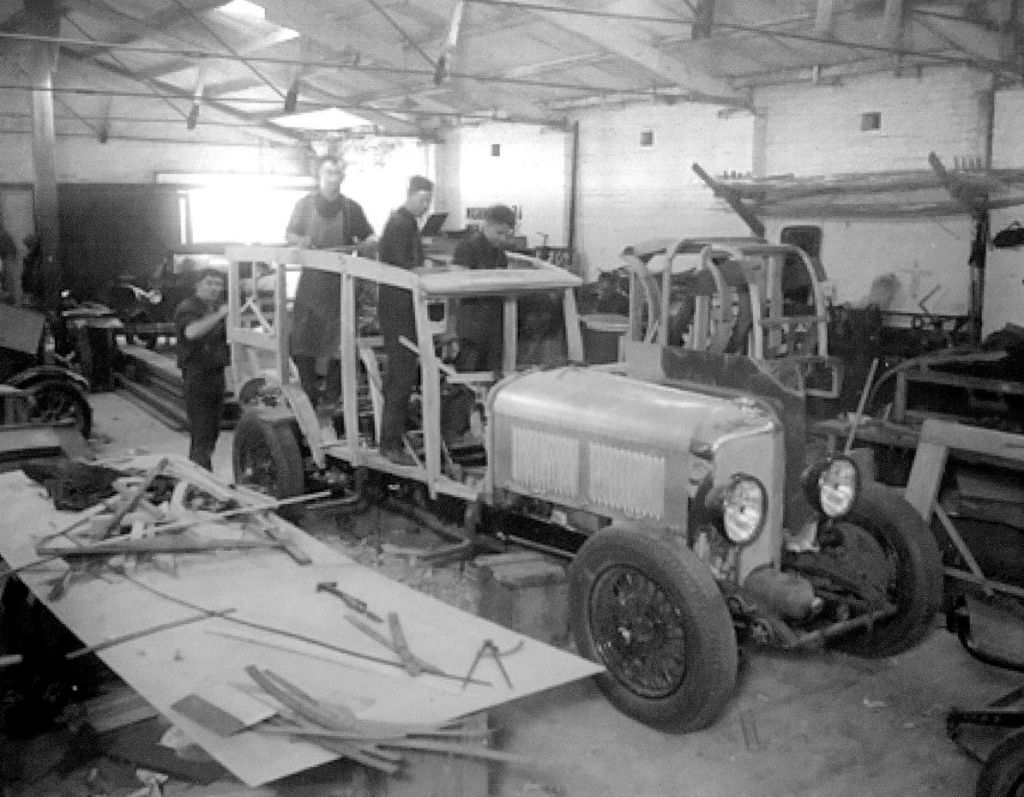
Just as well also, because the Bentleys were fitted with heavy bodies. Bryans Motor Body Works, a small operation in Perth constructed the two bodies exactly the same, using sturdy jarrah for the body frames, and aluminium for the panels. The cars finished up with rather American style bodies, which had been specified to be particularly strong, given that the intended use of the Bentleys would be very demanding.
They began in service in October 1930.
Even with a full crew, the two-way radio and other police equipment and the heavy bodies, the Bentleys were able to perform well. Even after some years of use, in 1935 the Police News noted that one of the cars had been timed at 92mph.
In his 1931-32 report the Police Commissioner stood by the Bentleys, stating “There is no doubt the efficiency of the Department has been considerably increased by the fact that a mobile police station can now be communicated with a moment’s notice.” There was also a detailed analysis of the per-mile cost of all Police vehicles, with the new Bentleys costing less to run than a 1913 Talbot still on the fleet.
It was all good justification for the huge sum of money which had been invested in these cars – however it was not all smooth sailing for the Bentleys.
The two-way radios were not the best performing units imaginable. The cars were largely used for night patrol – between the hours of 9pm and 5am. Perth Central Station was not ideally situated to receive communications from the west or south of the city, so one car was kept on the high ground of Kings Park adjacent to the city centre and acted as a relay for messages for the other car as it roamed the streets. Various antenna setups were tried on the cars.
A crew of four were used in each Bentley – a driver, a radio operator, a sergeant and a ‘runner’ who sat next to the driver ready to leap out and chase after any miscreants on foot. The cars were fitted with sturdy leather straps bolted to the floor in the cabin. One policeman who was in a Bentley crew recalled years later that holding on to the straps was critical when the cars were at speed, otherwise passengers would be thrown about or hit their heads on the roof. The lucky radio operator could be strapped in place.
If the radio system left something to be desired, then the sheer performance of the Bentleys proved their worth many times. The Police claimed the cars were capable of a top speed of 114mph, and one was said to average 96mph on a journey to a house fire in an outlying suburb. These were exaggerated claims – but if ever a car was going to have urban myths develop while it was in use, it would be one of these Bentleys.
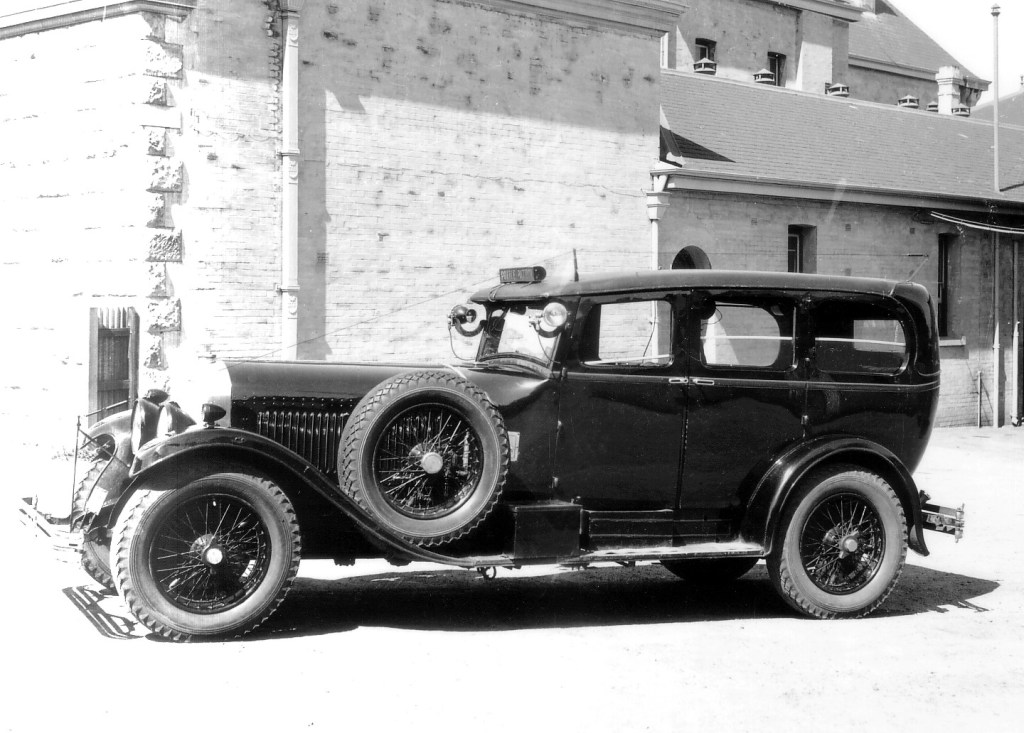
The Bentleys were christened “Gently” and “Softly”, though they were well known for their noise as the cars roared around Perth streets. Perhaps Gently from Gently Bentley and Softly to conform… The cars were also sometimes sent to remote rural areas for major crimes, where radio contact proved invaluable.
During World War Two one of the cars was fitted with a gas converter. It produced less than 7 miles per gallon in that configuration and became the car left in Kings Park to transmit messages.
By the late 1930s the radio equipment had been removed. The cars were well known around Perth and in 1947 The West Australian newspaper noted “There has hardly been a major crime committed in this State which has not been affected by one or other of the Bentleys.”
After the war was over, rationing continued and the Police Department decided it was time to sell off their well-worn, seventeen year-old Bentleys. In 1947 the cars were advertised on the Government Tender Board, incorrectly listed as Bentley 4½ litre cars.
Arthur Vance had always thought the Police Bentleys were wonderful cars and when saw them listed on the Tender Board, successfully bid £450 for the pair of cars in January 1948. Unable to afford both and only really wanting one car, Vance had arranged with an acquaintance, Ron Grey to take one car for £200. For his extra £50 Vance had the choice of car and the considerable quantity of spare parts. He chose the car which had not been converted to a gas producer.
Grey proceeded to use his car covering 40,000 miles until in 1962, having covered 300,000 miles it was involved in an accident and the body was scrapped. The car was sold to a Victorian collector after which it changed hands a couple more times, ending up with Graham Miller who has owned it for many years. It wears a fabric-covered touring body which was constructed in England.
The car Vance bought, had covered 143,000 miles. Like its sister car, the Bentley was put to work, its 150bhp pulling power being quite useful for lugging. The bodywork was quite poor, having deteriorated with seventeen years of hard work often on rough roads, and Vance’s use of it as a delivery truck didn’t help.
By the late 1940s the failure of the differential pinion bearings meant that Vance put the car off the road. Vance removed the Bentley’s body in preparation for a full rebuild of the car – and buried the body in a back yard…
Although this was intended to be a short term project, subsequent industrial accidents meant that Vance did not touch the dismantled car for 25 years. In 1977 Vance came to a sharing agreement with Jim Runciman to rebuild the Bentley. In the intervening years Vance had resisted many offers to sell, remaining keen for the car to stay in Western Australia.
The dismantled car was shipped to Victoria where much of the work was done by specialists.
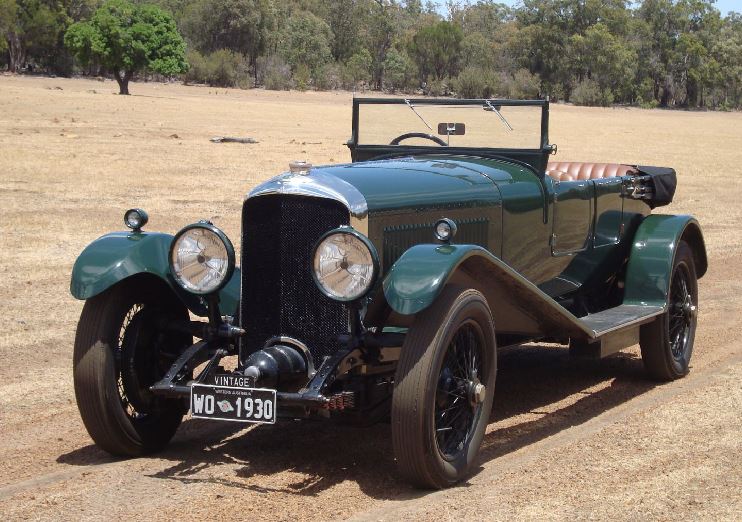
A new open tourer style body was built, wearing aluminium panels. The bonnet is still the original item. There were many details to attend to – instruments were rebuilt, windscreen pillars and other small items were cast, hinges and door catches and other items were sourced. Jim Runciman recalls “The engine was rebuilt and in October 1987 it fired up for the first time. Although the car was far from drivable this was a momentous occasion as the car seemed to come alive.”
A couple of the ‘old boys’ from the police force who’d used the Bentleys visited Runciman to see the car in the 1980s “One had tears in his eyes” recalls Runciman.
After many years of work, the Bentley was finally finished and in 1996, 48 years after it was last driven, the Police Bentley was back on Perth roads.
Vance has since passed away and the car is now wholly Runciman’s – the second private owner of a car over eighty years old. It has been used extensively, having been rallied in many parts of Australia and taken to South Africa for two rallies. The car has been in parade laps at the Australian Grand Prix in Melbourne and has competed in the Phillip Island Historics as well as the Classic Rally in Western Australia.
“When we attended the VSCC Silver Jubilee Rally in Victoria, by chance I decided to look at the chassis numbers of the three Speed Sixes that were there – and they all had successive chassis numbers.” Runciman says.
Runciman has done over 20,000 miles in the car, one of which was a trip in 2002 to Uluru (formerly known as Ayers Rock) in central Australia, along with three other Speed Sixes. So nobody could say this car has been pampered – ever.
“It’s a great cruising car,” Runciman enthuses, “on a moderately winding road it’s capable of 85-90mph and even after 4 or 5 hours is still comfortable. But it’s a pig to drive in city traffic because of the heavy steering and crash gearbox – it gives a wonderful insight into motoring of that era”.
In some ways it’s a shame that the original Police bodywork is no longer there, but in 1949 it was really just rubbish. But it’s wonderful that these cars still exist and they are testament to the amazing decision to order the Police Bentleys made over 80 years ago.
In a letter from Vance, published in Motor Sport in May 1949, he noted “When we took delivery of the cars from the plant engineer’s workshop, the parting was too much for the mechanic who assembled them and had ‘nursed’ them through their long and chequered career, such is the mark these grand old cars leave on one.”
Copyright Paul Blank
 Paul Blank