Looking back at a drive and review of a special Lamborghini
By Paul Blank
Part way through its model life, Lamborghini has taken an unusual turn with its popular Gallardo model. Normally improved high performance models added to a range get more and more high tech equipment added or become stripped out noisy faux competition cars.
Well, Lamborghini has taken a different path. Along with the updates that the other Gallardos have gained (predominantly bigger, more powerful engines), a limited edition version called the Valentino Balboni is the new star model. The biggest difference is that the Balboni is rear wheel drive only – while all Lamborghinis since the Diablo gained another diff, have been all-wheel-drive. It’s been a major point of differentiation with the Murcielago and Gallardo, helping make them sales successes. So it’s an interesting and important change of direction to see a lighter, simpler 2-wheel drive car released.
It features a 5.2-litre version of the V10 engine and a 6-speed manual or optional E-gear transmission. My test car had E-gear, though I think I would have preferred to shift gears myself – there’s something about clacking the gears through an aluminium gate… I drove the Balboni (the first in Australia) on Barbagallo Raceway, and fortunately also had the chance to compare its on-track performance with the new LP560-4 Gallardo (560bhp, 4-WD). While the all-wheel-drive model has a surefootedness, it’s natural inclination when pushed hard into a corner, is to understeer.
Not so the Balboni. Firstly, it turns in beautifully – no – magnificently. The steering response on your way in to and through a corner is spectacularly good. Push the car harder through a corner and the tail moves out, ever so controllably. Grip is absolutely confidence inspiring. Try driving a lap of a track in this car without grinning…
The Balboni feels lighter and nimbler than its all-wheel-drive sibling, even though the factory figures mark it as fractionally slower. In fact the Balboni is lighter at 1380kg (compared to 1410kg). Aside from removing the drive to the front wheels, the suspension has been changed and even the aerodynamics have seen modifications t suit the 2-wheel drive model.
The 408kW engine sounds glorious and pushes the car along completely thrillingly. Whilst this isn’t the big Lamborghini, it’s certainly a supercar in all respects.
Fit and finish appear to be up to parent company Audi’s high standards. Inside the Balboni is very well kitted out. It’s not a stripped-out competition car.
In case you don’t know, Valentino Balboni is famous as Lamborghini’s test driver, having been employed by the company since 1967. And that ties in nicely with his eponymous car being a real driver’s car.
Lamborghini plans to make only 250 of the Valentinio Balboni model, however interest and responses have been so positive that a rear wheel drive model is likely to join the range permanently – and that’s very, very good news.
Collector Peter Mullin assembled a group of cars like no other in the world. Clearly a man with as strong a focus as his bank balance, the collection comprised predominantly French cars from the 1920s and 1930s.
But these were not just any old French cars. The strength of this collection were the Art Deco masterpieces of coachbuilders such as Figoni & Falaschi, Portout, Saoutchick and their like, whose overt voluptuous shapes in metal were a high point in automotive and industrial design.
To see one of these cars in a museum is always a highlight, but to have a collection based on them took visitors to sensory overload. In a good way.
Bugatti, Delage, Talbot Lago and Delahaye were the main recipients of these beautiful bodies, but the collection is broader than this. And it’s not just cars from the high-point of 1936-1939, which helped tell much more of a story.
The accompanying photos say much more than I can describe about how beautiful these cars are, many of them unique examples.
Mullin also bought other significant cars – for example, the Bugatti Type 23 Brescia which was pulled out of an Italian lake several years back. Thankfully, displayed in as-found condition, Mullin having rescued the car from a fate of being restored. If the had become subject of a restoration, it would have lost all its character, history and uniqueness. There had been ill-formed plans along these lines before Mullin stepped in as the purchaser. Well done Mullin for saving the car – even though it cost him more than any other decent Brescia might have.
You’re probably aware of the famous Schlumpf brothers, whose vast collection in France was lost to them in the 1970s when they absconded to Switzerland in fear of their lives when unions revolted and discovered the hundreds of restored cars… This collection is now the French national motor museum, Cite del Automobile. However, the brothers had a cache of some 30 or so cars which were kept elsewhere – all in need of restoration. Known as the Reserve Collection, these cars remained with the Schlumpf family until they won a legal wrangle to retain them – in the last decade. This achieved, the whole lot were sold to Peter Mullin who displayed some of them at his Oxnard museum. Seeing a Bugatti turned into a pickup in the 1940s is a unique sight today.
Additionally there was an array of Art Deco furniture and sculpture and a sizeable collection of Rembrandt Bugatti’s furniture. The brother of car maker Ettore made (rather ugly) African-inspired furniture which is highly collectable and valuable today. Mullins had the world’s biggest collection.
An astute businessman, the story goes that Mullin was inspired by an Art Deco French car used in a photo shoot of a property, however fellow local millionaire enthusiasts in the US tell me this is a bit of a concocted story and that it was good business to buy such cars. Either way, Mullin assembled a spectacular collection the likes of which had never been seen.
More recently the collection had been expanded with several coachbuilt Citroen DS based cars.
After Mullins’ death in 2024 the museum was closed, some of the car auctioned-off and others displayed at the Petersen Museum in Los Angeles, of which Mullin was a director.
Failure is something that sports car makers have faced in droves. Aspiring sports car manufacturers, in all parts of the world, have tried to crack the code to success. Many have tried, most have failed.
A popular sports car needs to be cheap to buy and run. It needs to be attractive. And above all it needs to be fun – by the bucket load.
There have been some very out-there designs and some just plain dreary attempts. Few have hit the nail on the head, and unlikely though it may seem, the Goggomobil Dart did.
In spite of Australia’s warm climate, very few companies have designed and made open cars in the Land Down Under.
New South Wales man Bill Buckle (who I was fortunate to know) was to become a successful importer and Toyota dealer. He had developed his own Ford Zephyr-engined sports coupe, not unlike an AC Aceca, called the Buckle GT. Announced in 1955, it was one of very few sports cars of the era to achieve a level of commercial success, with 24 cars reportedly made, some gaining success in motorsport. Using a fibreglass body, the GT was a fairly sophisticated design both technically and stylistically.
This was to provide Buckle with expertise in design and manufacturing which would see him on the way to success, but with a most unlikely car.
Buckle’s company had been assembling cars for other makers in Sydney from CKD kits and he had searched for a vehicle for which he could have manufacturing rights. In 1957 he reached an agreement with German microcar producer Hans Glas, for their diminutive Goggomobil.
It took some persuasion, but Buckle convinced the Germans that he should manufacture the bodies for the Goggomobils fibreglass, rather than steel like the originals. These were made exactly replicating the design of the steel body, utilising the same fittings and hardware. The benefits of fibreglass for low volume production were obvious to Buckle, though at the time few companies around the world had yet embraced the material.
The running gear of the little Goggomobil was ideal for having alternative bodies fitted, having a pressed-steel floorpan with all running gear attached, much like a Volkswagen Beetle. The rear-mounted engine was an air-cooled twin of just 300cc, and had been proven to be extremely reliable. Later, an uprated 400cc version was used.
Sales of the Goggomobil sedan and Coupe grew strongly in Australia and Buckle decided to expand the model range. Using the existing platform and running gear, he designed his own very sleek, 2-seater open body. A prototype body was created in aluminium and moulds taken from it for fibreglass bodies to be made.
One of the innovations of the body was that it was essentially made in two halves, a bottom section, and the top with a lid let into it for access to the motor. There were no doors or front bonnet. A rubber strip ran around the centre of the car where the two halves joined. This technique was taken up by Lotus in the 1970s.
Above: This Dart was flown to England where Buckle’s sister Anne met the car.
The windscreen was the rear window from a Renault Dauphine and the car wore the same tail-lights and rear vent as the Goggo sedan. Apart from the stylish faired-in headlights, a chrome strip down the centre of the front, wipers and badges, there was nothing else fitted to the exterior.
The folding roof was simple to operate, which was fortunate as it took a very agile person to get in or out with the roof up – remember, there were no doors.
Weighing only 345kg the little Dart made the most of its tiny engine’s power and torque. It was low enough geared to feel like there was some acceleration and anyone stepping out of an Austin 7, a side-valve Hillman or Ford Popular in 1959 would have been impressed.
The Dart was very well priced, which no doubt added to its popularity. It cost thirty percent less than a Berkeley and over 40 percent less than an Austin Healey Sprite.
The car was an instant hit and in Australian sports car terms, it sold very well. By 1960 Buckle was employing 50 people to assemble their Goggos – nine of them women, as they proudly pointed out at the time. Production was up to 86 vehicles a month. Eventually 5000 Aussie Goggomobils were built, 700 of them Darts before production stopped in September 1961.
To drive a Dart today is an interesting experience, and a good one. I was fortunate to have Bill Buckle’s sister’s Dart in my care for over a year and drove it a lot. You lift the top the seat backrest and the entire seat cantilevers backwards and up to make entering the car easier. Step over the edge, get into the seat and while holding the side, or top of the steering wheel, drop the seat down to the floor. Bump, you’re in position. While the flat floor helps a feeling of spaciousness the small overall size of the car makes a strong impression.
The driving position is very good, legs almost straight out ahead of the driver and the wheel and gear-stick falling easily to hand. The 4-speed gear change is unusual, having a sideways throw between gears, with an upside-down, back to front shift pattern. Once you’ve got that in your head, the gearchange itself is very good to use, positive and quite quick.
For people of a particular height, like me at 6-foot, the top of the windscreen is exactly at eye level, so it’s lucky that the chrome surround is thin.
Ignition on, and the little two-stroke twin thrums into life, sounding for all the world like you’re being chased by an angry lawn mower. The air intake is just behind your shoulder and plenty of noise emanates from it. In fact, after a long drive it is quite a relief when you switch off and the noise stops.
As you might imagine, the rack and pinion steering is very light, and pleasingly direct. The car turns in well and responds much better to driver inputs than most microcars – in fact, it’s quite sporty. The Dart scuttles around very well, cornering quite flat and braking true – there’s hardly any weight to pull up.
With so much of its weight at the back, the very light front pitches and bobs a bit on the road. Push really hard and the swing-axles and rear weight bias allow the car to oversteer, according to road tests of the time, quite dramatically. I didn’t try that hard…
On the road, while everyone can overtake you, the attention that a Dart gets can be surpassed by very few vehicles.
What I did try – having heard a rumour it was possible – was to drive the Dart from the passenger’s seat. Reaching the pedals was easy, gear-change okay, left elbow on the ledge (to look cool), right hand on the bottom of the steering wheel (to look like nobody’s driving – no problemo! It did get some attention!
The press liked the Dart, Sports Car World exclaiming “performance is never exciting, although seldom is it actually depressing”. Automobiles Australia Yearbook of 1960 proudly proclaimed the Dart as “Australia’s contribution to Goggomobil progress”.
Today the Dart is a well respected microcar and very sought after. A bit of a cult following was inspired by two popular television advertisement campaigns referring to the Dart. Perhaps a hundred or more examples survive, including one in England, two which have gone to Germany and at least one exported to the USA in recent years.
The Dart is certainly a lovely and quite pure shape, it drives remarkably well and has an abundance of the crucial fun factor.
One old-time racer told me the story of a new Dart entered in a marathon 6-hour race at the Caversham circuit in Western Australia. It wasn’t exactly the fastest car on the track, and during the race, the driver was seen passing the pits holding up a newspaper as if reading it – with carefully torn out small viewing holes.
As a fun sports car the Goggomobil Dart was certainly no failure, rather, it was a great success, remaining Australia’s best selling home-grown sports car until the 1980s.
If you get the chance to drive one – Drive it! If you get the chance to buy one – Buy it! These cars are unique!
Pre-A at Villa d’Este Concorso on Lake Como, Italy– photo Paul Blank
Ferdinand Porsche was a prolific car designer and engineer, having planned many cars for other makers before beginning his own company, the first product of which was the 356. A pretty, if plain little sports car, utilising much of the thinking which went into the Volkswagen Beetle, the 356 turned out to be a runaway success.
Few people know that the Porsche marque began making its cars not in Germany, but in Gmund, Austria. Equally today, many Porsches are built in factories in Austria and Finland… 356 production moved to the suburb of Zuffenhausen in Stuttgart, Germany in 1950, taking over a Recaro seat factory, where Porsche has remained ever since.
The life of the 356 spanned 1948 to 1965, with a vast array of versions offered. So many versions were made that only a true fanatic would know them all. There were several fundamental versions over the years and a few different body styles offered. Let’s try to pick our way through the model’s development, in basic terms.
Competing in the Mille Miglia – photo Paul Blank
PRE-A 1948-55. The earliest cars, both Gmund and Zuffenhausen built, are referred to as Pre-A cars. These are pretty desirable today. Easiest way to identify these cars is the 2-piece windscreen, and from 1951 a single-piece flat screen with a bend in the middle. Three engine sizes were available – 1100, 1300 and 1500cc, each with correspondingly more performance. Power ranged from 40 to 70 horsepower. But the 356 was light, so even an 1100 engine gave reasonable performance (for the era). These cars had old fashioned lever-arm shock absorbers and no synchromesh… so pretty basic to drive. Coupe and convertible bodies were offered. 7627 were made.
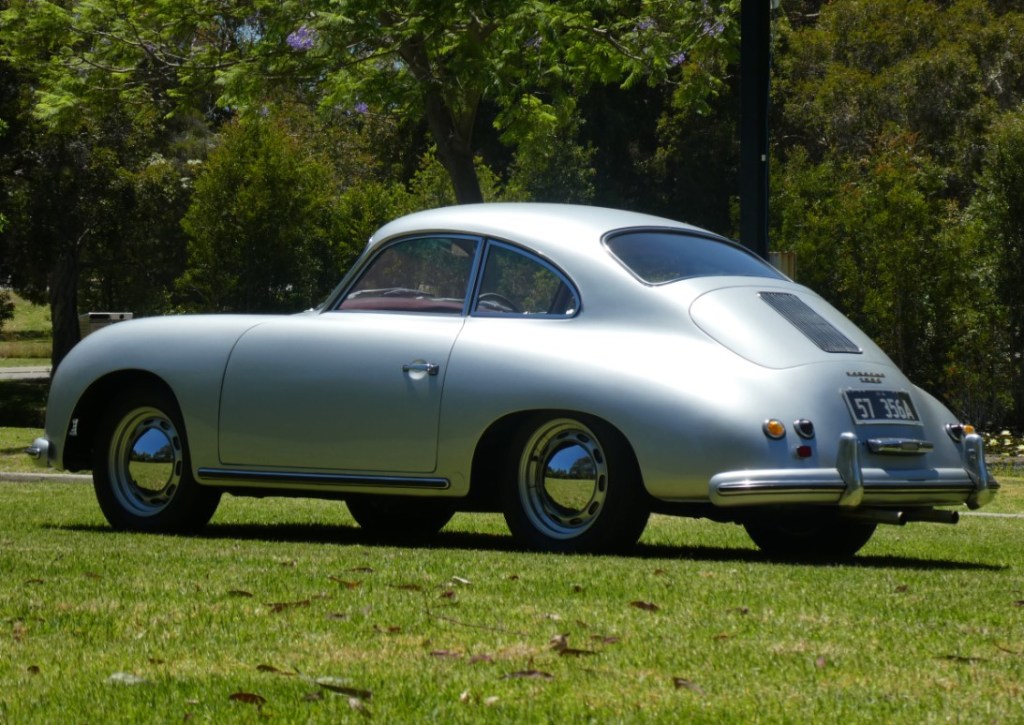
356A 1956-59. Here Porsche hit its stride. While the differences were all minor, they added up to a much improved car, which had international appeal – and sales matched. A curved windscreen and updated dashboard were the major visual changes, but moving the bumpers up slightly from the bottom of the bodywork made a significant stylistic improvement. A hardtop became available for the Cabrio. Suspension and steering were improved. But the big news was a new 1600cc engine with options of increased power. The 1300 hung in there too for a while, just for the German market. The Carrera name appeared for high performance 4-cam versions, but these are very rare. 21,045 356As were made.
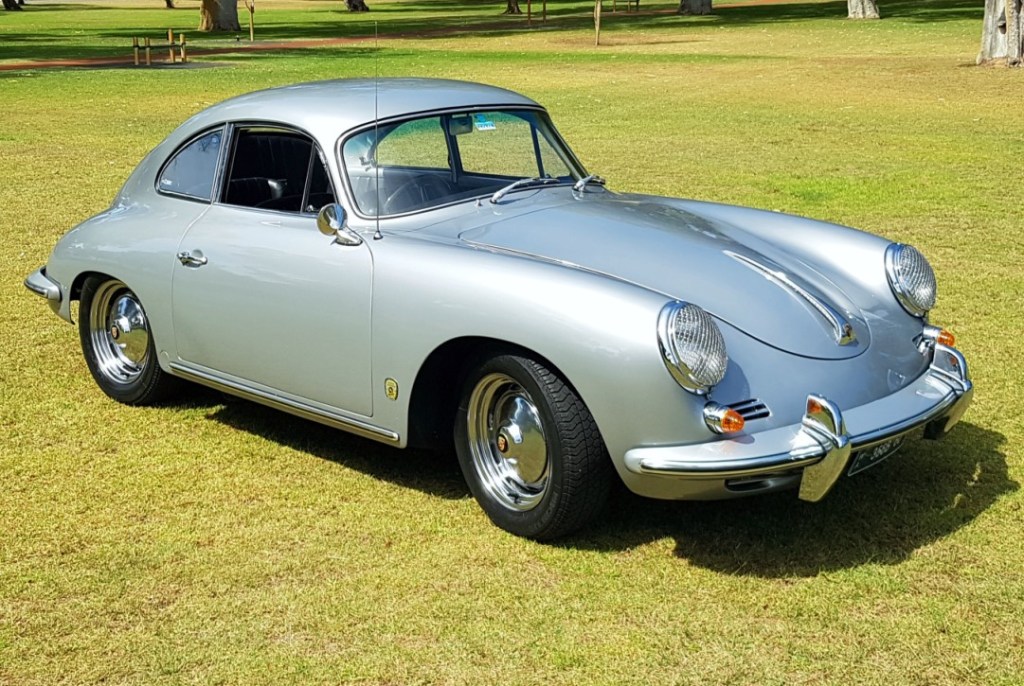
356B 1960-63. The bumpers were moved up again, bonnet reprofiled, headlights raised, quarter windows fitted to the doors and the rear window was enlarged. Two new body styles arrived – a notchback coupe and Roadster. An addition to the engine line-up was the Super 90 (90bhp). Sales continued to increase, the USA taking many 356s. 30,963 were built.
356C 1963-65. Last of the line. The 356 was getting long in the tooth by now, but the C brought with it 4-wheel disc brakes, new ZF steering, with flat hubcaps as the visual identifying feature. A raft of name changes saw the old Super now sold as the 1600C, the old 1600S, Super 75 and Super 90 became the 1600SC (with a 5bhp boost). The 130bhp Carrera 2 version continued to the end, but only 506 were made of B and C versions combined. Total 356C production was 16,668 cars.
Speedster. Worth describing as a separate model. Made to satisfy the request of US Porsche distributor Max Hoffman, the stripped-down convertible was made from 1954-1958. The cut-down windscreen gave a rakish look. Light weight (no side windows, for example, helped), and uprated engines gave spirited performance. The Speedster is the iconic collector’s model in the 356 range and many companies make fibreglass replicas to this day. Only 4858 were built (by Porsche).
DRIVING A 356
Don’t expect big performance and you won’t be disappointed. A 356 isn’t a powerhouse car, even with the trickiest engine.
However, it is a well balanced car, with sharp responses and a delicate precision about the driving experience. Remember, that the newest 356s are now sixty years old, and they weren’t the most advanced car of their time either.
On the absolute limit, the swing axles and rear engine can be a lethal combination, but rarely these days does a 356 owner really push their car hard. But the steering is pin sharp and feedback is excellent, so a decent driver can get a really good result when pushing a 356 along. The font of the car can bob up and down but that becomes a characteristic that’s easy to live with.
In typical Porsche tradition, the brakes offer little feel of progression, but are nevertheless very effective.
WHAT TO LOOK FOR
By now, virtually all 356s have been restored. That opens up a big question: How well restored? As 356s are fairly high value vehicles, most recent restorations will have been done to a high standard – a reflection of the finished car’s value. Older restorations may not have been so carefully done.
The biggest problem area is rust in the structure. Floors rust badly in all 365s and while usually repaired, a potential buyer must check how well this work has been done. This really means getting a car up on a hoist and taking a look – preferably by a Porsche specialist. The investment in their time could save a fortune. The battery box at the nose of the car can also be a rust trap.
Mechanically 356s are pretty robust. Early 356 engines (pre 1958) shared quite a lot with Volkswagens, and some cars have had VW engine swaps in years gone by when a 356 wasn’t as valuable.
Other areas such as brakes and suspension are not really any different to what you need to be looking at on any 60+ year old car.
TO BUY OR NOT TO BUY?
A 356 can be a very rewarding car. Aside from the fact that values shot upwards worldwide during 2015/16 and again in the Covid-era, there is a great deal of pleasure to be gained from a 356. They are simple cars yet provide great feedback and fun on the road. The original build quality was to a very high standard and they can be very reliable cars. But it’s the Porsche name and unique styling of the 356 which attracts most buyers. Provided you’re not looking for a fast car, and check carefully, a 356 can be a pretty safe buy.
Above and below: A couple of 356s sold by Paul Blank Classic Car Broker
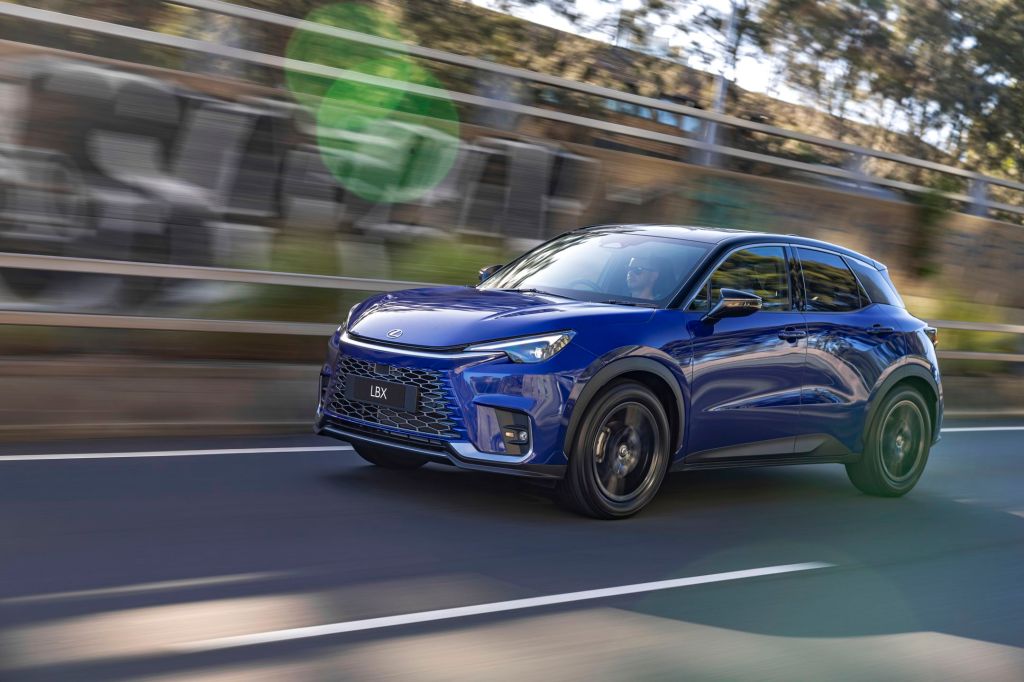
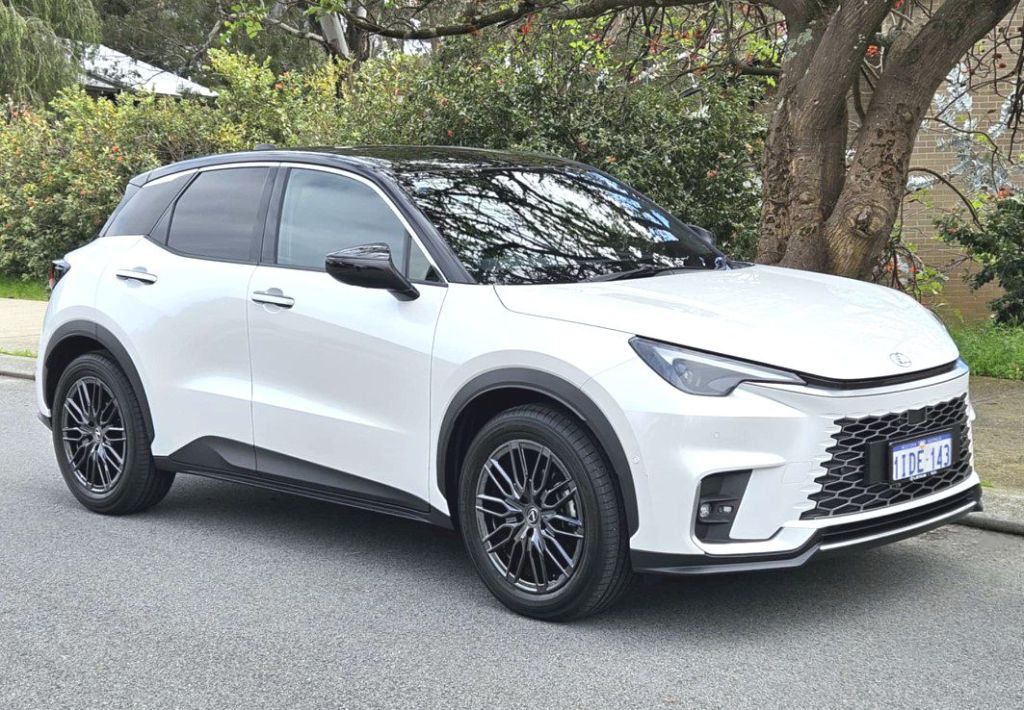
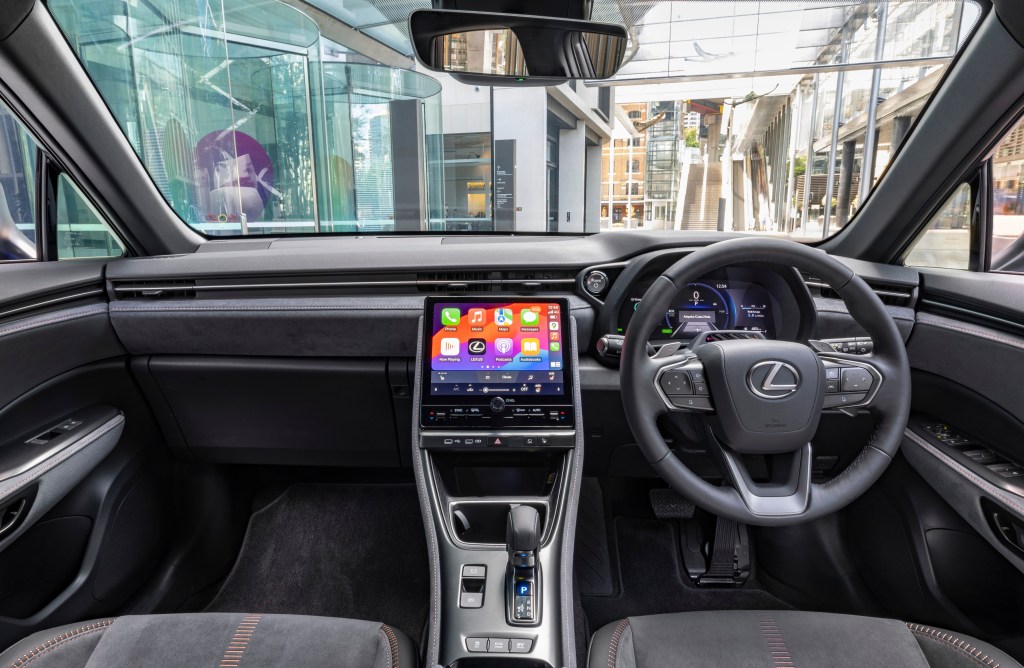
Is the LBX a game changer? A quite compact actual luxury car – not an economy car masquerading as a luxury car by having a few electronic gadgets fitted…
Well, in many ways, it would seem to meet the criteria that very few cars do. Although based on the platform of a low-cost Toyota model, Lexus have made a raft of changes which lift the LBX way into a different league.
There’s beautiful Ultrasuede upholstery on the seats, dashboard and door trims. The windows are made of sound-reducing double glazing. Electric buttons for door handles. Head-up display. Heated seats and steering wheel. Power tailgate. A lot of well-considered luxury. And it’s very quiet to ride in.
The hybrid mechanicals are a 3-cylinder, 1.5-litre petrol with a pair of electric motors, making it all-wheel-drive – giving confidence in grip in any weather on any roads. It’s not especially fast, but that’s not what the typical buyer is seeking. The CVT transmission is fine except when extra performance is required and it sounds like a slipping clutch as the engine revs to provide more motivation. The LBX is especially economical.
Rear seat space and boot space are both quite compromised, like many other cars of the same size.
The tyres have quite high-profile sidewalls which means the chances of kerb damage are much less than the typical set-up on too many cars these days. That also helps the ride quality. Where many small cars pitch over speed bumps and big road irregularities, the LBX is quite composed.
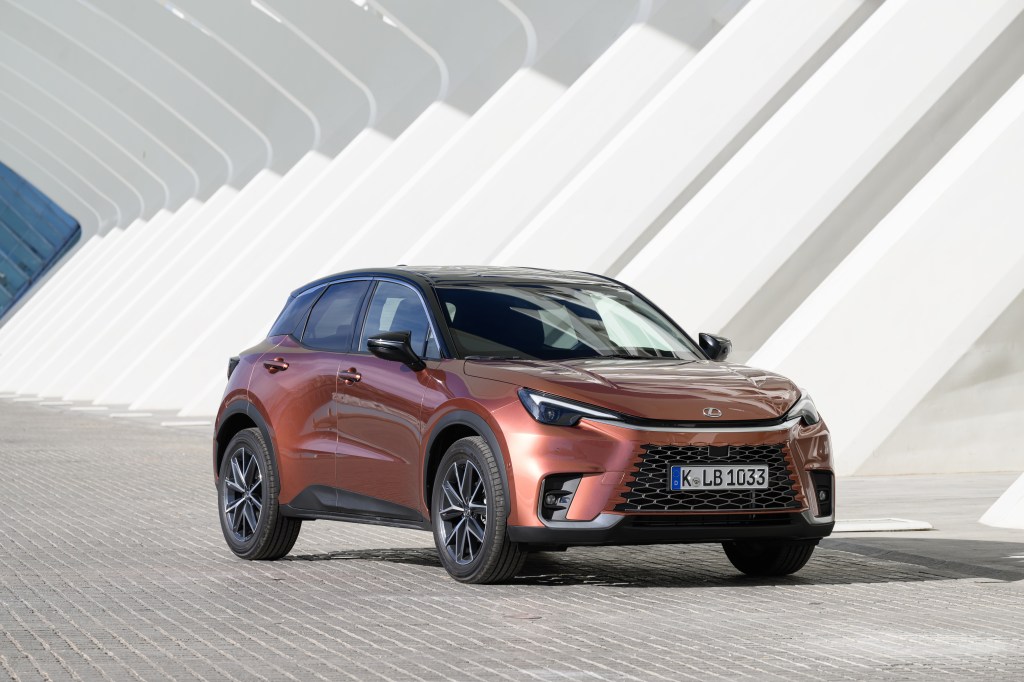
The Lexus stylists have created a muscular look to the LBX but pleasingly, they have avoided the aggressive styling elements that so many current cars suffer from.\
The model tested sells for $56,990, but a 2-wheel drive version is also offered, from $47,550.
So does the littlest Lexus live up to the aim of being a proper luxury car in such compact dimensions? In most respects it does. With a better engine/transmission combination it would be an easier sell as a luxury car. And with a few centimetres more rear legroom the car’s other issue would be gone… Maybe you can’t have everything.
The legendary Lexus build quality and after sales service are the envy of all other luxury car brands, which should give any LBX buyer great confidence. The LBX is an easy car to live with and one that I found unusually appealing.
Lexus LBX, captured on 29.11.2023 in Valencia, Spain. Photo: Daniel Reinhardt for LEXUS
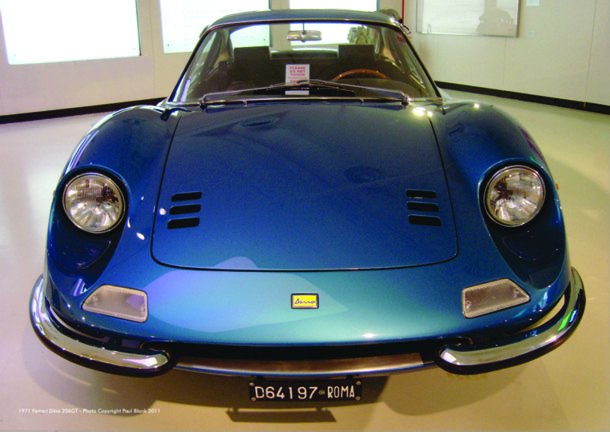
The Ferrari’s Dino is one of the all-time classics – and for very good reason. Very occasionally a car manufacturer builds a car which hits the nail so squarely on the head that it becomes an instant classic. The 246 captured the spirit of the moment and maintained its stature for years to come.
The shape, the mechanical layout, the price and above all, the way it drove, would capture the very essence of the pleasures of sporting motoring.
Operating since 1940, initially as a racing car manufacturer, Ferrari had long been a dominating force in racing and sports car design, manufacture and marketing, the name becoming a household word by the 1960s. But times were a-changing, and Enzo Ferrari, along with his many cohorts understood that there was demand for sports cars other than large, front-engined V12 machines.
Enzo’s engineers had long looked at the idea of smaller models – the ASA 1000GT of the early 1960s being the closest anyone had seen. Designed by his team, this pretty 4-cylinder design ended up being manufactured by another company after Enzo got cold feet.
The time when Ferrari was working on new small car concepts coincided with a period when styling house Pininfarina was at its zenith, creating modern, smoothly curved, voluptuous shapes. Their design work would become an important part of the process that Ferrari would follow. Pininfarina showed a V6 mid-engined, 3-seater styling exercise at the 1965 Paris Salon, the 206S, from which the styling of the eventual production car would evolve.
While Ferrari had built the 250LM competition car as their first mid-engined car (1963-1966), it used their venerable 3.3-litre V12, which was mounted north-south behind the cockpit, in the same manner as most mid-engined cars. A new engineering feature was gaining ground, which the new small sports car would incorporate – a transversely mounted mid-engine.
A couple of towns away, Lamborghini was also working on a transverse mid-engine design, the spectacular V12 Miura, which would see the light of day in 1966.
Ferrari’s engineers developed the new small car to incorporate a 1987cc 65-degree V6 engine. With quad cams and triple Weber carburettors, the aluminium alloy engine was an absolute jewel. A new 5-speed gearbox was developed along with many other specially-designed major components for the all-new car.
The Dino 206 was launched at the Turin motor show in 1967, the new car was an immediate hit. The name Ferrari chose for the car was Dino, the name of his son who had died in 1956 from leukaemia at the age of 24. In fact, Enzo thought that there was some risk to the Ferrari image involved with the new small car project, so the name Ferrari did not appear on the car. While designed, built and sold alongside traditional Ferraris, Enzo was cautious and distanced the new Dino from his larger cars.
That said, from day one, just about every owner fitted Ferrari badges to their Dinos. Even dealers did it.
The Dino 206 was so right for the time that it became an instant success. The media hailed the new sports car as one of the greatest of all time – quite likely unaware that it would be perceived as such many decades later.
Well respected racing driver and journalist Paul Frere was among the first to drive the car saying it was “a revelation … perfectly neutral and incredibly agile.” British magazine Car tested a Dino in 1970 and enthused about the driving characteristics “Driving the Dino is quite an experience, for it is probably closer to a mid-engined racing car than to most road vehicles. It has that instant responsiveness and chuckability that the French so delightfully term ‘nerveuse’, which makes it a joy on twisting roads.” They summed it up saying the Dino “probably has the best handling of any high performance GT car”.
Developing 180bhp at 8000rpm, the 206GT could accelerate to 100km/h in 7.6 seconds and achieve a top speed of 240km/h.
The car’s handling was a revelation. Pin-sharp steering, strong brakes, very little body-roll and excellent adhesion made the Dino one of the best handling cars of the time. The styling of the Dino has long been acclaimed as among the all-time greats. Curvaceous and so very sexy, the design incorporated modern features such as the cut-off Kamm-tail and a long, low rear deck, allowing good rear three-quarter vision (something severely lacking in many early mid-engined cars). The Dino had a very balanced overall shape, with a wide stance and many lovely details such as the side air intakes and delicate chrome trim (often the little tab external door handles were a bit too delicate).
It wasn’t until 1968 that production got underway, with Scaglietti in Modena assembling the alloy-bodied cars. In the following year, the car would see some major changes. After only 152 cars had been built, Ferrari announced the revised Dino 246GT.
As the 246 name suggests – 2.4-litre, 6 cylinder – the engine capacity was enlarged. But significantly, the new engine also changed to a cast iron block. The 2419cc engine offered increased power and torque, giving the new version a 0-100km/h time half a second quicker and an additional 12km/h top speed. The torquier engine characteristics suited the Dino well, making it an even better drivers’ car.
Alongside the engine changes, Ferrari saw fit to make several other changes. Material for the bodies was changed to steel. The centre of the body was lengthened by 580mm, and detail changes such as a fuel filler flap were incorporated. The previously off-centre gear-selector tunnel was centred so that right-hand-drive cars could be built.
These changes coincided with an agreement with Fiat, which saw the huge conglomerate take Dino engines for cars of their own. Fiat introduced the Fiat Dino Coupe (with Bertone body) and Dino Spider (by Pininfarina), both initially with the 2-litre V6, then the 2.4 – and Lancia used the Dino engine for their dramatic and seriously effective Stratos rally car. For the first time ever, Ferrari had the benefits of economy of scale from relatively mass manufacture of an engine.
Ferrari themselves offered a couple of variations on the 246 theme. There were several options available on the 246, one of the best known, being the ‘Chairs & Flares” option, which consisted of seats upholstered in the Daytona style ventilated trim, along with flared wheelarches to accommodate a wider wheel and tyre package.
More significant though, was the GTS version which was introduced in 1972. This adaptation incorporated a removable centre section of the roof. The targa-roofed GTS also differed by having three small vents where the rear side windows were on the coupe version – matching the vents on the bonnet. This open-topped version proved very popular.
The Dino introduced a whole new range of clientele to the brand and by the time production ceased in 1974 over 3700 246s had been made, making it far and away the company’s best seller to date.
Values The Dino sold in an interesting marketplace, where its natural enemy was the Porsche 911 – still a relatively new model at the time. By comparison, in 1972 a 246GT listed in Australia at $16,000, a 911S 2.4 was $15,628 and a Jaguar E-Type V12 was just $11,929. Pricey though it may have been, the Dino cost half as much as a V12 Ferrari.
Values of Dinos commonly dipped as low as $15,000 in the late 1970s, before reaching sky-high figures in the boom at the end of the following decade. Amounts as high as $200,000 were achieved by some lucky sellers – only to halve when the recession hit. Today, prices have gone completely crazy, seemingly regardless of condition and history. Starting prices in excess of half a million dollars are commonplace now…
Dinos were prone to rust, and were often not particularly well looked after by early owners. Quite a few local cars were also imported second-hand from the UK. Hence, the vast majority of Dinos in Australia today have been restored at least once.
Driving a Dino Today, a good Dino is still a pleasure to drive. I’ve driven Dinos on road and track. The Dino insists that you become involved in the driving process – beginning with a slightly un-natural driving position, with the pedals offset to the centre. Then there’s the warming up process; both the engine and gearbox like quite a few kilometres before they’re friendly.
But once you and the Dino are ready to play there is a harmony you develop with the car which is reassuring, confidence inspiring and quite exciting. The Dino is one of those rare cars where you really feel it is a part of you. The controls respond instantaneously, accurately and inspiringly.
Before your first drive, you might imagine the 2.4-litre car to be a sweet, if delicate, reasonable performer, with its strength being handling, not performance. When you’ve got the feel of the Dino and explore what it has to offer, perhaps the greatest surprise is the engine’s performance. A buried accelerator brings out a wonderful howl from behind the cockpit, accompanied by impressive acceleration. Combine that with brilliant – almost intuitive steering and handling, and the Dino makes exceptional progress.
Click the gearstick through that famous Ferrari alloy gate, gently ease the steering wheel, and feel the thrum of the V6 just behind your shoulders – the Dino offers an entirely pleasurable driving experience. And one that certainly lives up to the expectations that such an iconic car has.
It is a pleasure to explore what the Dino has to offer in the confines of a race track, or on open country roads. And unlike some large supercars, it isn’t unwieldy around town. Compared to a new hot hatch though, it isn’t that fast and the lack of power steering is noticeable when parking.
It does, however, attract attention like few other cars.
The shape, the name, the aura, the classic, exotic icon status of the Dino all add up to make it one of the true greats – quite justly recognised as such.
The Abarth name refers to performance versions of Fiat products. And so it is with the sportier version of Fiat’s electric 500e.
The Abarth 500e boasts a beefier looking body kit with deep front spoiler, larger wheels wearing low profile tyres, adjusted suspension, body hugging front seats and lots of Abarth badges.
It also has a handy lift in performance over the standard 500e – not hard to achieve in an electric car, but oddly, while it’s quick-ish, the Abarth isn’t quite as fast as the old petrol Abarth version of the 500. The performance helps make it a nimble car around town, with the sporty handling emphasizing the nature of the car. It’s certainly got plenty of fun factor built in.
Front seat ergonomics are a big improvement over the slightly smaller old petrol 500, though back seat space hasn’t improved – particularly the shortage of rear legroom. There are some small ‘surprise and delight’ features inside. Like the electric button internal door releases… The row of ‘gear’ selection buttons on the dashboard is simple and nice – better than the gimmicky controls many other makers have for gear selectors.
One big gripe I have with all the electric 500s is that they’re specified for the Australian market with a glass roof panel. It’s a car clearly designed and tested in a European winter. There’s a retractable internal roof blind, which has more perforation than material. The glass gets hot even on a moderately warm day and the heat radiates in. I found I was getting sunburnt, even though the glass is (lightly) tinted. I ended up putting a cut-to-fit foam board in as a roof lining. Presumably installing a strong reflective window tint would help a lot…
For the launch, the importers have brought some excellent colours – like the tennis ball flouro green of the car I tested. There’s also a very attractive bright blue.
There’s an optional fitment of a sound generator, which the test car didn’t have – basically a speaker under the back bumper simulating exhaust sounds. Nowhere near as sophisticated as Hyundai Ioniq 5N’s in-car sounds and from all reports, the Abarth system is more gimmick than fun.
When I’ve been in Europe recently, it’s been clear that the take-up of the 500e as a city car has been pretty good. The claimed range for the Abarth is 253km, so it doesn’t stack up as a long-distance cruiser (all electric cars really don’t), but that’s not what the 500e is intended for. Around town, it can be a ball of fun.
Two versions, just below and just above $60,000 were offered initially – and now the importers and dealers have been slashing the price to clear stock, as market resistance has been too strong to sustain such a high price.
Alfa Romeo Montreal. Race-bred engine, show car body – what a combination! But one of the most misunderstood cars of the 1970s would have to be the Montreal. It was a fascinating car, featuring a unique, race-bred quad-cam, dry-sump V8 engine, show-car bodywork and was produced in very small numbers. But today only a small number of people seem to recognise them and few enthusiasts crave a Montreal so values have took a while to rise while other cars around them skyrocketed.
So what was this mysterious Italian exotic all about? The company had a long and illustrious history in racing and building high performance cars, but it had been some time since they’d built anything like their own supercar.
Financially, in the late 1960s the Alfa Romeo company was in a pretty good position. Sales in the last decade were strong around the world, their model range was expanding – Alfas were doing well in several racing categories and the future looked rosy.
Milan-based Alfa Romeo was invited to be the sole car manufacturer to exhibit at the Expo 67 World Fair, a huge exhibition staged in Montreal, Canada which opened in April 1967. The show celebrated 100 years of Canadian Federation and nations were invited to show their finest achievements in culture, science and technology. There was a section entitled “Man the Producer” and Alfa Romeo was the only car maker invited to show their vision of the future.
Seizing the opportunity for such a high profile occasion, the Alfa bosses contracted coachbuilders Bertone to design a show car especially for the Expo. Bertone and Alfa Romeo had a long relationship which had been immensely successful for both companies.
The resulting design was based on the floorpan and running gear of the popular 105-series coupe and featured flamboyant styling, with an assortment of vents and gills as the hallmarks of the sleek design. The engine was the 1.6-litre version of Alfa Romeo’s venerable twin-cam 4-cylinder unit.
Two identical show cars were built and from the moment they were shown at Montreal, they received excellent reviews from the media and public. Period publications complimented the balance and proportions of the design.
The styling had been done while two greats, Giorgio Giugiaro and Marcello Gandini worked at Bertone, and like other Bertone cars of the era, there remains some discussion about who was responsible for the design… Most likely the work was begun by Giugiaro and finished by Gandini.
On the strength of the show car’s great reception, Alfa Romeo’s management decided that the show car presented them with the opportunity they wanted to build a new top of the range sports car. Apparently there were many arguments within management about how the car should be – but keep in mind that Alfa Romeo was an Italian company…
Ultimately the decision was made to incorporate a version of the successful Tipo 33 V8 engine which had powered various Alfa racing cars to many competition successes in recent years. The 2593cc V8 featured a quad-cam layout, dry sump lubrication, electronic ignition and Spica fuel injection. This was as high tech as you got in the early 1970s. For the application of the new road car, it would produce 150kW (200bhp).
Also specified were an (expensive) robust German ZF gearbox, with dogleg first gear plus a limited slip diff, with its own oil cooler were included. The show car bodywork was adapted to fit the bigger engine and a multitude of minor changes were made, but the overall look of the car remained very much the same when production began 3 years later.
Bertone was contracted to assemble the cars for Alfa Romeo, at its Grugliasco plant, alongside Lamborghini Miuras, Fiat Dino Coupes and 850 Spiders.
The resulting car, named Montreal after the Expo venue, was launched at the Salon de Geneva in 1970.
With it’s magic engine, the Montreal was a quick car by the standards of the early 1970s, capable of 230km/h. 0-100km/h took 7.1 seconds. It could show a Porsche 911 a clean set of heels.
At much the same time as the new range-topping coupe came on stream, Alfa Romeo was suffering from industrial problems which beset all Italian car makers at the time. The company was also suffering issues with building a new plant in the south of Italy to build the all-new Alfasud series.
The 1973 fuel crisis really hurt Montreal sales. Nonetheless Alfa persevered with the car, and there continued to be sufficient demand until 1975 when manufacturing ceased – though the final cars were sold in 1977. Just 3925 had been built.
Unlike with some other exotics, with the Montreal, Australians were lucky – it was offered in right-hand-drive. Wheels magazine gushed enthusiastically about the first one which landed (a left-hand drive example), and called it “A half price Lambo”. They said it was “The most exciting, luxurious car the famous Italian firm has ever made.”
Offered at $11,900 sales began late in 1972, but only lasted here for a couple of years. The 1974 price had risen to $14,935.
To compare, by 1974 a Porsche 911 started at $13,460 (to $18,477 for a Carrera), a BMW 3.0CSi cost $17,950, a Ferrari 308GT4 cost $19,500 – right on par with a Urraco and a Mercedes 450SL. So the Montreal was pretty good value here.
Dealers around Australia were pleased to have such a glamour model to boost the brand’s image. The cars were offered in a range of colours, including two real stand-out metallics – orange and green. Just 44 were sold new in Australia.
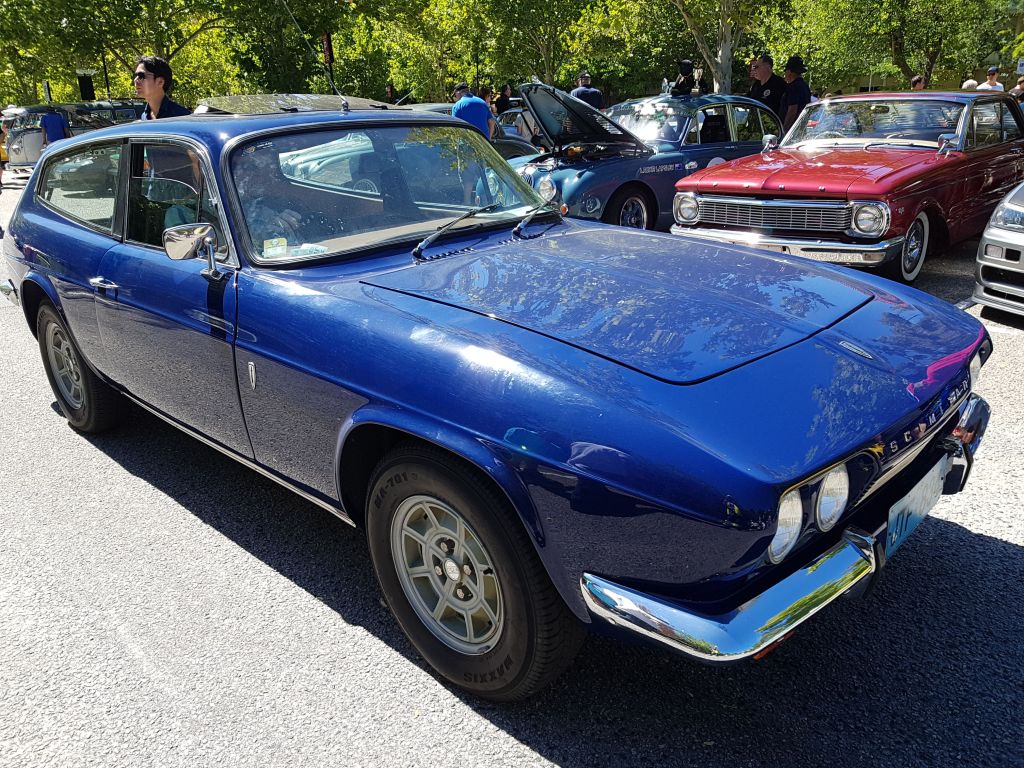
For a brief period, the Reliant Scimitar GTE was one of the hottest properties. The trendy new idea of a sports estate was really launched by Reliant with this car. Princess Anne famously drove one (often collecting speeding tickets) and other celebs were attracted to the model. Other cars followed, inspired y the GTE’s success, notably the Volvo 1800ES and Jensen Healey GT Estate.
The GTE really raised the profile of Reliant internationally, which had been mostly been known for their ghastly 3-wheel economy cars. But those sold in huge numbers and allowed the Tamworth-based company funds for a range of sporty cars. Reliant had built the Sabre sports (actually a design they’d made for an Israeli company where it was marketed as a Sabra) from the early 1960s. Using a hodge-podge of parts from different makers, almost 300 were sold, which encouraged the company to make something better.
The result was the 1964 Scimitar GT, with sharp styling by Tom Karen of Ogle Design. The new coupe featured Ford’s Zephyr engine, and later the new 3-litre V6 (much better). With a thousand sold, Reliant was on a roll.
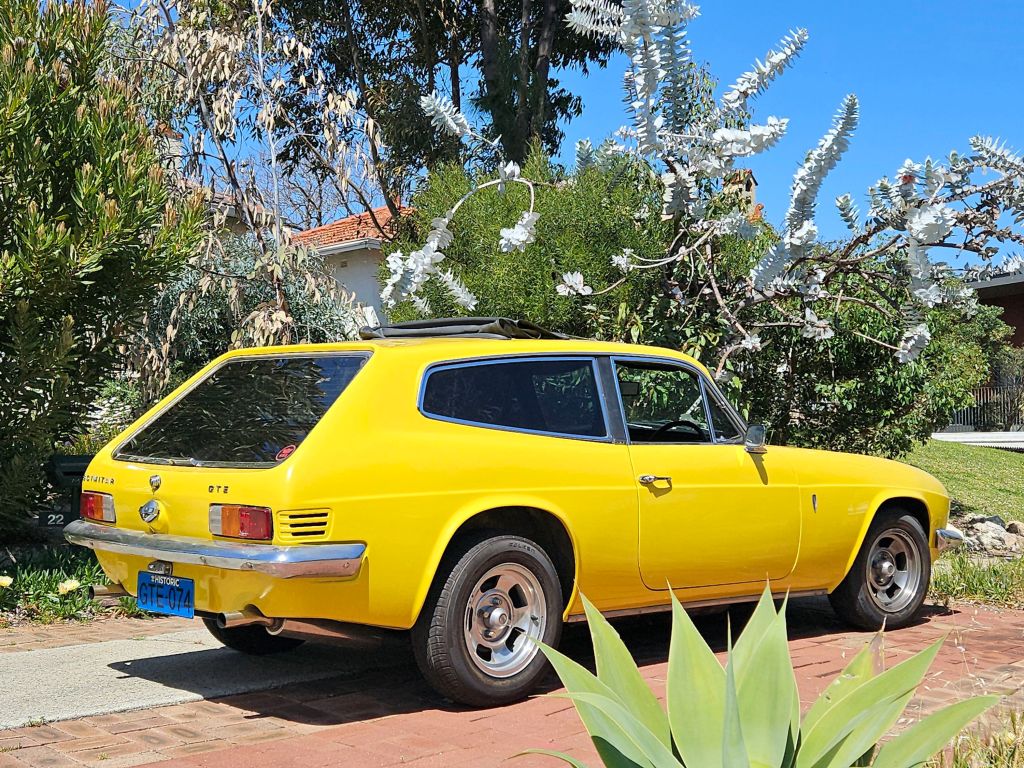
In 1968 they launched the sexy new Scimitar GTE, the striking sports wagon body again the work of Tom Karen at Ogle. The GTE gained a new steel chassis, and like all Reliants before and since, wore fibreglass bodywork. The car was an immediate success with the 4-seater setting sales records for Reliants proper cars (over 100,000 3-wheel ‘plastic pigs’ were made).
The press and the public loved it. Featuring Ford’s lusty 3-litre V6, putting out 144bhp, the GTE was capable of 120 miles per hour (200km/h) which was pretty impressive in the late 1960s. Fitted with stylish MGB V8 alloy wheels (or stylised fibreglass wheel covers), overdrive – and with automatic transmission available from 1969 – the GTE quickly became the trendy car to have if you didn’t want an E-Type or Lotus Elan +2, which were both already a bit old hat by then.
British car buyers embraced fibreglass cars – which avoids rust – and many makers offered cars with such bodywork. Big players Lotus, TVR and Reliant were joined by many smaller makers such as Gilbern, Fairthorpe, Ginetta and others.
Many internal and external hardware parts are common to mass production cars of the era, so not too hard to find replacements for… except for bumpers which are pretty much unobtainable these days.
Mechanically the GTEs are straightforward and plenty of specialists can offer service and parts to suit. The front suspension can suffer with age and is Triumph TR6-based, so pretty straightforward for repairs.
Quite a few were imported to Australia, mostly while the cars were current, and while they are certainly not common, if you want one, they’re not impossible to find. For some reason, these important, if slightly iconic cars are worth relatively little. Low values haven’t helped keep some GTEs in great condition, but a restored example will command a strong price, but these cars should really be worth more….
So if you fancy something from the era of flared pants, which will stand out from the crowd, be cheap to maintain and perform nicely, perhaps a Scimitar GTE should be on your radar.
Above: Later cars had altogether different, wider body, whilst maintaining a similar look – but a little less stylishly. Below: The short-lived open topped GTC.
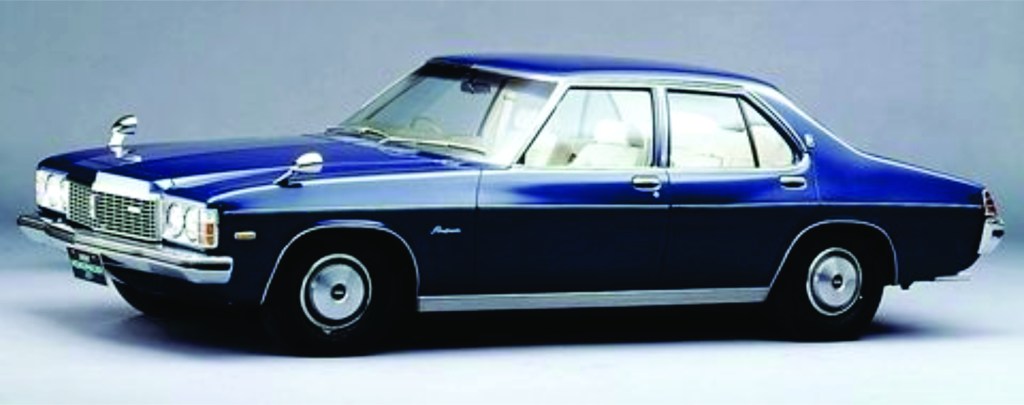
Here’s one of the most unusual of Japanese cars. It’s so unusual, that almost anyone in Australia would doubt the claim that it is a Japanese car at all.
To most Aussies it looks like a Holden HJ Premier, and those with a keen eye will note a few detail differences. The most obvious of these are the Mazda badges the car wears.
It’s a Mazda Roadpacer, born from a brief liaison between Holden and Mazda in the early 1970s.
This was a time when the larger Japanese manufacturers built exclusive top-of-the-range luxury models for executives and dignitaries, the Toyota Century, the Nissan President and to a lesser extent Mitsubishi Debonair. These cars were marketed only in Japan and the Toyota and Nissan featured unique V8 engines.
While Mazda was growing, they had no such car, nor the finances to develop one. Their model range was broad in the early 1970s, with their rotary and piston engine range of models selling well from the Kei-class Chantez 360 to the new RX5.
The Roadpacer was the result of a concept which had certain undeniable merits. Development time and tooling costs were significantly reduced compared to starting from scratch. Japan, like Australia was a right hand drive market. Also the Holden was not sold in Japan, which was the only market the new Mazda luxury model would be marketed, so it would be exclusive. Mazda did a del to buy Holden bodies, and fitted their own running gear, interior trim and other minor parts.
Compared to the Holden, the biggest change was the installation of Mazda’s 13B rotary engine, exactly as used in the RX4 – or Luce RE-AP in its home market. The 13B twin-rotor engine developed 181kW (135bhp) at 6000rpm, not a great deal for a car with the weight of a fully equipped Holden Premier – just under 1600kg. The rotary powerplant sits low and well back in the engine bay and the radiator is oddly angled.
The Roadpacer was only available with automatic transmission, a Jatco 3-speed unit, with slightly lower gearing than the Holden version to try to get some acceleration out of the car. Performance was not strong compared to its competitors, with a top speed of just 165km/h.
While the Roadpacer was one of Japan’s first cars to meet strict new anti-pollution regulations, fuel economy was not one of its highlights. No better than 15mpg could be expected. It used as much fuel as a V8-engined Premier, but had no more performance than a 3.3-litre, 6-cylinder version of the Holden.
What the Roadpacer may have lacked in outright performance, Mazda made up for in lavish equipment levels. The list of luxury fitments included air conditioning, power steering, electric windows, central locking, interior boot release, an AM–FM radio/cassette player (with additional controls in the rear), a rear window demister and remote external mirror adjustment.
Among the few options available, was the choice of bench or bucket front. The cars were upholstered in soft materials, including the felt-like hood-lining to help reduce noise levels. Some had amazing sculptured velvet Louis XIV upholstery in vile colours, which whilst very plush, were an acquired taste – to be polite. Plainer trim was also available.
Other changes were made to the car to meet Japanese regulations – big chrome wing mirrors, front side repeater lamps, reversing lamps and hazard lights. Various warning buzzers and doors that lock automatically at 10km/h were fitted.
Other differences include a unique centre console (with the separate front seat option), different hubcaps, and of course lots of Mazda badges.
It appears that there were also minor changes during production, as early press photos show reversing lights and additional reflectors hung under the rear bumper, while later cars had RX4 integral type units fitted into the bumper.
I’ve had the pleasure of driving a Roadpacer on a couple of occasions. And driving the Roadpacer is an unusual experience – not so much for the rotary engine, but that it drives just like a 1970s Holden. It even sounds like a Holden 6-cylinder until the revs get quite high and the smooth hum of the rotary becomes apparent. It glides around smoothly and comfortably, as would have been expected of it when new.
The Roadpacer was not a convincing exercise as a luxury car and the Japanese market shunned it. While it was listed as available from 1975 to 1978 (gaining an updated grille in 1977) it is unlikely that more than a few hundred were sold each year. It seems most likely that a total of just 800 were sold. It cost the same 3.8 million Yen as a V8 Nissan or Toyota, was not as luxuriously fitted out and certainly lacked the performance of its rivals.
Today, a surviving Roadpacer is a very rare car indeed. Unloved by the Japanese, only a small number remain there. Two or three examples are known to be in Australia, the best known of which is in a collection in Western Australia having previously been in two prominent WA collections. That’s it, below.


 Pre-A at Villa d’Este Concorso on Lake Como, Italy – photo Paul Blank











 Paul Blank