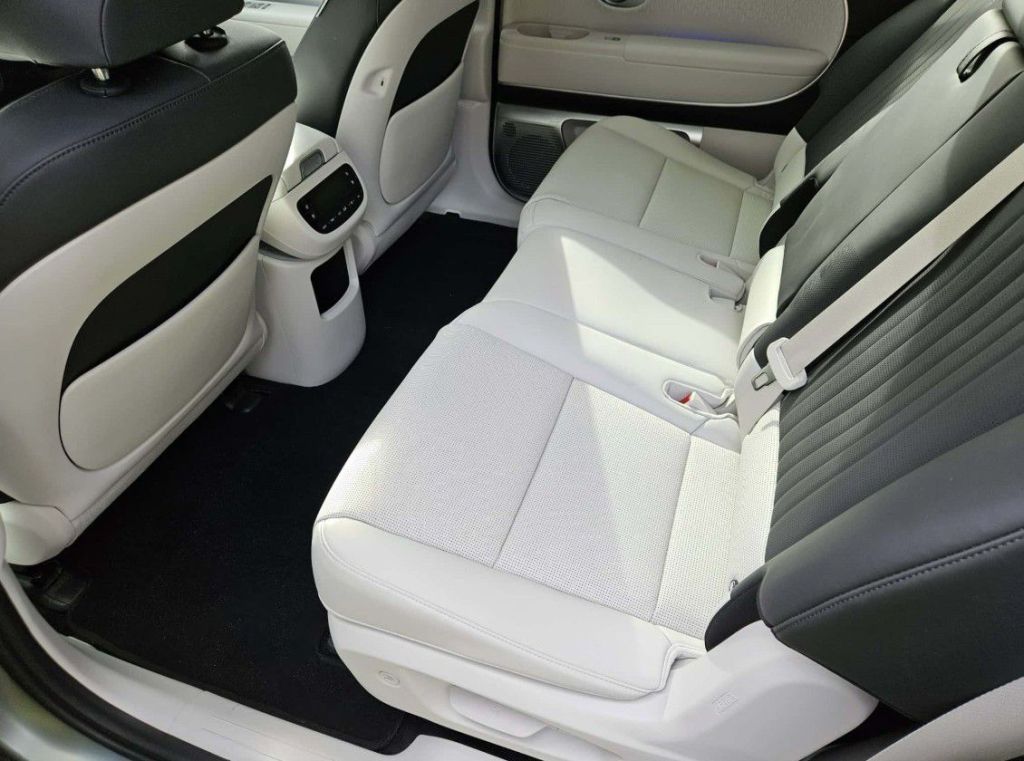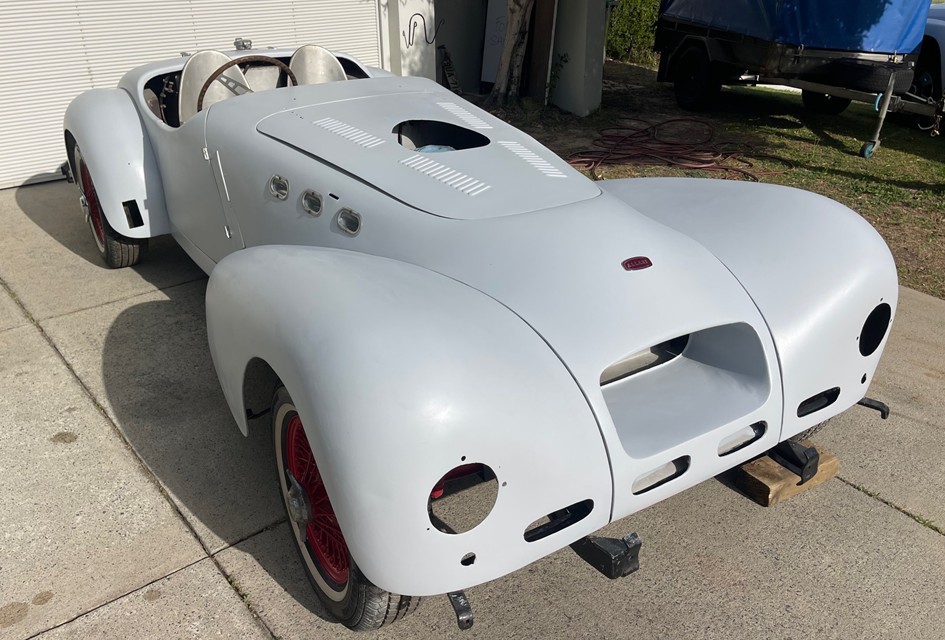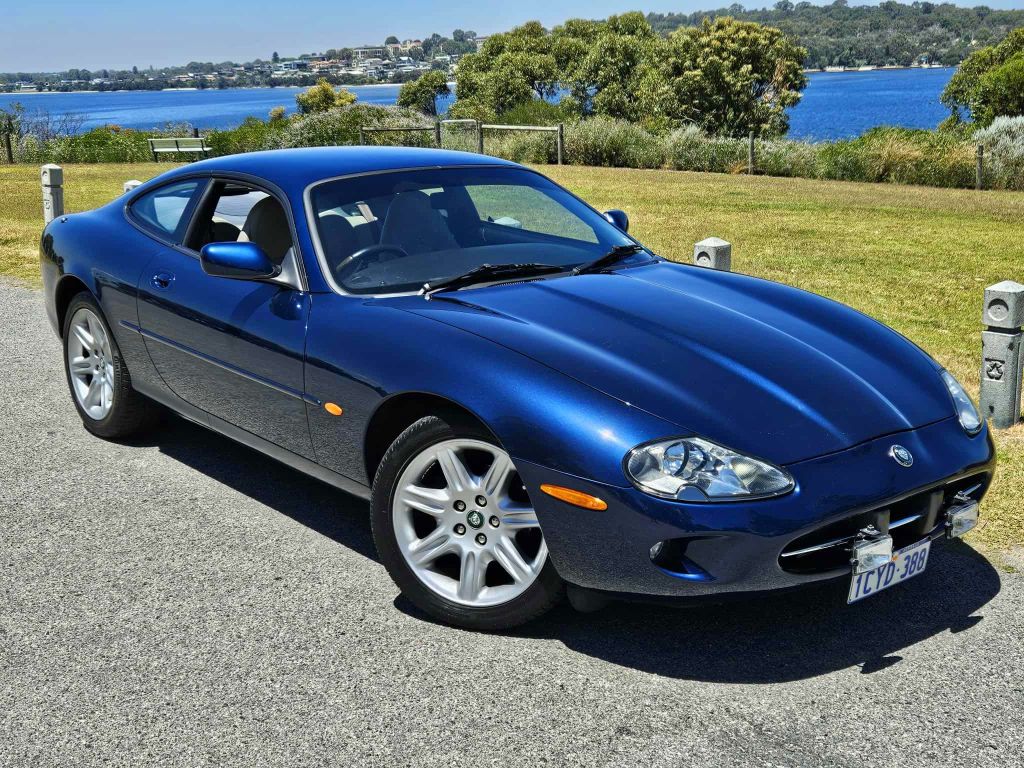
The Boxster brought a freshness to the Porsche range with its 6-cylinder mid-engine layout, effectively replacing the front engine 4-cylinder model range at the easier entry point to Porsche ownership than the 911. The Boxster was a tremendous success from the start.
This car was a prize in a raffle, and the winner decided to sell the car immediately, through the dealer which had pre-delivered it. A Perth buyer had it shipped and registered here and when he collected the car it had covered just 31 kilometres.
Finished smartly in Guards Red with black trim and soft-top, with optional wheels it makes as striking a car as it would have 23 years ago. The same owner has kept the car all this time, covering 121,000km in it.
The car has been serviced and maintained all along by Porsche specialists, mainly the same well-regarded expert for many years. The service booklet is stamped, showing the mileage to be correct.
There are just a couple of minor cosmetic items one could attend to – some slightly discoloured paint, the front grilles have some paint peeling and inside some of the plastic has got sticky surfaces. The soft top was replaced a decade ago. There is very little to criticize with this car.
Least of all, the driving experience it offers – this Boxster drives beautifully, with peppy performance and a tight feel. This is a particularly nice example, with single ownership and full service history – and is realistically priced.
Paul Blank Classic Car Broker MD28143 Reg 1BGY 022
Whilst every effort to ensure accuracy is made when preparing the description of a car, much of the information is provided by the owner and cannot be guaranteed to be accurate and complete. Some errors and omissions occur occasionally and we cannot be held liable for any loss or damage arising from incorrect or incomplete information or any reliance which might be placed on information provided. Any potential purchaser is advised to make his or her own independent investigations or inspections to determine title and whether a vehicle is suitable for purchase.
The Outlander has been a popular seller for Mitsubishi and it’s been through a few generational updates. I’ve just had a week with the 2025 Aspire version.
This is a mid-level version, which starts the range at around $41,000. The Aspire costs a fraction over $48,000.
There are three levels of equipment, 5 or 5+2 seating versions, front or all-wheel drive and petrol or PHEV powerplants. The petrol powerplant in the car I drove is a 135kW 2.5-litre, 4-cylinder, with a smooth 8-speed automatic transmission.
It’s significant that the Outlander scored in the top 5 sellers in Australia most months last year.
In announcing the latest updates, Mitsubishi said: “As a core market for Mitsubishi Motors globally, Australian market feedback played a significant role in further improving the updated Outlander’s steering, ride and handling, tuning it to further suit Australian conditions and buyer requirements with a new tyre specification.
“There’s also an incredible new suite of Yamaha audio systems that further enhance the driving experience, while the refreshed exterior, new alloy wheel designs, interior and improved infotainment systems add further presence and sophistication.”
In many respects, it’s an innocuous vehicle. It blends in with everyday modern traffic… Not huge, but decently spacious. Well appointed without being pretentious.
What I did note, was that it is very well built. The fit and finish inside and out is excellent. I’m pretty critical about this and can say that in this respect, the Outlander far outshines the Chinese offerings in the same price range.
The same with on-road dynamics. While it might not be important to all drivers (and clearly isn’t to many who find cheap Chinese vehicles adequate) the Outlander drives nicely, handles well, brakes competently and manoeuvres confidently without being overtly sporty or weak. That gives confidence.
The electronics are well resolved too. While every new car is laden with tech needed to achieve their ANCAP 5 points for safety, some brands have annoying, badly calibrated and intrusive systems, Mitsubishi have developed a good, mature usability in this respect.
Mitsubishi has been around a long time, which explains some of the above – but should also give buyers confidence that they’ll still be here well after the long warranty has expired.
Here’s a fantastic find – a one-family owner, Perth delivered, original and correct Mazda 808 with just 96,000km.
It’s the updated version with minor technical revisions, readily identified by the wide grille and separate headlights. In Australia the automatic version was only available in Deluxe trim.
This remarkable example was sold new by Mazda Morley to a buyer for his wife, as he could no longer drive. The family Holden was traded-in on it. In 1982, the wife gave up driving and the car changed hands to a daughter-in-law to drive. But by 1984, she had to give up driving due to her health and the car mostly sat in their garage. The car underwent some refurbishment in 2019 – the engine was refreshed, brakes rebuilt and new tyres fitted, readying the car (now a classic) for more regular use.
However, the car was kept in the garage it had been in for so many years and still used little. In 2021 the house was sold and the car moved to a storage unit. In the last five years the 808 has covered about 1000km, just on occasional weekend outings. The car is now the property of a grand daughter of the original owner.
This Mazda remains in exceptional, original condition throughout. There had been towelling seat covers on the car since new – removed for the first time for the photo session. Carpet mats did the same protective job for the original. Internal fittings are all straight, complete and correct.
The bodywork is tidy, straight and all external trim is as it should be, with the exception of the front bumper which has some ripples visible. Underneath, the car is remarkably clean and original too.
Unfortunately the handbooks have been lost, but the original tool roll, jack and Mazda touch-up paint tin remain with the car. It has its original plates XMT364.
This car is a unique proposition – realistically priced. Chances of finding another like it are extremely slim. Don’t miss this opportunity.
Whilst every effort to ensure accuracy is made when preparing the description of a car, much of the information is provided by the owner and cannot be guaranteed to be accurate and complete. Some errors and omissions occur occasionally and we cannot be held liable for any loss or damage arising from incorrect or incomplete information or any reliance which might be placed on information provided. Any potential purchaser is advised to make his or her own independent investigations or inspections to determine title and whether a vehicle is suitable for purchase.
The Delta Integrale is one of the select few iconic rally-bred homologation cars which offered almost supercar performance in a family-car derived shape. With a turbocharged engine and all-wheel-drive the Integrale built on Lanica’s great rallying reputation, winning a record-setting six World Rally Championships.
This example is a very early 16-valve version, built in May 1989. This Italian-specification car has the rare green perforated Alcantara seats, door trims and head-lining. Most have the lower-cost rainbow-striped grey cloth interior.
Remaining in Italy until 2005, it was sold to Lambda Motors in NSW through former Lancia World Rally Championship and Driver’s Champion Miki Biasion’s dealership in Italy. The car was used for various club events on the east coast of Australia for seven years.
It was purchased by the current owner in late 2015 and shipped to Perth where it underwent some mechanical and electrical repairs as well as attention to the body, trim, brightwork and paint to bring the car up to the highest standard.
The has since been used for a range of Club events including a 1200km drive through the south-west of WA only three weeks after registration. The Integrale has regularly attended club events, drives and displays.
It has been used regularly and maintained. The owner is pleased to report than in his decade of ownership, running and repair costs have been quite reasonable for a high-performance, road-going rally car.
The Integrale presents very smartly inside and out and the owner advises it requires nothing beyond being driven and enjoyed… It’s a car with great performance, grip and handling, with reasonable economy and practicality – an unusual and intoxicating mix.
Current mileage is just under 138,000 km.
Registration ‘GO WRC’ to be sold with the car if sold to a WA buyer.
Please request an email with detailed description and photos from paul@classicrally.com.au
Paul Blank Classic Car Broker MD28143
Whilst every effort to ensure accuracy is made when preparing the description of a car, much of the information is provided by the owner and cannot be guaranteed to be accurate and complete. Some errors and omissions occur occasionally and we cannot be held liable for any loss or damage arising from incorrect or incomplete information or any reliance which might be placed on information provided. Any potential purchaser is advised to make his or her own independent investigations or inspections to determine title and whether a vehicle is suitable for purchase. MD28143
JBA was a British designed component car which met with more success than most – from 1982 to 2004. Fraser Auto Sports began marketing JBAs in Australia with an interesting process, whereby buyers could attend sessions with Fraser to build their cars together.
This car was owned and built by Murray Fraser for his wife Sue. As a demonstrator for the possibilities with a JBA, great lengths were taken to ensure the best build and specs. It was fitted with a Toyota Supra V6 engine, giving excellent performance. This car features red leather interior, polished woodwork, chrome wire wheels and more. It’s not an amateur build.
Fraser sold the car after a while to a buyer who kept it until May 2003 when the present owner’s husband purchased the car. He passed away ten years later and the car has seen limited use since.
The car starts instantly, runs as smoothly as the well-respected Supra motor is famous for and the car has the Toyota 5-speed gearbox. With relatively light weight, it offers excellent performance.
It has covered just 27,000km since being built. This is clearly a very well-built car, which offers a lot of fun along with practicality of modern running gear. It gets a lot of positive attention when out and about… and represents tremendous value for money.
Fully registered 1BJB430.
Please request an email with full details and more photos, from paul@classicrally.com.au
Whilst every effort to ensure accuracy is made when preparing the description of a car, much of the information is provided by the owner and cannot be guaranteed to be accurate and complete. Some errors and omissions occur occasionally and we cannot be held liable for any loss or damage arising from incorrect or incomplete information or any reliance which might be placed on information provided. Any potential purchaser is advised to make his or her own independent investigations or inspections to determine title and whether a vehicle is suitable for purchase.
The place is Melbourne, the year is 1970, the man is Michael. He’s 35 years old, has become a leading architects – and he’s quietly pleased with himself.
Michael has worked hard. After school he went to university, enrolling for Architecture which would allow him to indulge in his pleasures of design, engineering and aesthetics. The same criteria he applied to his other passion – cars.
As a kid Michael always eagerly awaited looking at each month’s latest car magazines, especially Melbourne’s own Motor Manual.
As Michael pored over the pages of the latest magazines he loved the flamboyant styling of the American designs and the sophisticated engineering of some of the European cars. These cars were a world away as only very occasionally would he see anything like these cars on Melbourne’s roads.
As soon as he finished university there was a job waiting which meant an income – to buy a car. Michael went straight out and bought a used Volkswagen Beetle, just like the car which had won the demanding Redex Round-Australia Trial the year before. It proved unbreakable even when asked to perform challenging tasks – like a memorable weekend trip with a mate and three girls to the snow…
But a year later the Beetle would be sold as Michael followed his dream and took off to England for a year’s working holiday. Europe in the late 1950s was an eye-opener for any car enthusiast from the Antipodes. While Michael had his year away, his enthusiasm for European design – of products, architecture and cars increased exponentially.
He returned to Australia confident and with a mission… and set up his own architectural firm, keen to promote the latest skills and knowledge he’d brought back with him. And Melbourne welcomed him with open arms, the business flourishing from the start.
So with his success came a strengthening income. And that meant indulging in cars. After briefly having a “sensible car”, Michael started being drawn to cars with a bit more performance and panache. In 1965 Michael bought his first brand new car – a modern Triumph 2000.
Two years later a very unorthodox new car was announced in Germany – the NSU Ro80 – which would become known as a seminal design and acknowledged as one of the most important cars of the 20th century.
People knew NSU as the world’s biggest motorcycle manufacturer and it had begun its postwar car production with the little rear-engined Prinz, which had also been very successful. Cashed up, the company took on their engineer Felix Wankel’s radical rotary engine design and developed a completely new car around it.
That was forty years ago today – and for Michael like many others, the Ro80 was an amazing vision of motoring in the future. It had the incredible twin-rotor Wankel engine, front wheel drive (which few cars had in the 1960s), had semi-automatic transmission, and unusually sleek aerodynamic bodywork. Inside it had a flat floor with no transmission hump, comprehensive instrumentation and all the modern equipment. He’d never seen anything like it.
While he admired the Ro80 in magazines, it wasn’t until 1969 when Michael saw one in Melbourne. He was walking outside his offices in South Yarra when he heard an odd humming engine sound behind. Looking around, he swivelled on his heels, grinning widely as a bright orange Ro80 cruised past. Just released in Australia, this was the coolest car Michael had ever seen!
He called the Melbourne dealer Regan Motors who sent out a brochure – and Michael was hooked. Two weeks later he cautiously drove home for the first time in his own Ro80. It was an expensive car, costing him $6400, when his brother had just bought an impressive new Ford Falcon GTHO for $4500 and his neighbour had paid just $2600 for new a Peugeot 404.
Michael, always the individualist, could justify the expense in two ways – firstly, business was good enough to indulge himself and secondly, there was nothing on the market like the Ro80. It had a long wheelbase and cushioning ride like a big French car (but a Citroen DS was not for him), had the build quality of a Mercedes, plus modern, sure-footed handling and four disc brakes (when big Australian cars would make do with drums all round for the next decade).
The car was a talking point, being the centre of attention wherever he went. Which perfectly suited Michael’s cool image…
Once Michael had mastered the gear-change (touching the gear-knob activated the clutch) and became at home with the low torque but high revving characteristics of the rotary engine, it became a very smooth car to drive.
On country roads the aerodynamic shape kept the car stable and the Recaro seats offered support and comfort like few other cars could equal. It cornered at speed with the composure of a steely supermodel and encouraged Michael to take country drives.
NSU had begun with a clean sheet, the Ro80 having no carry over parts from any other car. It was an expensive operation, and one fraught with risks, especially with a completely new type of engine. The company had produced a small run of single-rotor Wankel engined Prinz Spiders as a test, but the Ro80 would be the first mass production application of the engine.
Felix Wankel had conceived his novel engine before World War 2, but it wasn’t until 1957 when at NSU, he tested his first engine. This simple, yet sophisticated engine produced excellent power for a small capacity and small physical size.
Car manufacturers became excited by the potential they saw in the Wankel rotary engine and NSU sold licenses to many companies including Mercedes-Benz, General Motors, Citroen and Mazda.
NSU adopted a ‘wedge’ low-front, high-rear aerodynamic shape for the Ro80 along with faired-in, shaped headlights, deep windows and other details which would become expectations 20 years later, but were quite revolutionary for a 4-door sedan in 1967.
The package was instantly acclaimed by the media and the car won the coveted European Car of the Year award among its many accolades.
But all was not well… The company had felt compelled by commercial pressures to launch the car before it was completely ready – not an altogether unfamiliar story in the car world. Whilst the engineers and designers had achieved a truly vast undertaking in developing a totally new car, the engine would prove to be its Achilles’ heel. Rotor tip seal failures caused problems which would eventually take years to resolve.
While the company openly and without hesitation replaced faulty engines in cars for customers under a generous warranty, the replacement engines were no better. Many owners would find that engines lasted just 30,000km. That said, there are still examples being driven with their original engines decades later.
Before Michael took delivery of his Ro80 in Melbourne, the factory had already sent out an engine upgrade kit which was installed in his car – like all others in Australia. But it was to no avail. As much as Michael enjoyed city and country driving in his NSU, after four years his engine cried ‘enough’ and he faced the question of what to do. He enjoyed and admired this car more than any other car he’d seen, but faced a big cost and questionable future.
Only 164 Ro80s had been sold in Australia and they were no longer being imported, with the last example registered in 1973 (though production for Europe continued until 1977, with over 133,000 built). Having spent enormous amounts developing the Ro80, and replacing countless engines, NSU had also been spending money developing another completely new car – a slightly smaller 4-door sedan, to take the rotary and a newly developed 1500cc conventional engine. The once great NSU, started in 1905, had been brought to its knees and Volkswagen stepped in with an offer which was accepted in April 1969, NSU merging with Audi in a new arrangement. The smaller NSU sedan was put into production as the Volkswagen K70, giving the company its first water-cooled and first front wheel drive model.
All this didn’t bode well for Australian Ro80 owners as there was no intention to market the cars here again. Sadly for Michael, his love affair was over, cut short. The car was sold and while he owned a string of other luxury cars later, none filled him with pride like the avant garde NSU had – when he could cruise down St Kilda Road confident he wouldn’t see another car that measured up to his technical masterpiece pass the other way.
TECHNICAL MARVEL
The rotary engine was at the heart of the Ro80 experience. The engine has a rounded triangular ‘piston’ rotating in a housing with combustion chambers around the outside. The nominally 995cc twin-rotor Ro80 engine used twin Solex carburettors and produced 86kW – which could get the 1210kg sedan to over 180km/h. Light and physically small, it sat low in the engine bay, giving a low bonnet and centre of gravity. A feature is that the higher it revs, the smoother it gets – and the exhaust note progresses from a hum to a buzz.
The transmission was unusual too. A 3-speed semi-automatic had the clutch activated by applying pressure to the gear-knob. A torque converter kept things smooth. First gear was down and left, with second and third in the right plane – reverse above first, and Park to the left again.
The Ro80 was full of novel technical solutions, such as the front disc brakes mounted inboard and very easily accessed from under the bonnet for pad replacement. Power-assisted ZF rack and pinion steering was fitted and the car has coil spring suspension all round. Alloy wheels were among the options – and a real rarity in the era.
Aside from NSU, only Citroen and Mazda marketed rotary engined cars, and Suzuki a rotary motorcycle. Mazda continues today with the RX8, after producing well over a million rotary cars – including the 1991 Le Mans wining car.
ENGINE ALTERNATIVES
With the reliability problems that the Wankel engine had, owners took to fitting alternative motors. In England, the apparently strange popular choice was the Ford V4, which we saw in service in Transit vans, but several passenger cars in the UK used it. Though cheap, compact and readily available – it really wasn’t that nice…
In Australia we were lucky to have readily accepted Mazda’s rotary engined models in significant numbers, and their engines were a more available, sensible and obvious choice – and in keeping with the original design. And they have “License NSU-Wankel” cast in the tops of the housings… The 12A has always been the most popular Mazda engine for this conversion, and with an adaptor plate, makes a relatively straightforward conversion and gives a handy power boost over the original NSU unit.
Today many owners around the globe are fitting original NSU engines, as their cars are only doing the sorts of mileages that many collectors’ pieces do, and should last many years.
Paul Blank
The author owned the white Ro80 shown in these photos for eleven years.
The long-running mid-size E-Class range has been tremendously successful for Mercedes-Benz for decades. Today though, sales of all cars in its category are diminished by the popularity of SUVs.
So it’s heartening that some companies still design and manufacture traditional sedans (and wagon versions), and in this case, a high quality, beautifully engineered ‘proper car’.
There’s no shortage of modern technology in the new E-Class, which is immediately evident from the carefully streamlined body shape to the fill-width dashboard of screens – known as the MBUX Superscreen.
Australia gets a limited selection of E-Class models. It starts with the E200 at $117,900 through the E300 at $130,414 and the very special, range-topping AMG E53 4Matic+ plug-in hybrid which sells for $199,900.
I reviewed the E300, which has a 190kW, 400Nm 2.0-litre turbocharged four-cylinder petrol engine, aided by a 48-volt mild-hybrid system, which can allow the engine to coast under low load conditions, or provide a handy 17kW/205Nm boost under acceleration. There’s plenty of performance available, but when pushed, the 4-cylinder doesn’t sound quite premium.
That said, the car is beautifully quiet, with excellent noise suppression as a luxury car should provide.
And proper luxury is what the E300 provides. There’s a full-size panoramic glass sunroof, head-up display, 17-speaker sound system, leather upholstery on plush multi adjustable, heated and ventilated seats, flush door handles which pop out when you approach…
In Australia, the E300 includes AMG-line external fitments. Surprise and delight features abound. In addition to the instrument screen and central control navigation screen, there’s 12.3-inch panel in front of the passenger offering all kinds of entertainment and capabilities. Atop the dashboard is a camera that can operate as a selfie-taker and as a face recognition authenticator to log you into your Mercedes account. It can also be used for participating in video conferencing on the run. Interestingly, the same camera keeps an eye on the passenger, and if it determines they’re feeling unwell, it will adjust airflow, their seat and even the interior lighting…
The strip-light around the interior pulsates to the music you choose.
Optionally, a Plus Package offers air suspension, power-closing doors, heated rear seats, an illuminated front grille, and rear-wheel steering – plus a heated front armrest.
On the road, the E300 excels. The low centre of gravity (unlike SUVs) provides confidence. The ride is beautiful, and the comfort level doesn’t compromise the impressive handling and roadholding.
The boot is very large at 540-litres and rear seat space has been increased significantly over the previous model.
With over 120 years of creating high quality cars it’s evident everywhere in the E300, with quality, careful consideration of so many elements of the design and joy in use. This is a special car.
This is an exceptional example of the iconic Beetle, having been purchased – with some excellent accessories – being well-enjoyed and maintained and only sold 64 years later…
Fitted from new with an under-dash parcel shelf, white side flashes, towbar and radio as well as white sidewall tyres among other accessories, the car’s full service history with Volkswagen dealers appears in the service booklets.
The owner cherished the car, drove it across Australia several times towing a small trailer of luggage for extended family holidays and always kept the Beetle… Some ten years after he died, his family let the car go, selling it to neighbours over the road who also knew the car for many decades.
They lavished a lot of attention on the car which had sat unused for many years – rebuilt engine and gearbox – electrical items, brakes, suspension all received attention. New tyres and battery and special numberplates V1960W were fitted.
However, the owner is aging and finds driving a manual, non-power steer car a challenge, so has decided to sell. The car has recently had a license inspection which gives confidence. Aside from the surface of the bumpers, no rust is visible anywhere and the car starts instantly and runs particularly smoothly.
Here’s an opportunity to buy an excellent, cherished example of the iconic Volkswagen, with much work done and ready to be enjoyed.
Please request an email with detailed description and photos from paul@classicrally.com.au
Paul Blank Classic Car Broker MD28143
Whilst every effort to ensure accuracy is made when preparing the description of a car, much of the information is provided by the owner and cannot be guaranteed to be accurate and complete. Some errors and omissions occur occasionally and we cannot be held liable for any loss or damage arising from incorrect or incomplete information or any reliance which might be placed on information provided. Any potential purchaser is advised to make his or her own independent investigations or inspections to determine title and whether a vehicle is suitable for purchase.
This actual car was displayed as a running chassis at Earls Court at the British Motor Show, illustrating the quality and finish the company was proud of. The car featured the company’s twin-overhead camshaft 2.6-litre 6-cylinder motor, giving tremendous performance for the era. Following the show it went back to the works and was completed, with bodywork by highly respected coachbuilder Mulliners.
This was a very expensive car when new, very much hand-built with the best materials and technology available. Featuring leather upholstery and wire wheels, it was a glamorous car too. The buyer of the car took delivery on March 11 1954.
The car’s history of ownership and servicing is mostly recorded by the factory in documentation with the car today.
In 1980 the owner undertook a restoration program, which included stripping the bodywork, replating all chromework, new interior including dashboard, seats, carpets, overhauling the instruments, rewiring the car and work on the brakes. Details of the companies which undertook the work are with the car’s history.
UK registration certificates show the car back on the road on May 22 1986. In June 1987 the car was advertised for sale and the purchaser was Peter Briggs’ York Motor Museum and the car was shipped to Western Australia, arriving in July 1988. It was sometimes displayed at the museum and other times kept at the Briggs’ home garage when it was enjoyed on the road and in car club events. Some additional work was carried out during the next thirty years to ensure the car’s usability. It wore York numberplates Y 03.
In March 2017 the Aston Martin changed hands, remaining in Western Australia. The owner undertook more work on the car to bring it up to a high standard. This included new leather upholstery and carpets, work on the steering, suspension, and the fuel tank and nozzle. A set of new (correct) tyres were fitted. Some bodywork was required with new door frames and inner pillars plus work on the window winder mechanisms and partial repaint.
The car has seen limited use, being a part of a collection. It was exhibited at the invitation-only Celebration of the Motorcar show in 2022.
It presents beautifully throughout. In 2025 the soft top and its cover were replaced and the steering wheel re-covered.
The DB2/4 starts immediately from cold and fairly soon thereafter runs very smoothly, with the distinctive twin-cam 6-cylinder sound and slightly rorty exhaust note.
It wears numberplates AM DB2 which will be sold with the car if bought by a Western Australian buyer.
This car is Mille Miglia eligible should such an adventure appeal.
Opportunities to buy any of this model are very few worldwide. This well-sorted car with excellent, known history makes a particularly attractive proposition.
Please request an email with full details and more photos from paul@classicrally.com.au
Whilst every effort to ensure accuracy is made when preparing the description of a car, much of the information is provided by the owner and cannot be guaranteed to be accurate and complete. Some errors and omissions occur occasionally and we cannot be held liable for any loss or damage arising from incorrect or incomplete information or any reliance which might be placed on information provided. Any potential purchaser is advised to make his or her own independent investigations or inspections to determine title and whether a vehicle is suitable for purchase.
A fabulously versatile car, this Scenic has covered 192,000km, with the last two owners enthusiasts.
Super reliable, comfortable and practical, it’s well-equipped with power steering, good cold climate-control air conditioning, power windows, airbags, remote central locking, folding rear tables, 3 separate rear seats, CD sound system, etc, etc.
It’s a remarkably good driving car, with a 16-valve 2-litre engine, 6-speed manual gearbox and comfy French car ride. It has had the instrument panel and blower unit controller replaced, which are typically troublesome in this model. A new battery has just been fitted.
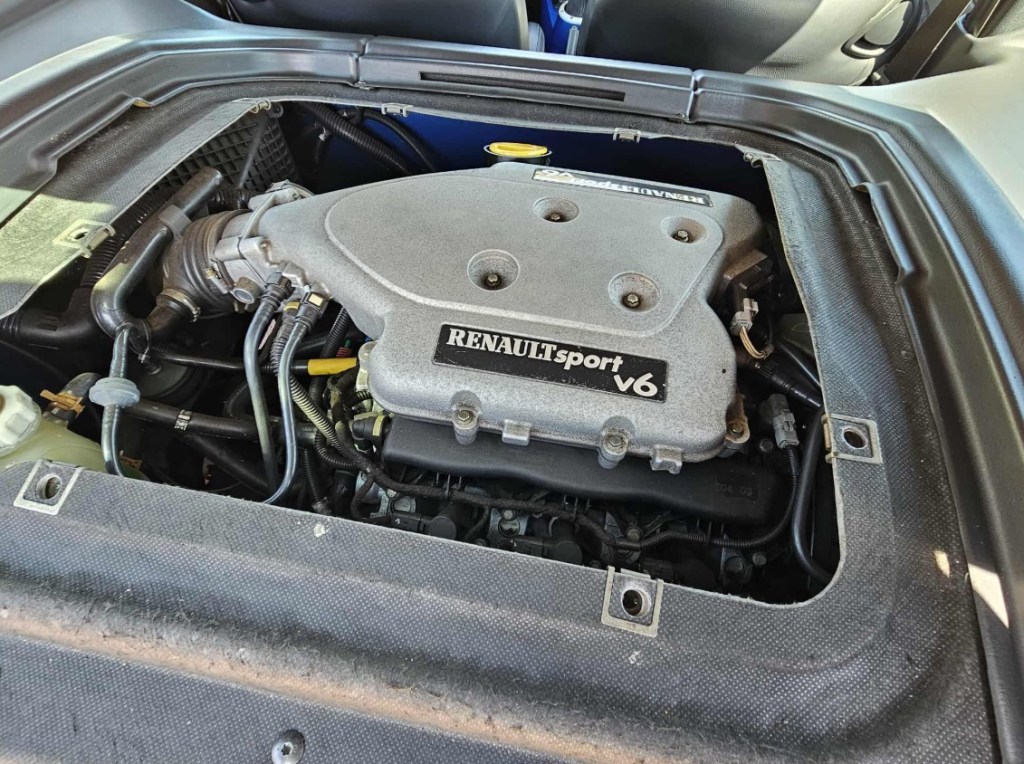
There are multiple storage boxes in the floors, drawers under the seats, a sliding centre console with two big storage boxes and each rear seat folds separately, comes out and can slide back and forth.
With 3 keys and books, it’s a tidy, straight and well looked-after example. A lot of car for not much money.
Happy to email more photos. Please call Paul on O4O7 O979ll or email paul@classicrally.com.au
Whilst every effort to ensure accuracy is made when preparing the description of a car, much of the information is provided by the owner and cannot be guaranteed to be accurate and complete. Some errors and omissions occur occasionally and we cannot be held liable for any loss or damage arising from incorrect or incomplete information or any reliance which might be placed on information provided. Any potential purchaser is advised to make his or her own independent investigations or inspections to determine title and whether a vehicle is suitable for purchase.