
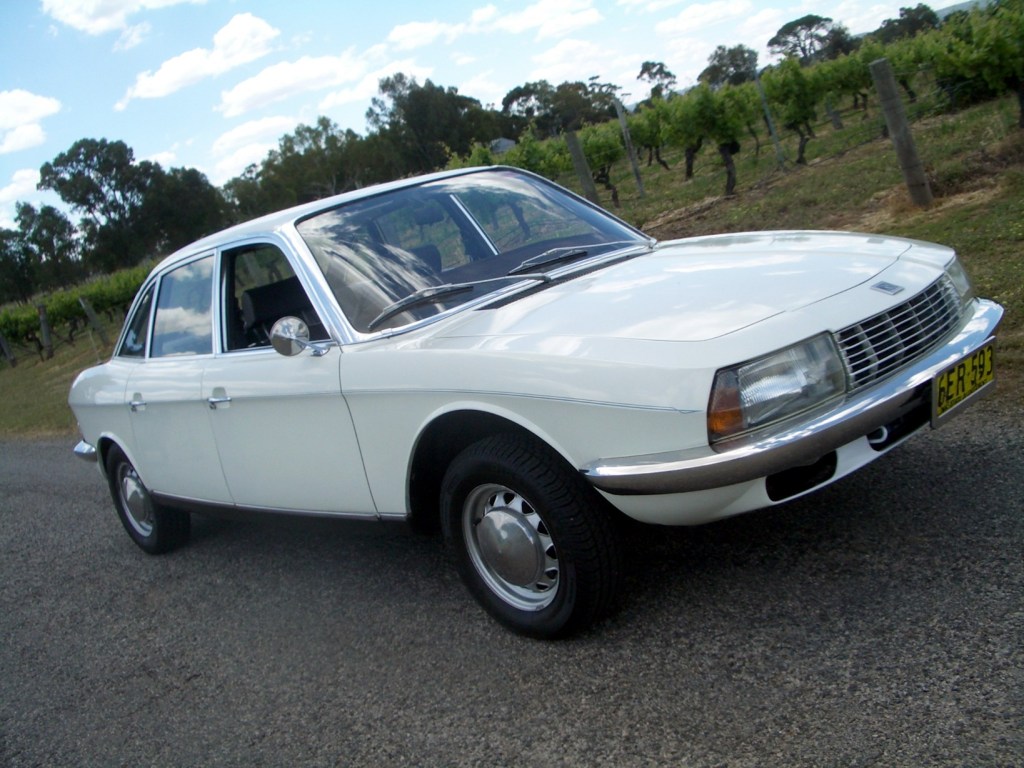
The place is Melbourne, the year is 1970, the man is Michael. He’s 35 years old, has become a leading architects – and he’s quietly pleased with himself.
Michael has worked hard. After school he went to university, enrolling for Architecture which would allow him to indulge in his pleasures of design, engineering and aesthetics. The same criteria he applied to his other passion – cars.
As a kid Michael always eagerly awaited looking at each month’s latest car magazines, especially Melbourne’s own Motor Manual.
As Michael pored over the pages of the latest magazines he loved the flamboyant styling of the American designs and the sophisticated engineering of some of the European cars. These cars were a world away as only very occasionally would he see anything like these cars on Melbourne’s roads.
As soon as he finished university there was a job waiting which meant an income – to buy a car. Michael went straight out and bought a used Volkswagen Beetle, just like the car which had won the demanding Redex Round-Australia Trial the year before. It proved unbreakable even when asked to perform challenging tasks – like a memorable weekend trip with a mate and three girls to the snow…
But a year later the Beetle would be sold as Michael followed his dream and took off to England for a year’s working holiday. Europe in the late 1950s was an eye-opener for any car enthusiast from the Antipodes. While Michael had his year away, his enthusiasm for European design – of products, architecture and cars increased exponentially.
He returned to Australia confident and with a mission… and set up his own architectural firm, keen to promote the latest skills and knowledge he’d brought back with him. And Melbourne welcomed him with open arms, the business flourishing from the start.
So with his success came a strengthening income. And that meant indulging in cars. After briefly having a “sensible car”, Michael started being drawn to cars with a bit more performance and panache. In 1965 Michael bought his first brand new car – a modern Triumph 2000.
Two years later a very unorthodox new car was announced in Germany – the NSU Ro80 – which would become known as a seminal design and acknowledged as one of the most important cars of the 20th century.
People knew NSU as the world’s biggest motorcycle manufacturer and it had begun its postwar car production with the little rear-engined Prinz, which had also been very successful. Cashed up, the company took on their engineer Felix Wankel’s radical rotary engine design and developed a completely new car around it.
That was forty years ago today – and for Michael like many others, the Ro80 was an amazing vision of motoring in the future. It had the incredible twin-rotor Wankel engine, front wheel drive (which few cars had in the 1960s), had semi-automatic transmission, and unusually sleek aerodynamic bodywork. Inside it had a flat floor with no transmission hump, comprehensive instrumentation and all the modern equipment. He’d never seen anything like it.

While he admired the Ro80 in magazines, it wasn’t until 1969 when Michael saw one in Melbourne. He was walking outside his offices in South Yarra when he heard an odd humming engine sound behind. Looking around, he swivelled on his heels, grinning widely as a bright orange Ro80 cruised past. Just released in Australia, this was the coolest car Michael had ever seen!
He called the Melbourne dealer Regan Motors who sent out a brochure – and Michael was hooked. Two weeks later he cautiously drove home for the first time in his own Ro80. It was an expensive car, costing him $6400, when his brother had just bought an impressive new Ford Falcon GTHO for $4500 and his neighbour had paid just $2600 for new a Peugeot 404.
Michael, always the individualist, could justify the expense in two ways – firstly, business was good enough to indulge himself and secondly, there was nothing on the market like the Ro80. It had a long wheelbase and cushioning ride like a big French car (but a Citroen DS was not for him), had the build quality of a Mercedes, plus modern, sure-footed handling and four disc brakes (when big Australian cars would make do with drums all round for the next decade).
The car was a talking point, being the centre of attention wherever he went. Which perfectly suited Michael’s cool image…
Once Michael had mastered the gear-change (touching the gear-knob activated the clutch) and became at home with the low torque but high revving characteristics of the rotary engine, it became a very smooth car to drive.
On country roads the aerodynamic shape kept the car stable and the Recaro seats offered support and comfort like few other cars could equal. It cornered at speed with the composure of a steely supermodel and encouraged Michael to take country drives.
NSU had begun with a clean sheet, the Ro80 having no carry over parts from any other car. It was an expensive operation, and one fraught with risks, especially with a completely new type of engine. The company had produced a small run of single-rotor Wankel engined Prinz Spiders as a test, but the Ro80 would be the first mass production application of the engine.

Felix Wankel had conceived his novel engine before World War 2, but it wasn’t until 1957 when at NSU, he tested his first engine. This simple, yet sophisticated engine produced excellent power for a small capacity and small physical size.
Car manufacturers became excited by the potential they saw in the Wankel rotary engine and NSU sold licenses to many companies including Mercedes-Benz, General Motors, Citroen and Mazda.
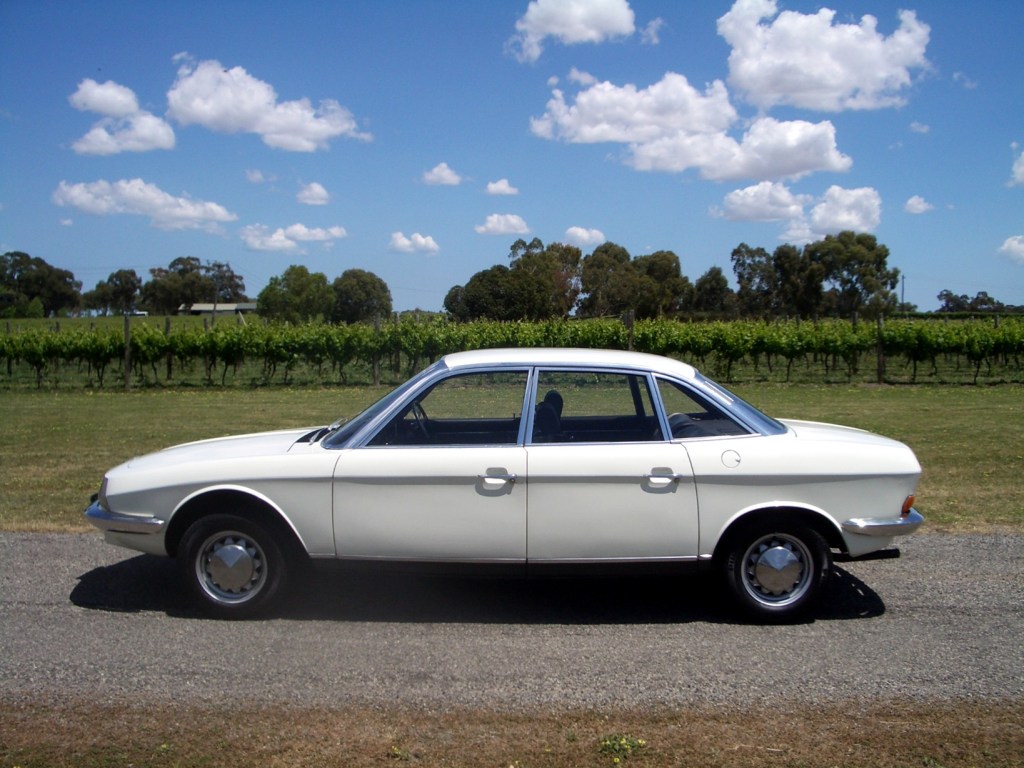
NSU adopted a ‘wedge’ low-front, high-rear aerodynamic shape for the Ro80 along with faired-in, shaped headlights, deep windows and other details which would become expectations 20 years later, but were quite revolutionary for a 4-door sedan in 1967.
The package was instantly acclaimed by the media and the car won the coveted European Car of the Year award among its many accolades.
But all was not well… The company had felt compelled by commercial pressures to launch the car before it was completely ready – not an altogether unfamiliar story in the car world. Whilst the engineers and designers had achieved a truly vast undertaking in developing a totally new car, the engine would prove to be its Achilles’ heel. Rotor tip seal failures caused problems which would eventually take years to resolve.
While the company openly and without hesitation replaced faulty engines in cars for customers under a generous warranty, the replacement engines were no better. Many owners would find that engines lasted just 30,000km. That said, there are still examples being driven with their original engines decades later.
Before Michael took delivery of his Ro80 in Melbourne, the factory had already sent out an engine upgrade kit which was installed in his car – like all others in Australia. But it was to no avail. As much as Michael enjoyed city and country driving in his NSU, after four years his engine cried ‘enough’ and he faced the question of what to do. He enjoyed and admired this car more than any other car he’d seen, but faced a big cost and questionable future.
Only 164 Ro80s had been sold in Australia and they were no longer being imported, with the last example registered in 1973 (though production for Europe continued until 1977, with over 133,000 built). Having spent enormous amounts developing the Ro80, and replacing countless engines, NSU had also been spending money developing another completely new car – a slightly smaller 4-door sedan, to take the rotary and a newly developed 1500cc conventional engine. The once great NSU, started in 1905, had been brought to its knees and Volkswagen stepped in with an offer which was accepted in April 1969, NSU merging with Audi in a new arrangement. The smaller NSU sedan was put into production as the Volkswagen K70, giving the company its first water-cooled and first front wheel drive model.
All this didn’t bode well for Australian Ro80 owners as there was no intention to market the cars here again. Sadly for Michael, his love affair was over, cut short. The car was sold and while he owned a string of other luxury cars later, none filled him with pride like the avant garde NSU had – when he could cruise down St Kilda Road confident he wouldn’t see another car that measured up to his technical masterpiece pass the other way.

TECHNICAL MARVEL
The rotary engine was at the heart of the Ro80 experience. The engine has a rounded triangular ‘piston’ rotating in a housing with combustion chambers around the outside. The nominally 995cc twin-rotor Ro80 engine used twin Solex carburettors and produced 86kW – which could get the 1210kg sedan to over 180km/h. Light and physically small, it sat low in the engine bay, giving a low bonnet and centre of gravity. A feature is that the higher it revs, the smoother it gets – and the exhaust note progresses from a hum to a buzz.
The transmission was unusual too. A 3-speed semi-automatic had the clutch activated by applying pressure to the gear-knob. A torque converter kept things smooth. First gear was down and left, with second and third in the right plane – reverse above first, and Park to the left again.
The Ro80 was full of novel technical solutions, such as the front disc brakes mounted inboard and very easily accessed from under the bonnet for pad replacement. Power-assisted ZF rack and pinion steering was fitted and the car has coil spring suspension all round. Alloy wheels were among the options – and a real rarity in the era.
Aside from NSU, only Citroen and Mazda marketed rotary engined cars, and Suzuki a rotary motorcycle. Mazda continues today with the RX8, after producing well over a million rotary cars – including the 1991 Le Mans wining car.
ENGINE ALTERNATIVES
With the reliability problems that the Wankel engine had, owners took to fitting alternative motors. In England, the apparently strange popular choice was the Ford V4, which we saw in service in Transit vans, but several passenger cars in the UK used it. Though cheap, compact and readily available – it really wasn’t that nice…
In Australia we were lucky to have readily accepted Mazda’s rotary engined models in significant numbers, and their engines were a more available, sensible and obvious choice – and in keeping with the original design. And they have “License NSU-Wankel” cast in the tops of the housings… The 12A has always been the most popular Mazda engine for this conversion, and with an adaptor plate, makes a relatively straightforward conversion and gives a handy power boost over the original NSU unit.
Today many owners around the globe are fitting original NSU engines, as their cars are only doing the sorts of mileages that many collectors’ pieces do, and should last many years.
Paul Blank
The author owned the white Ro80 shown in these photos for eleven years.


 Paul Blank