
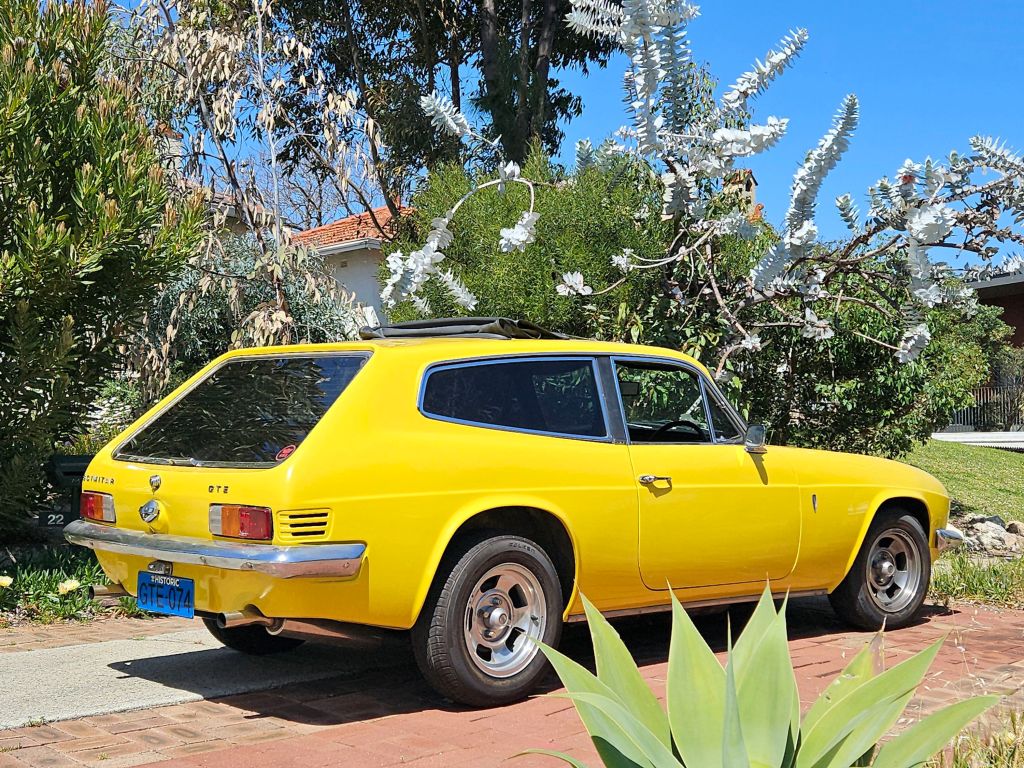
For a brief period, the Reliant Scimitar GTE was one of the hottest properties. The trendy new idea of a sports estate was really launched by Reliant with this car. Princess Anne famously drove one (often collecting speeding tickets) and other celebs were attracted to the model. Other cars followed, inspired y the GTE’s success, notably the Volvo 1800ES and Jensen Healey GT Estate.
The GTE really raised the profile of Reliant internationally, which had been mostly been known for their ghastly 3-wheel economy cars. But those sold in huge numbers and allowed the Tamworth-based company funds for a range of sporty cars. Reliant had built the Sabre sports (actually a design they’d made for an Israeli company where it was marketed as a Sabra) from the early 1960s. Using a hodge-podge of parts from different makers, almost 300 were sold, which encouraged the company to make something better.
The result was the 1964 Scimitar GT, with sharp styling by Tom Karen of Ogle Design. The new coupe featured Ford’s Zephyr engine, and later the new 3-litre V6 (much better). With a thousand sold, Reliant was on a roll.
In 1968 they launched the sexy new Scimitar GTE, the striking sports wagon body again the work of Tom Karen at Ogle. The GTE gained a new steel chassis, and like all Reliants before and since, wore fibreglass bodywork. The car was an immediate success with the 4-seater setting sales records for Reliants proper cars (over 100,000 3-wheel ‘plastic pigs’ were made).
The press and the public loved it. Featuring Ford’s lusty 3-litre V6, putting out 144bhp, the GTE was capable of 120 miles per hour (200km/h) which was pretty impressive in the late 1960s. Fitted with stylish MGB V8 alloy wheels (or stylised fibreglass wheel covers), overdrive – and with automatic transmission available from 1969 – the GTE quickly became the trendy car to have if you didn’t want an E-Type or Lotus Elan +2, which were both already a bit old hat by then.
British car buyers embraced fibreglass cars – which avoids rust – and many makers offered cars with such bodywork. Big players Lotus, TVR and Reliant were joined by many smaller makers such as Gilbern, Fairthorpe, Ginetta and others.

Many internal and external hardware parts are common to mass production cars of the era, so not too hard to find replacements for… except for bumpers which are pretty much unobtainable these days.
Mechanically the GTEs are straightforward and plenty of specialists can offer service and parts to suit. The front suspension can suffer with age and is Triumph TR6-based, so pretty straightforward for repairs.
Quite a few were imported to Australia, mostly while the cars were current, and while they are certainly not common, if you want one, they’re not impossible to find. For some reason, these important, if slightly iconic cars are worth relatively little. Low values haven’t helped keep some GTEs in great condition, but a restored example will command a strong price, but these cars should really be worth more….
So if you fancy something from the era of flared pants, which will stand out from the crowd, be cheap to maintain and perform nicely, perhaps a Scimitar GTE should be on your radar.
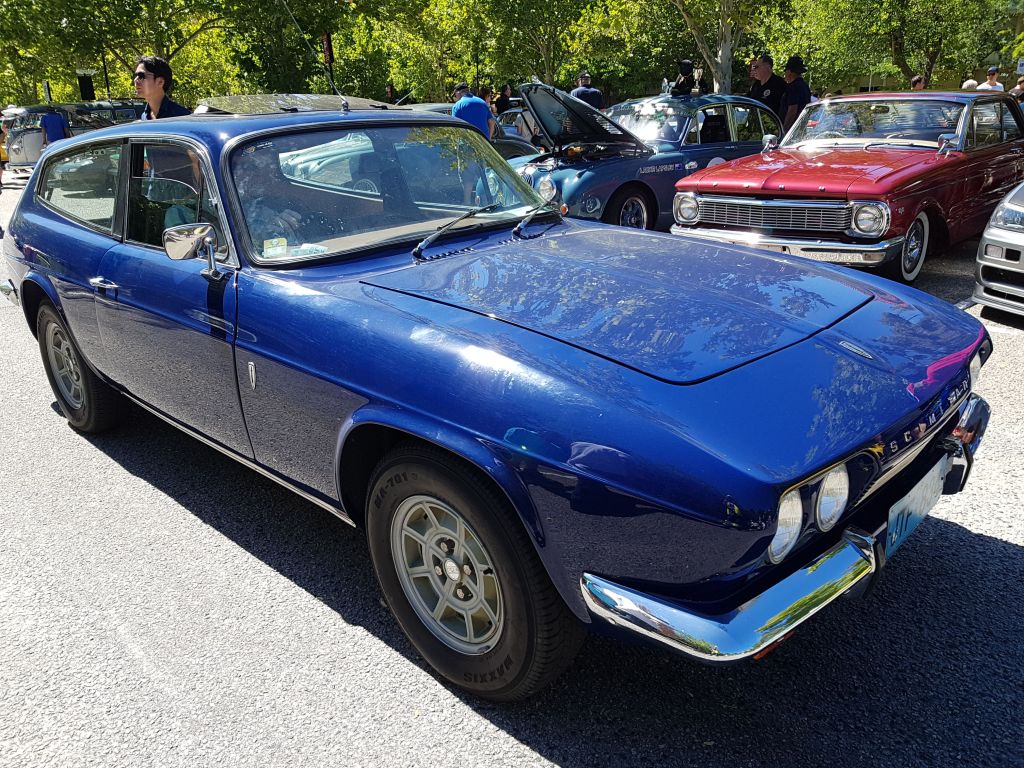


Above: Later cars had altogether different, wider body, whilst maintaining a similar look – but a little less stylishly. Below: The short-lived open topped GTC.

Copyright Paul Blank
 Paul Blank